

Small-kitchen design guide · NC Triad
Best Countertops for Small Kitchens
The right countertop cannot physically add square footage, but it can make a compact kitchen feel brighter, calmer and less crowded. Color, pattern scale, backsplash choices and layout matter more than simply choosing the lightest stone available.
Countertop fabrication and installation across Greensboro, Winston-Salem, High Point, Jamestown and surrounding NC Triad communities.
The direct answer
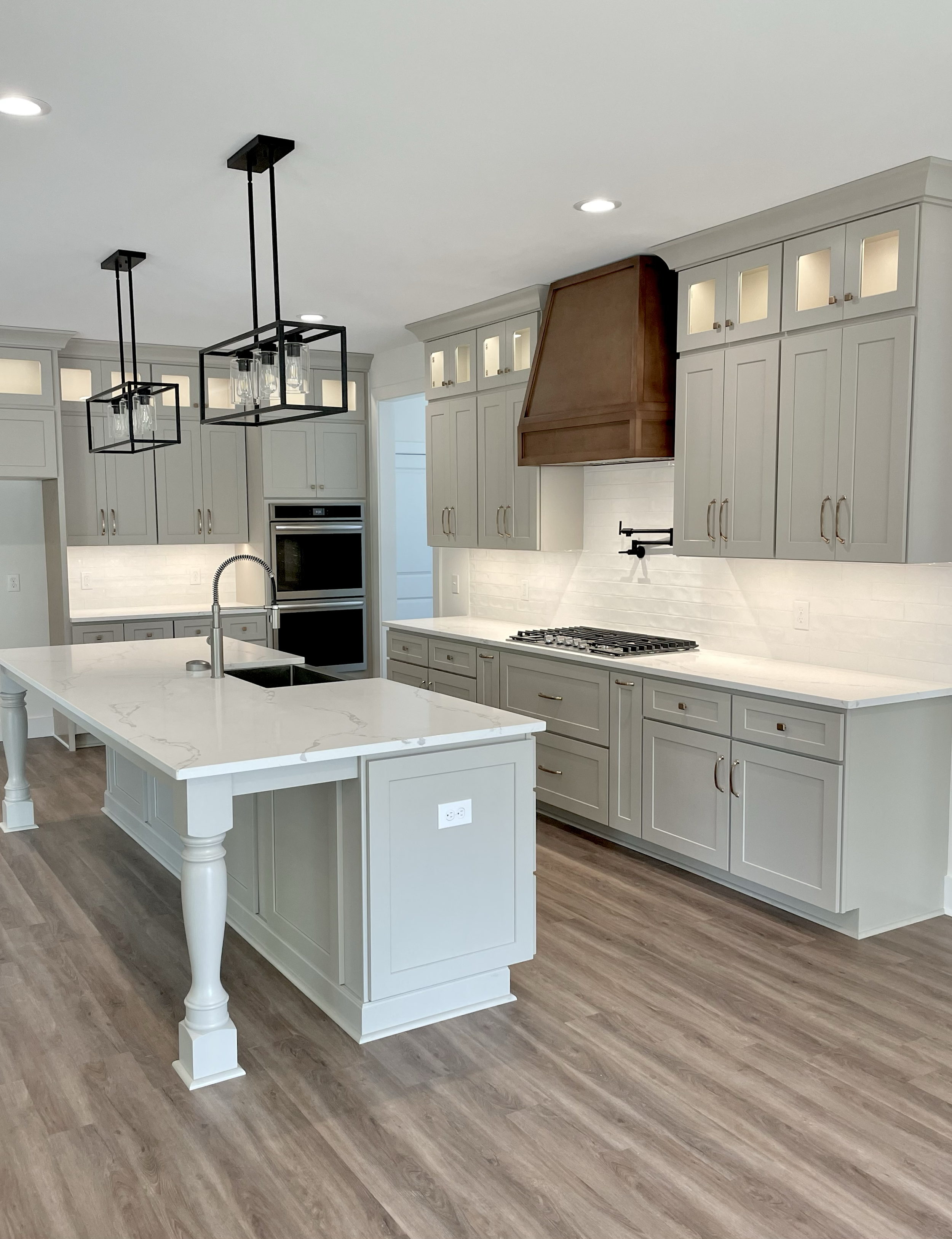
Warm white, cream, pale greige and lightly patterned countertops are the safest choices for most small kitchens.
Light countertops reflect more available light and create clearer separation from medium or dark cabinets. However, an extremely bright blue-white surface can feel cold beside warm flooring and cabinetry.
Keep the pattern controlled. Fine movement or long, quiet veining usually feels calmer than dense speckles or several competing colors.
For the most continuous appearance, use a restrained backsplash or continue the countertop material vertically instead of adding another strong pattern.
What matters most
Four decisions have the greatest visual impact.
A small kitchen rarely benefits from adding more decorative information. The strongest designs simplify the palette while making every inch of counter space useful.
Countertop brightness
A pale surface returns light to the work area and reduces the visual weight of upper and lower cabinets.
Pattern scale
Small, controlled movement usually reads more cleanly than a dense pattern containing many colors and mineral shapes.
Visual continuity
Fewer abrupt material changes can make the countertop and backsplash feel like one larger, more continuous surface.
Useful work area
Appliance placement, sink size, cooktop location and overhangs matter as much as color when counter space is limited.
Light does not have to mean plain
A small kitchen can still carry natural movement.
The key is scale. Broad, flowing movement can create direction without making the surface feel crowded. Fine, consistent veining can add detail while keeping the overall countertop quiet.
With natural stone, review the complete slab and decide which areas should appear on the most visible sections. A dramatic vein may work beautifully across a peninsula but feel overwhelming when divided across several short countertop runs.
Best countertop colors for compact kitchens
Six color directions that keep the room visually open
The cabinet, flooring, wall color and lighting determine whether a countertop reads warm, cool, clean or dull. Compare the actual finishes together before making the final decision.
Warm white
Warm white brightens the room without the sharpness of a strong blue-white surface. It works with white, wood, green, gray and darker painted cabinetry.
Works especially well withBrass hardware, oak flooring, cream walls and warm residential lighting.
Browse light quartz →Cream and ivory
Cream softens compact kitchens with honey oak, beige tile or warm flooring. It creates less visual contrast than bright white while still returning light to the room.
Works especially well withOak cabinets, olive green, warm gray and traditional finishes.
Read the oak-cabinet guide →Pale greige
Greige creates a quiet transition between warm and cool finishes. It can hide light everyday debris better than a completely white surface.
Works especially well withWarm-gray cabinets, white oak, beige flooring and black hardware.
Read the gray-cabinet guide →White with soft movement
Fine gray, taupe or warm-gold veining adds enough detail to avoid a flat appearance without making short countertop runs look crowded.
Works especially well withPainted cabinetry, simple tile and open shelving.
Compare countertop colors →Pale natural stone
Light granite and quartzite bring mineral depth into a small kitchen. Select slabs with movement that can be planned around the shorter sections and cutouts.
Works especially well withNatural wood, cream paint and understated backsplashes.
Browse granite →Charcoal used carefully
Dark countertops can work in a small kitchen when cabinets, walls and flooring remain light. The contrast can create a strong, intentional architectural line.
Works especially well withPale cabinets, strong daylight and simple wall finishes.
See dark-surface combinations →Compare countertop materials
Choose the material for the kitchen you actually have.
Smaller kitchens may use less total square footage, but sinks, cooktops, seams, corners and narrow sections can still affect fabrication and slab usage.
Strong when you want a calm, consistent surface
Quartz makes it easier to select a light background and controlled pattern scale. This can help short countertop sections read as one connected surface.
Quartz generally does not require routine sealing. Follow the manufacturer’s care guidance and use protection under very hot cookware and countertop appliances.
Strong when you want mineral depth and natural variation
Light granite can hide minor everyday debris while still keeping a compact kitchen bright. Quieter slabs are generally easier to place across several short runs.
Natural slabs vary. Review the actual material and discuss sealing based on the specific stone, finish and sealer selected.
Strong when the countertop is the main design feature
Quartzite can bring flowing natural movement into a small room without relying on several decorative materials. Cream and pale slabs can create a premium but visually calm result.
Review the whole slab and discuss how veins will pass through corners, seams, sinks and short countertop sections.
Strong for minimal white, concrete and charcoal palettes
Dekton can support a simple modern design with restrained pattern and clearly defined edges. Light colors can maintain brightness, while concrete-inspired options create a quieter neutral surface.
Thickness, support, edge design and fabrication details should be confirmed for the exact product and project layout.
Layout before decoration
Protect usable countertop space.
A beautiful surface will not fix a layout that leaves nowhere to prep food. Plan the sink, cooktop, appliances and landing areas before focusing on decorative details.
Do not oversize it
A very large sink can remove valuable prep space and reduce the width of the cabinet sections on both sides.
Keep counters clear
Consider where coffee makers, air fryers and other daily appliances will live before finalizing outlets and countertop runs.
Add seating carefully
A modest overhang may add useful seating, but excessive depth can tighten walking space in an already compact room.
Plan seams and movement
Natural stone movement should turn or transition intentionally through corners instead of appearing randomly interrupted.
Countertop and backsplash
Fewer visual breaks can make the kitchen feel calmer.
A matching full-height countertop backsplash creates a continuous surface without grout lines or another competing pattern. It can be especially effective behind a range or across a short main wall.
It is not automatically the best choice for every budget or slab layout. Compare the additional material requirement with a restrained tile backsplash before deciding.
Matching stone
Continuous appearance, fewer material changes and a stronger focal surface.
Quiet tile
Lower material usage and subtle texture without competing with the countertop.
What to approach carefully
Six mistakes that make a small kitchen feel busier
Dense multicolor patterns
Several strong minerals and colors can make short countertop sections feel fragmented.
Busy stone and busy tile
Let either the countertop or backsplash carry the main pattern—not both.
Too many abrupt color changes
Repeated transitions between cabinets, countertop, tile and wall paint can visually divide the room.
Oversized decorative edges
Heavy profiles may visually thicken the counter and compete with a compact cabinet layout.
Dark surfaces without lighting
Dark stone can work, but under-cabinet and general room lighting must keep the work surface usable.
Choosing from small online photos
Screens cannot show actual undertones, finish, slab movement or pattern scale accurately.
Countertop planning in the NC Triad
Small kitchens need accurate planning—not oversized design moves.
Bring your cabinet finish, flooring, kitchen photos and rough measurements to our Jamestown location. We can help compare quartz, granite, quartzite, marble and Dekton options before final templating.
Sondos Stone serves homeowners, builders and remodelers throughout Greensboro, Winston-Salem, High Point, Jamestown, Kernersville, Burlington, Lexington, Thomasville, Asheboro, Archdale, Trinity and surrounding North Carolina communities.
-
01
Measure the current layout
Note walls, cabinets, appliances and short countertop sections.
-
02
Compare materials
Review color, movement, care, thickness and slab requirements.
-
03
Protect prep space
Confirm sink, cooktop, appliance and overhang dimensions.
-
04
Template and fabricate
Final measurements are taken after the cabinets are ready.
Continue planning
Countertop tools and related guides
Small-kitchen countertop FAQs
Questions homeowners ask
What countertop color makes a small kitchen look bigger?
Warm white, cream, ivory and pale greige are dependable choices because they reflect available light and create a more open work surface. The exact color should still coordinate with the cabinets, flooring and wall paint.
Is quartz good for a small kitchen?
Yes. Quartz offers consistent color and controlled patterns, which can help several short countertop sections feel more connected. It also generally does not require routine sealing.
Can dark countertops work in a small kitchen?
Yes. Dark countertops can create deliberate contrast with pale cabinets and walls. Good natural light, under-cabinet lighting and a restrained backsplash help keep the room balanced.
Should a small kitchen have patterned countertops?
Pattern can work, but controlled movement is usually easier to use than dense multicolor speckles. Broad or subtle veining can create interest without making the room feel crowded.
Should the countertop and backsplash match?
They do not have to match. Continuing the countertop material up the wall can create a continuous appearance, while quiet neutral tile can add texture without competing with the countertop.
Is granite too busy for a small kitchen?
Not necessarily. Light granite with controlled mineral movement can work well. Review the actual slab and avoid patterns containing several strong, unrelated colors when the room already has busy cabinetry or flooring.
Does natural stone need to be sealed?
Many granite, quartzite and marble countertops benefit from an impregnating sealer. The need and timing depend on the exact stone, finish, sealer and how the surface is used.
Does Sondos Stone serve Greensboro and Winston-Salem?
Yes. Sondos Stone fabricates and installs custom countertops across Greensboro, Winston-Salem, High Point, Jamestown and surrounding NC Triad communities.
Material and care research
External countertop resources
These references support the general natural-stone care and sealing information in this guide. Follow the instructions provided for the exact material and product installed in your kitchen.