

Natural stone guide · NC Triad
Taj Mahal Quartzite: What to Know Before You Buy
Taj Mahal is warm, quiet and naturally one of a kind. It is also a premium slab that deserves more thought than choosing from a small sample. This guide explains the price, variation, care and fabrication decisions that matter.
The honest answer
Is Taj Mahal quartzite a good countertop?
Yes—when you want genuine natural stone, warm neutral movement and better resistance to normal kitchen acids than marble. It is not the right choice if you expect every section to match perfectly or want the lowest-cost surface.
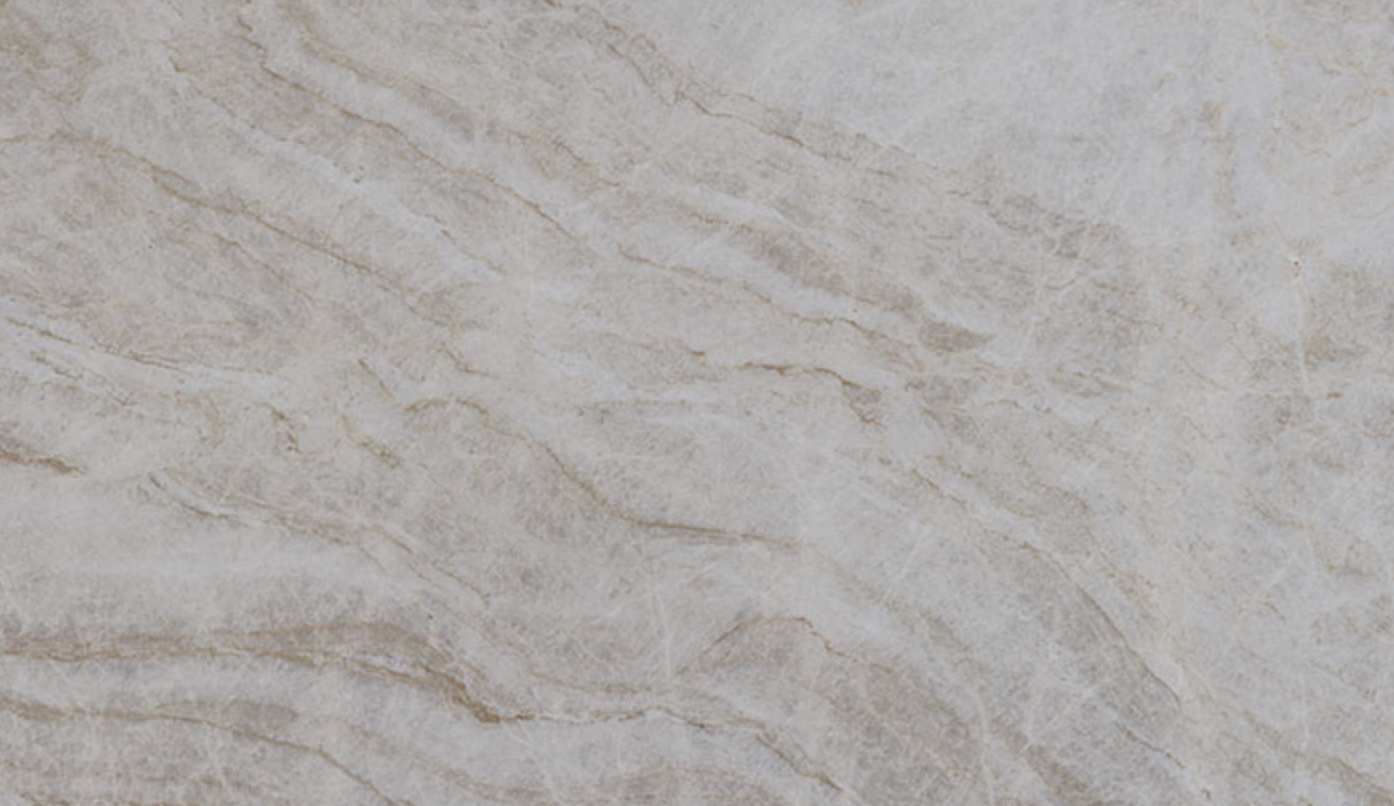
Taj Mahal is a natural quartzite, not engineered quartz. It is formed from sandstone altered by heat and pressure, producing a dense stone made largely of quartz. Its background commonly ranges from soft ivory and cream to light beige, with taupe, gold or brown movement that changes from slab to slab.
Material
Natural quartzite
Appearance
Warm cream with beige-gold movement
Maintenance
Clean gently; seal when the slab and sealer require it
Best feature
Marble-like warmth with genuine natural variation
Planning the budget
How much does Taj Mahal quartzite cost?
Sondos Stone quartzite projects currently start around $140 per square foot installed. That includes material, professional templating, in-house fabrication and installation. Taj Mahal is a premium color, so its exact installed price can be higher depending on the supplier, slab, thickness, availability and project layout.
Quartzite starting point
$140/sq. ft. installed
Final Taj Mahal pricing is confirmed from the selected slab and actual project scope.
40 sq. ft.: quartzite projects start near $5,600
50 sq. ft.: quartzite projects start near $7,000
60 sq. ft.: quartzite projects start near $8,400
These are base calculations using the quartzite starting price—not guaranteed Taj Mahal quotes. Extra slabs, upgraded edges, cutouts, demolition, waterfalls, backsplashes and unusual access can change the total. See the full NC countertop cost guide.
The decision most people underestimate
Choose the slab—not just the name
A four-inch sample cannot show the movement, mineral details or color changes across a full Taj Mahal slab.
View the full slab
Some lots are creamy and quiet. Others show stronger taupe bands, warmer gold sections or more visible movement. Approve the actual slab whenever possible.
Bring cabinet and flooring samples
Compare undertones in the same lighting. A cool white cabinet can make a warm slab appear more beige, while warm white, oak and walnut usually support its color.
Discuss vein direction before cutting
The slab must work across islands, perimeter runs and backsplashes. Vein flow, seam placement and focal areas should be planned before fabrication begins.
Understand natural characteristics
Natural stone can include color variation, mineral deposits, fissures and filled areas. Review the slab in person so these features become part of the plan—not a surprise.
Design without guessing
Cabinets, hardware and edges that work with Taj Mahal
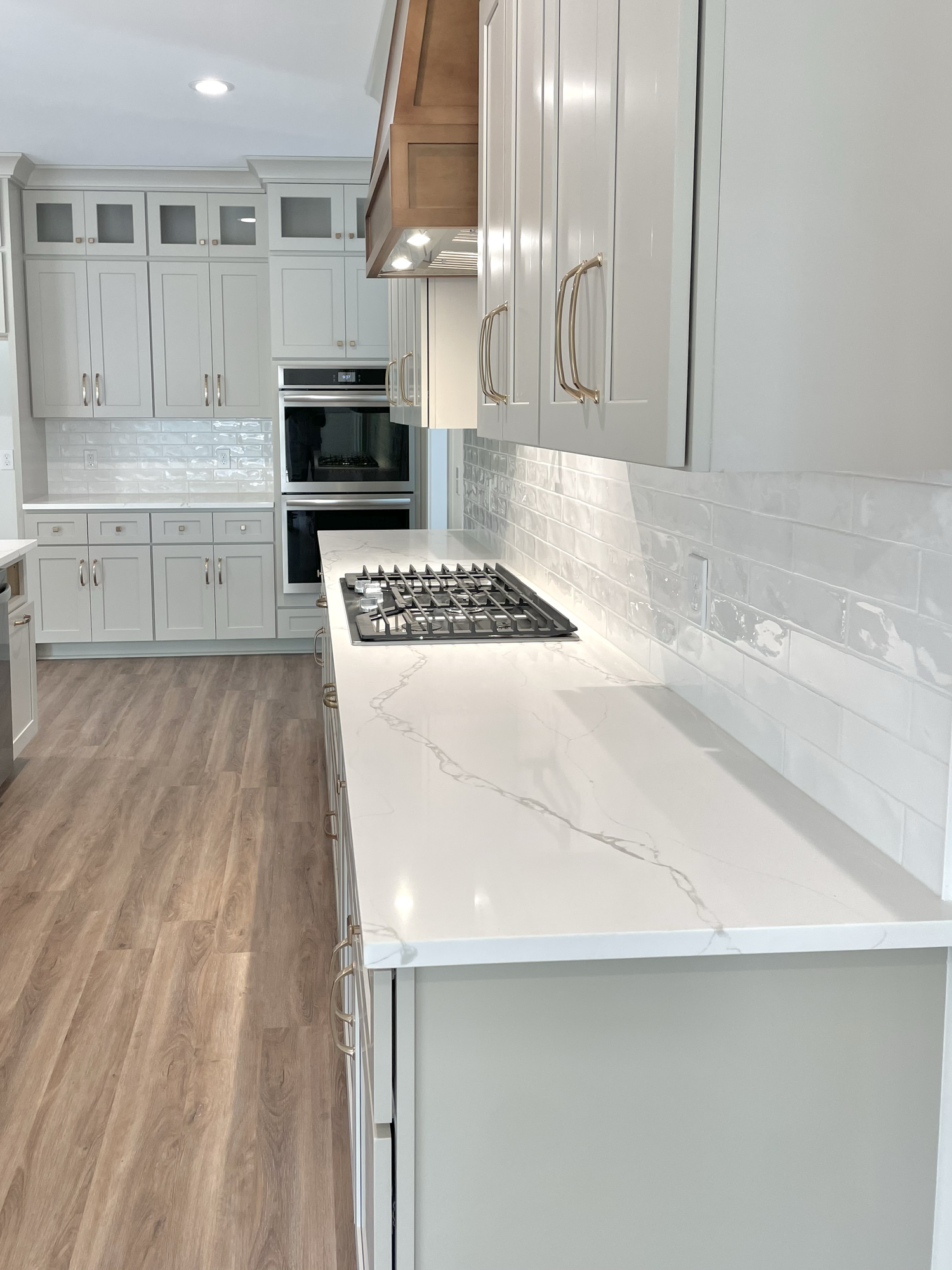
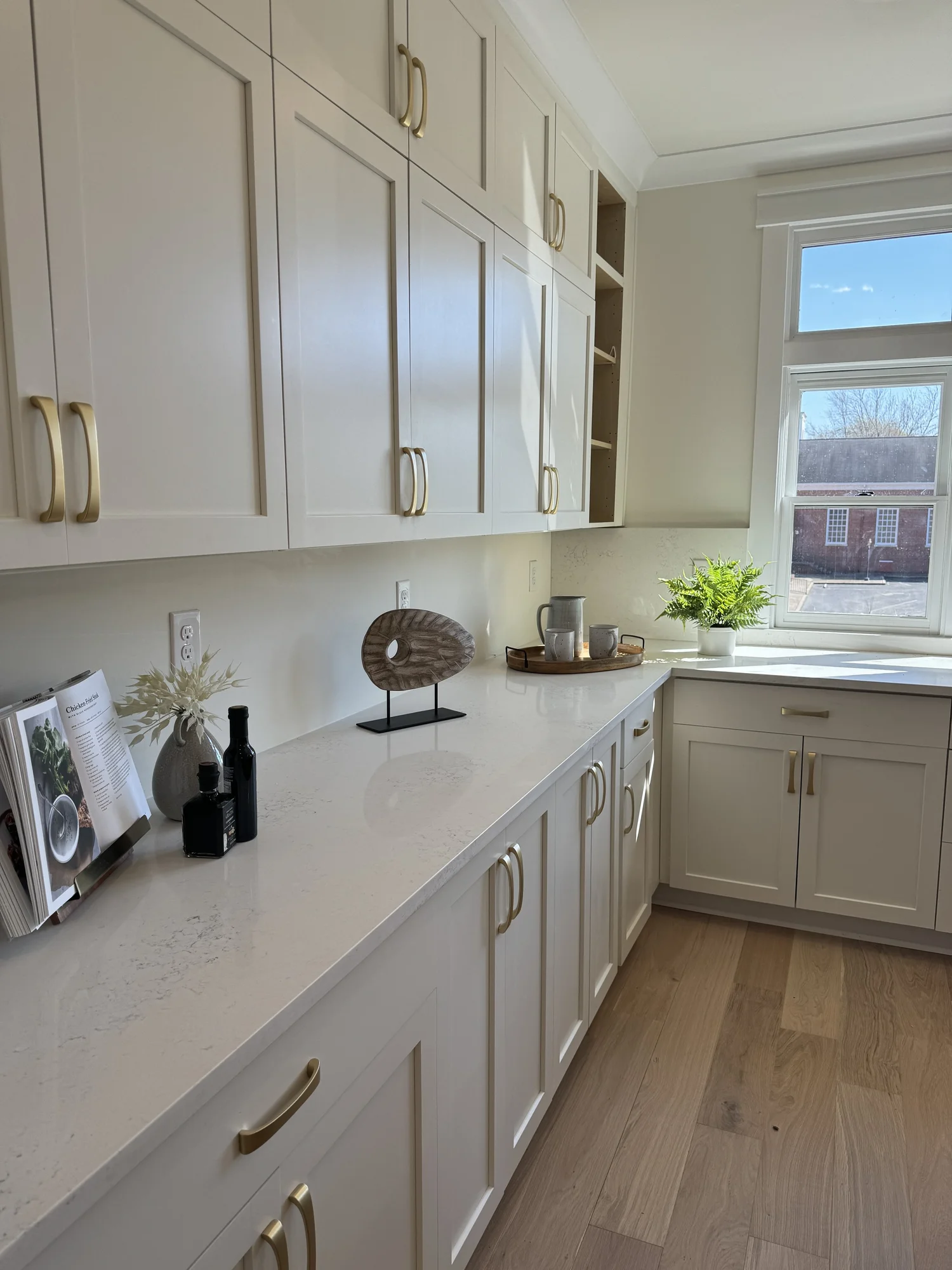
Warm white cabinets
Quiet and connected
Warm or creamy whites usually blend more naturally with Taj Mahal than icy blue-whites. Compare paint samples against the actual slab before committing.
Natural oak or walnut
Bring out the warmth
Wood cabinetry can pull forward the beige, taupe and gold movement without forcing the countertop to become the only warm element in the room.
Black or deep brown
Add contrast
Dark cabinetry creates a stronger outline around the stone. This works well when the selected slab is light and the room has enough natural or layered lighting.
Brass, bronze or nickel
Match the undertone
Warm metals emphasize gold movement. Nickel can keep the room quieter. Hardware should be compared beside the slab, cabinet and backsplash—not selected alone.
Do not confuse the names
Taj Mahal quartzite vs. quartz vs. marble
| Feature | Taj Mahal quartzite | Taj Mahal-look quartz | Marble |
|---|---|---|---|
| Composition | Natural metamorphic stone | Engineered surface with resin | Natural calcite-based stone |
| Pattern | Unique to every slab | More controlled and repeatable | Unique to every slab |
| Sealing | Depends on slab and sealer | No routine sealing | Generally benefits from sealing |
| Common kitchen acids | True quartzite resists etching | Resistant, but follow manufacturer care | Can etch from lemon, vinegar and similar acids |
| Heat | Strong natural heat resistance; use trivets | Use trivets to protect resin | Use trivets and avoid thermal shock |
| Best for | Natural variation and premium movement | Lower maintenance and consistency | Owners who accept patina and etching |
Care without myths
How to care for Taj Mahal quartzite
Taj Mahal is dense, but “dense” does not mean maintenance-free. Treat the actual slab and finish in front of you—not a generic schedule copied from the internet.
Do
- Clean with mild soap, warm water and a soft cloth.
- Wipe oils, wine, coffee and deeply colored spills promptly.
- Use cutting boards to protect the finish and your knives.
- Use trivets even though natural quartzite handles heat well.
- Ask which sealer was used and how to evaluate it later.
Do not
- Assume every slab has identical porosity.
- Use abrasive powders or aggressive scrub pads.
- Use harsh specialty chemicals without checking compatibility.
- Stand or sit on unsupported countertop sections.
- Reseal automatically if the existing sealer is still performing.
Buyer questions
Taj Mahal quartzite FAQs
Is Taj Mahal quartzite actually quartzite?
Yes. Taj Mahal is recognized as a natural quartzite. Stone names can be used inconsistently across the broader market, so buyers should still confirm the material and supplier information for the slab being considered.
Does Taj Mahal quartzite need to be sealed?
It may benefit from an appropriate penetrating sealer, but there is no honest universal resealing calendar. The slab’s absorption, finish, sealer and use determine when another application is appropriate.
Will Taj Mahal quartzite stain?
Any natural stone should be treated carefully around oils and strongly colored liquids. Prompt cleaning and a properly selected sealer reduce risk. No fabricator should describe a natural stone countertop as impossible to stain.
Can Taj Mahal be used for a full-height backsplash?
Yes. Continuing the slab onto the backsplash can create a connected look, but it requires additional material, outlet cutouts and careful vein planning before fabrication.
Should I approve the slab before fabrication?
Yes whenever possible. Full-slab approval gives you the clearest understanding of color, movement and natural characteristics before pieces are cut.
Does Sondos Stone serve areas outside Greensboro?
Yes. Sondos Stone fabricates and installs throughout Greensboro, High Point, Winston-Salem, Jamestown, Kernersville, Burlington and surrounding NC Triad communities.
See the stone before choosing
Compare real Taj Mahal slabs for your project.
Bring your cabinet, flooring, paint and hardware samples. We will help you review undertones, movement, layout and the details that affect the installed price.