

Countertop design guide · Greensboro & the NC Triad
Best Countertops for Gray Cabinets
Gray cabinets can feel warm and timeless or clean and contemporary. The right countertop depends on whether the cabinetry leans blue, green, beige, violet or charcoal—not simply whether the paint is labeled “gray.”
Custom countertop fabrication and installation across Greensboro, Winston-Salem, High Point, Jamestown and the NC Triad.
The direct answer
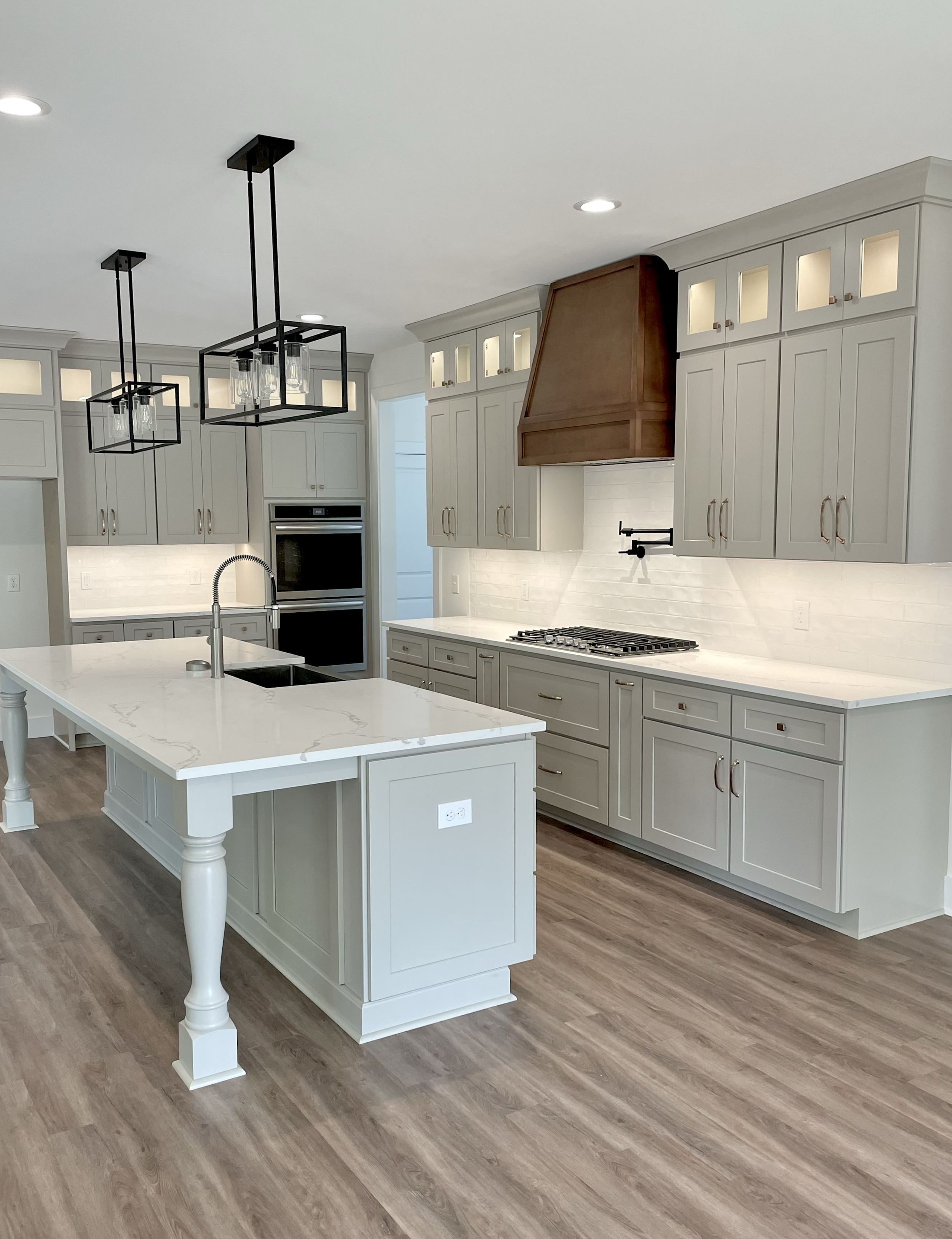
White, cream, greige and controlled natural movement are the safest countertop choices for gray cabinets.
Light-gray cabinets: pair well with warm white, soft marble-look quartz, cream quartzite and darker charcoal surfaces.
Dark-gray cabinets: usually benefit from a lighter countertop that creates separation and prevents the kitchen from feeling visually heavy.
Greige cabinets: work best with warm white, ivory, taupe and subtle beige-gray movement rather than icy blue-white surfaces.
Step 01 · Identify the cabinet undertone
Gray changes when it is placed beside stone.
Paint names are unreliable. Compare the actual cabinet door with the countertop because nearby colors can make gray appear blue, green, purple, beige or nearly black.
Beige, taupe or brown underneath
Warm gray works naturally with cream, ivory, greige and stone that contains restrained taupe or gold detail.
Explore warm quartzite →Blue, silver or violet underneath
Cool-gray cabinets pair well with crisp white, pale gray, charcoal and stone featuring controlled gray or black movement.
Explore quartz colors →Balanced gray and beige
Greige is flexible but can shift dramatically with flooring and wall color. Warm white and quiet natural stone are usually safe.
Use the kitchen visualizer →Deep gray approaching black
Charcoal cabinets usually need lighter countertops or noticeable movement to keep the surfaces from merging into one dark block.
Read the black-cabinet guide →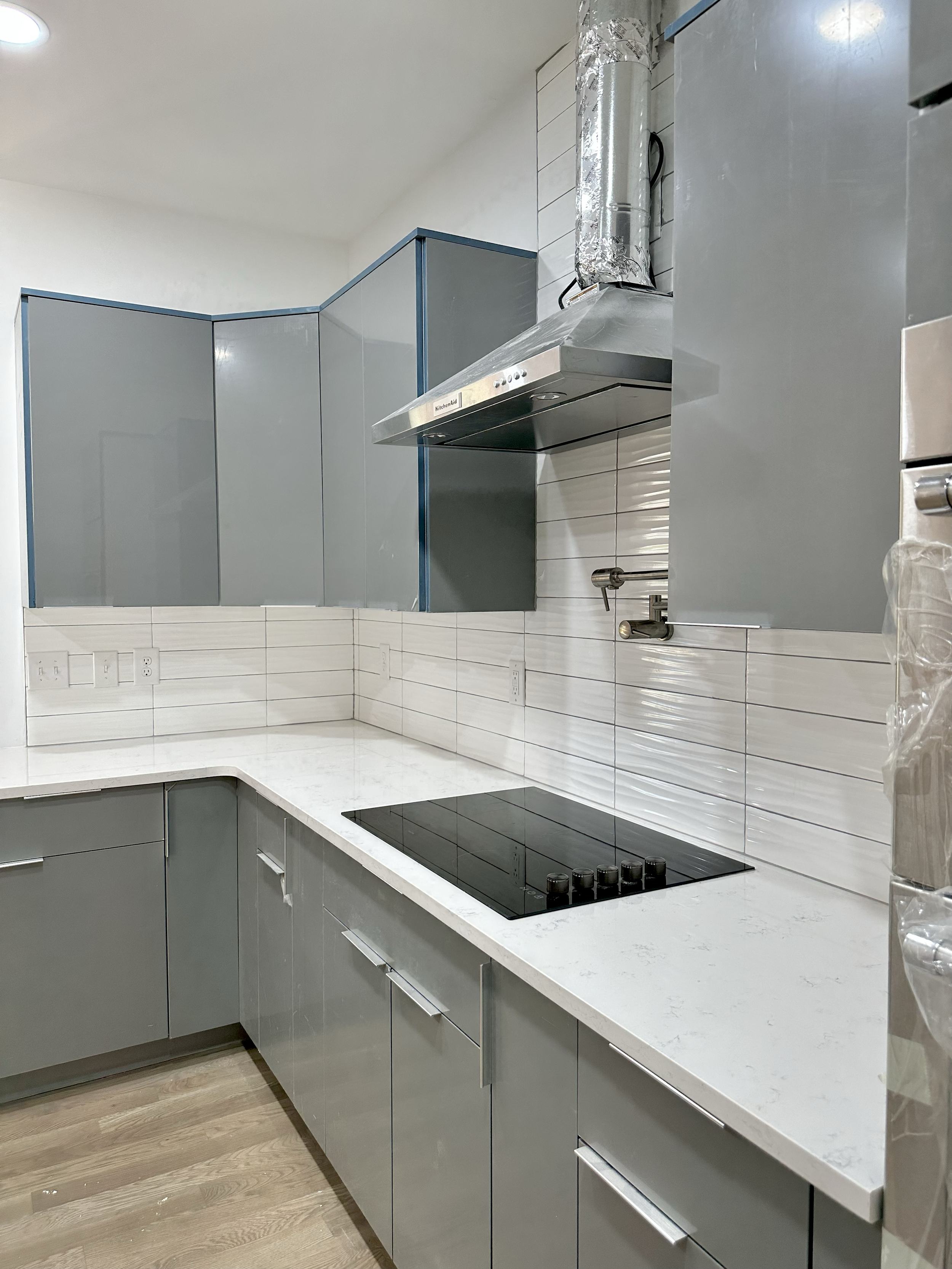
Why this pairing works
The light countertop creates separation without adding another strong color.
The cabinetry already provides the dominant gray tone. A soft, lightly patterned countertop keeps the work surface visible and connects naturally to the white backsplash.
Notice that the countertop does not attempt to match the cabinets exactly. Controlled contrast makes the kitchen feel intentional and allows each surface to remain distinct.
View more real Sondos Stone kitchens →Step 02 · Narrow the countertop palette
Six countertop colors that work with gray cabinets
These are broad color directions. Natural slabs and manufactured samples should always be compared with the installed cabinet finish under the room’s actual lighting.
Warm white
Warm white brightens gray cabinets without producing an icy or clinical appearance. It works especially well with greige, brass hardware and wood flooring.
Best forTransitional, organic-modern and softly traditional kitchens.
Browse light quartz →Crisp white
Crisp white creates clear contrast with medium and dark gray. It reinforces a clean contemporary look, particularly with black, chrome or stainless-steel details.
Best forCool-gray, charcoal and modern slab-front cabinetry.
Compare white surfaces →Cream and ivory
Cream introduces warmth and prevents gray cabinetry from feeling cold. It can also connect the cabinets to beige tile, natural wood and warmer wall colors.
Best forGreige cabinets and rooms with warm fixed finishes.
Browse natural quartzite →White with gray movement
Soft gray veining can repeat the cabinetry color while the lighter background maintains separation. Avoid selecting a vein that clashes with the cabinet’s undertone.
Best forIslands, full-height backsplashes and open kitchens.
See installed examples →Taupe and greige
Taupe surfaces create a quieter, layered palette. The result is softer than high-contrast white and generally warmer than a gray-on-gray combination.
Best forWarm contemporary and understated luxury kitchens.
Test the palette visually →Charcoal or black
Dark countertops create a dramatic result with pale-gray cabinets. Use enough lighting and contrast through the backsplash, walls or flooring to prevent the room from becoming flat.
Best forLarge rooms and kitchens with strong natural light.
Browse granite colors →Step 03 · Select the surface type
Design matters. Performance matters longer.
Compare daily maintenance, natural variation, heat exposure and the way your household uses the kitchen before selecting a final material.
Predictable color and controlled veining
Quartz makes it easier to coordinate a specific cabinet undertone because the pattern and background are more consistent than most natural slabs.
Quartz generally does not require routine sealing. Use trivets or protective pads instead of placing extremely hot cookware directly on the surface.
Natural mineral detail and visual depth
Granite can add warmth, texture or contrast to gray cabinetry. Quieter white and gray granites create a controlled look, while black granite can produce a stronger architectural result.
Slab appearance and porosity vary. Review the actual material and discuss sealing based on the exact stone and finish selected.
Natural movement for a premium focal point
Light quartzite can soften cool-gray cabinetry or add subtle warmth to greige cabinets. The actual slab may contain cream, gray, taupe, green or gold that is not visible in a small sample.
Review the complete slab and confirm the care requirements of the specific material rather than relying only on its commercial name.
Soft natural movement with realistic expectations
White and gray marble creates a natural relationship with gray cabinets. It can be an elegant choice for homeowners who appreciate natural variation and an evolving patina.
Marble is sensitive to acidic substances and may etch. Sealing can improve stain resistance, but it does not prevent acid-related etching.
Step 04 · Match the countertop to the cabinet depth
Light gray and dark gray require different levels of contrast.
Keep it airy or introduce deliberate contrast
Warm white, crisp white and soft veining create an open appearance. Charcoal or black can work as a bold contrast when the kitchen has sufficient light.
Avoid countertop colors that nearly—but not quite—match
A surface one or two shades away from the cabinets can look accidental. Choose a clearly lighter background, a clearly darker surface or movement that separates the materials.
Use the countertop to return light to the room
White, ivory, pale quartzite and light granite create stronger balance. Dark-on-dark works best with intentional texture, visible veining and excellent lighting.
Finish the entire palette
Hardware, backsplash and flooring can warm or cool the result.
Do not judge cabinet and countertop samples alone. The larger fixed finishes in the room can noticeably change how both colors appear.
Brass and bronze
Warm metals soften gray cabinetry and pair naturally with cream, greige, taupe and stone containing restrained gold movement.
Black hardware
Black creates definition and a cleaner contemporary direction. It works particularly well with light-gray cabinets and white stone.
Nickel and chrome
Cooler metals reinforce blue-gray and silver undertones. Compare them carefully with warm greige cabinetry before committing.
Wood flooring
Wood can prevent gray-and-white kitchens from feeling cold. Bring a flooring sample when choosing between cream, white and cool-gray stone.
Common design mistakes
Five ways gray kitchens go wrong
Ignoring the undertone
A blue-gray cabinet and a yellow-beige countertop may exaggerate each other instead of creating balance.
Making every surface gray
Gray cabinets, gray countertops, gray flooring and gray walls can make the kitchen feel flat without clear variation in depth, texture or temperature.
Choosing an almost-matching countertop
A slightly different gray may look like a failed match. Clear contrast usually looks more intentional.
Relying on showroom lighting
Samples may appear very different under warm residential bulbs, natural daylight and evening lighting.
Adding multiple competing patterns
Strong countertop movement, patterned backsplash tile and busy flooring can compete for attention instead of building one focal point.
Local countertop planning
Compare your cabinet sample with real material.
Bring a cabinet door, paint sample, flooring sample and kitchen photos to Sondos Stone in Jamestown. Our team can help narrow the available quartz, granite, quartzite, marble and Dekton options before final templating and fabrication.
We serve homeowners, builders, cabinet companies and remodelers throughout Greensboro, Winston-Salem, High Point, Jamestown, Kernersville, Burlington, Lexington, Thomasville, Asheboro, Archdale, Trinity and surrounding NC Triad communities.
-
01
Bring the room finishes
Cabinet sample, flooring, paint, backsplash ideas and photos.
-
02
Compare available materials
Review undertones, movement, finish, maintenance and budget.
-
03
Confirm the project layout
Discuss seams, cutouts, overhangs, backsplash and focal movement.
-
04
Template, fabricate and install
The countertop is produced for the measurements of the room.
Gray cabinet countertop FAQs
Questions homeowners ask
What countertop color looks best with gray cabinets?
White, warm white, cream, greige and lightly veined stone are dependable choices. The best option depends on whether the gray cabinetry has warm beige undertones or cooler blue, green or violet undertones.
Should countertops be lighter or darker than gray cabinets?
Either can work, but the relationship should look intentional. Dark-gray cabinets generally benefit from lighter countertops. Light-gray cabinets can work with either pale surfaces or clearly darker charcoal and black options.
Does white quartz work with gray cabinets?
Yes. White quartz creates clear contrast and offers controlled pattern consistency. Compare the exact quartz sample with the cabinet because different whites may lean warm, blue, gray or pink.
Can I use gray countertops with gray cabinets?
Yes, but the countertop should differ clearly in depth, texture or pattern. Two nearly matching gray finishes may look accidental rather than layered.
What backsplash works with gray cabinets?
Warm white, crisp white, cream and quiet handmade tile can all work. When the countertop has strong movement, keep the backsplash restrained or continue the same stone vertically.
Is quartz or granite better with gray cabinets?
Quartz offers more predictable color and generally does not require routine sealing. Granite provides natural variation and individual mineral character. The best choice depends on the desired look, maintenance expectations and the specific material.
Does Sondos Stone serve Winston-Salem and Greensboro?
Yes. Sondos Stone fabricates and installs custom countertops across Greensboro, Winston-Salem, High Point, Jamestown and surrounding North Carolina Triad communities.
Should I view the entire natural-stone slab?
Yes. Natural slabs can contain movement, color variation, mineral deposits and features that do not appear in a small sample or online photograph.
Research and care resources
External countertop references
These sources support the general care and sealing guidance included in this article. Follow the instructions supplied for the exact countertop product selected for your project.