

Design field guide · Greensboro & the NC Triad
Best Countertops for White Cabinets: An Honest Design Guide
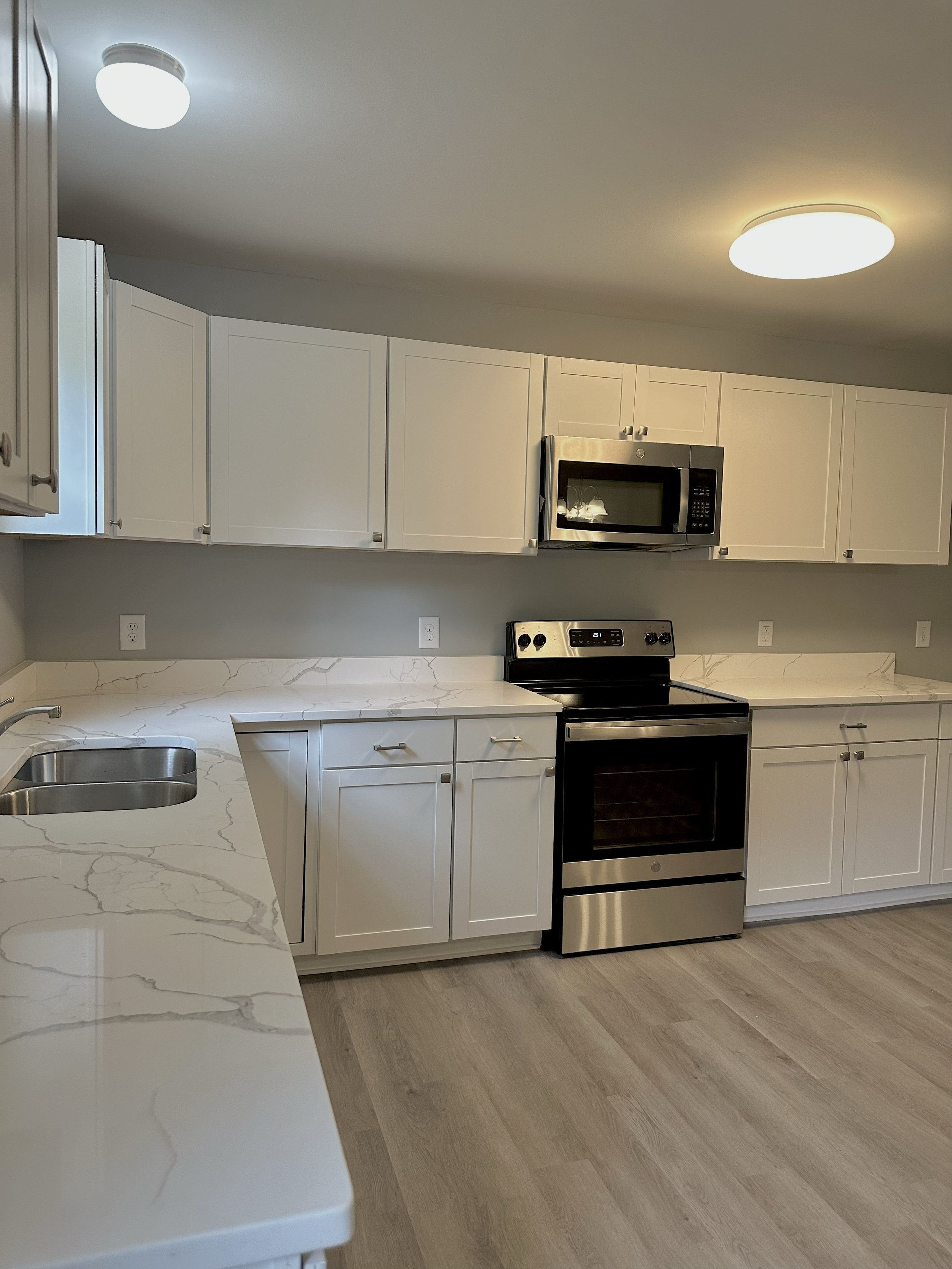
White cabinets do not automatically work with every white countertop. The strongest combination starts with the cabinet’s undertone, then uses the countertop to create contrast, warmth or quiet movement.
The short answer
The best countertop is the one that gives your white cabinets a clear relationship—not a near miss.
For a bright, quiet kitchen: choose a light quartz or fine-grained granite whose background shares the cabinet undertone.
For natural movement: consider quartzite or granite with white, gray, taupe or warm-gold variation.
For contrast: dark granite, soapstone-inspired quartz or a deep charcoal surface can make white cabinetry look intentional rather than flat.
Step 01 · Diagnose the cabinet white
“White” is a color family, not one color.
Place a cabinet door or finish sample beside the full slab. Phone screens and small samples can hide the exact cream, gray, blue, green or pink cast that becomes obvious after installation.
Cream, ivory or soft yellow cast
Look for cream, taupe, beige, caramel or restrained gold in the stone. Warm quartzites, Colonial White-style granites and soft marble-look quartz can connect naturally.
Avoid:Very blue-gray countertops unless another finish deliberately bridges the temperature difference.
Blue, crisp gray or icy cast
Cool gray veins, charcoal minerals, black contrast and clean white quartz can work well. Hardware and backsplash can add warmth without forcing it into the countertop.
Avoid:Yellow-beige stone that makes the cabinets look accidentally blue.
Balanced, without a strong cast
This is the most flexible starting point. Choose the countertop according to flooring, wood tones, lighting and how much visual movement the room can handle.
Avoid:Choosing in isolation. A neutral cabinet can expose undertone conflicts elsewhere.
Step 02 · Pick the behavior
Compare material families before comparing color names.
A countertop must work as a surface after it works as a photograph. Start with variation, maintenance and daily use; then narrow the palette.
Quartz: predictable pattern and lower maintenance
Quartz is engineered from mineral content, pigments and binders. It offers more consistency from sample to slab and does not need routine sealing. Marble-look quartz can create a controlled white-on-white composition, but direct high heat should be kept off the surface with a trivet.
Best when: you want a repeatable pattern, simple care and a specific white or warm-neutral background.
Browse quartz →Granite: natural variation with practical performance
Granite can add mineral texture without demanding a heavily veined look. Light families such as Dallas White, Colonial White and River White can bridge white cabinets to wood floors, while Black Pearl or Absolute Black creates a clean high-contrast direction. View the exact slabs because commercial color names cover real natural variation.
Best when: you want a one-of-a-kind natural surface and are comfortable discussing sealing with the fabricator.
Browse granite →Quartzite: marble-like movement with its own slab personality
Many quartzites combine warm-white, gray and taupe movement that works naturally with white cabinetry. Taj Mahal leans warm; Mont Blanc and other white-gray quartzites can feel cooler. Classification and performance vary by stone, so verify the exact material rather than relying only on a trade name.
Best when: the island or backsplash should become the room’s natural focal point.
Browse quartzite →Marble and dolomitic stone: character with informed care
Marble can be beautiful beside painted cabinets, but calcium-carbonate-rich stone is sensitive to acids and may etch. A homeowner who expects the surface to remain visually unchanged may prefer another material. A homeowner who appreciates patina may accept that tradeoff.
Best when: natural character matters more than maintaining a flawless new appearance.
Browse marble →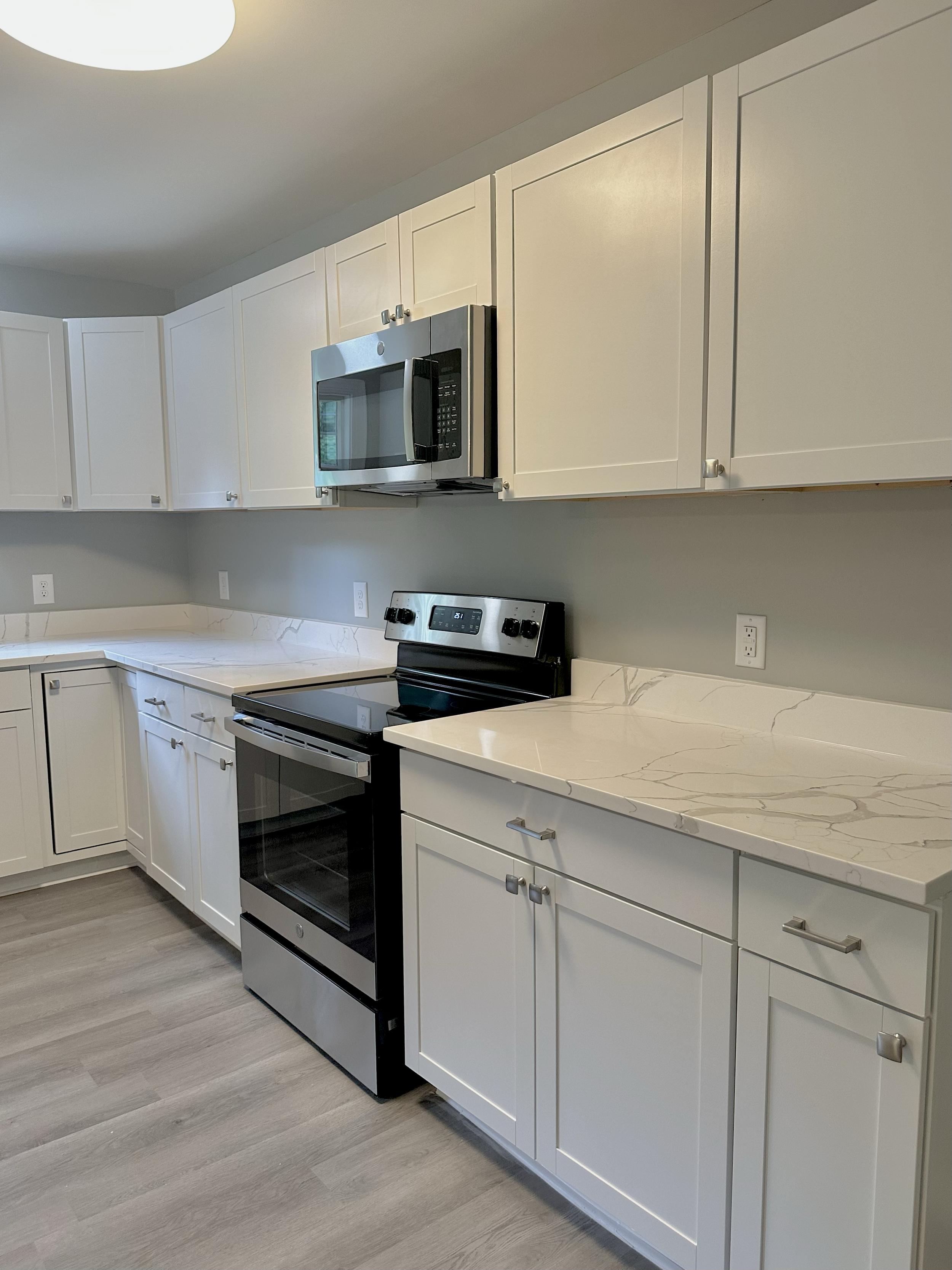
The 60-second sample test
View the pieces vertically and horizontally.
A cabinet door is vertical. A countertop is horizontal. Light strikes them differently. Stand the cabinet sample upright beside the slab, then place the backsplash and flooring samples in their installed orientation. Check the group in daylight and under the room’s evening lighting.
When two whites almost match but do not, the combination can look more accidental than a deliberate contrast. Either match the temperature closely or create enough difference to make the choice obvious.
Step 03 · Let the room vote
The same slab behaves differently in four kitchens.
Low natural light
Prioritize a lighter background or smaller-scale movement if the goal is to open the room. A glossy finish reflects more light; a honed or leathered finish absorbs it.
Large open kitchen
A big island can carry bolder movement. Review the full slab and decide where the strongest vein should land before fabrication.
Warm wood flooring
Use taupe, cream, brown or subtle gold in the countertop to connect white cabinets to the floor. The stone does not need to match the wood; it needs one shared note.
Patterned backsplash
Let one surface lead. If the backsplash has strong pattern, a quieter countertop usually produces a more durable design than two competing focal points.
Five costly design mistakes
Choosing from a phone photo
Screen color, room lighting and editing can change the apparent background and vein color.
Using a four-inch sample for dramatic stone
A sample can show color but not the movement, scale or usable layout of a full natural slab.
Matching white too closely
Near-matching whites can reveal each other’s unwanted yellow, blue or gray cast.
Ignoring the floor
The floor occupies more visual area than the hardware. It should influence the countertop decision early.
Selecting a stone name instead of a slab
Natural-stone bundles vary. Reserve and review the material intended for your project.
From cabinet sample to installed surface
How Sondos Stone helps narrow the choice
Bring a cabinet door, paint sample, flooring sample, room photographs and basic measurements to the Jamestown showroom. The team can help compare available materials, discuss the full-slab layout, plan cutouts and prepare the project for field measurement, fabrication and installation.
- Share the room.Cabinets, flooring, lighting, plans and inspiration.
- Compare real material.Check undertones and movement at useful scale.
- Plan the slab.Decide how veins, seams and focal areas should work.
- Template and fabricate.Confirm final dimensions before cutting.
Questions homeowners ask
White cabinet countertop FAQs
Should the countertop be whiter than the cabinets?
Not automatically. Two similar whites can conflict if their undertones differ. A close temperature match or an intentional contrast is usually safer than a near match.
What color countertop makes a white kitchen feel warmer?
Look for cream, taupe, beige, warm gray, soft brown or restrained gold. Wood accents and warm lighting can reinforce the same direction.
Does dark granite work with white cabinets?
Yes. Black or charcoal granite creates a clear contrast and can make the cabinetry look brighter. Check how much natural light the room receives and repeat the dark tone elsewhere.
Is quartz or quartzite better with white cabinets?
Quartz offers greater pattern consistency and no routine sealing. Quartzite offers natural variation and more individual slab movement. The better choice depends on the desired look, care expectations and exact product.
Should I select the backsplash before the countertop?
Usually select the countertop first, especially when using natural stone. Its pattern is less controllable than tile, paint or hardware, so the other finishes can be chosen around the final slab.
Can Sondos Stone help compare cabinet and stone samples?
Yes. Bring the cabinet finish and other room samples to discuss available granite, quartz, quartzite, marble, porcelain and Dekton options for your project.
Research and verification