

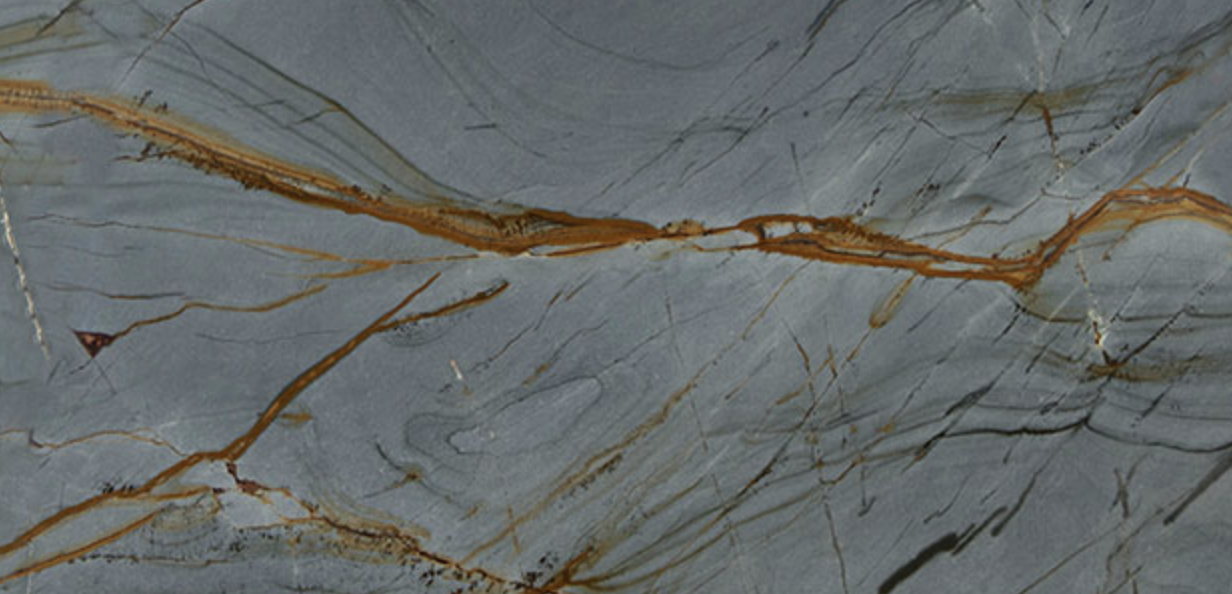
 Actual Blue Roma image from the Sondos Stone website collection
Brazilian natural stone dossier
Blue Roma Quartzite
One of the most dramatic natural countertop stones available: blue-gray movement crossed by warm copper, brown and gold-toned veins. This guide explains what is verified, what varies and what should be planned before fabrication.
Fact-checked · Updated July 19, 2026
Published country of origin
Commercial material classification
General background color family
Every slab must be reviewed
Material identity
What is Blue Roma quartzite?
Direct answer: Blue Roma is a Brazilian natural stone commercially sold as quartzite. It is recognized for a powder-blue to blue-gray foundation crossed by irregular warm brown, copper and gold-colored movement.
Blue Roma is not an engineered blue surface and it is not manufactured to repeat from slab to slab. Its color, movement, vein width, light areas and darker sections are naturally variable.
Several stone suppliers identify Blue Roma as quartzite from Brazil. However, the commercial name does not identify one scientifically documented geologic formation. This page therefore does not invent a quarry, Brazilian state or exact mineral recipe that the available supplier documentation does not establish.
Similar-looking stones may be sold under related trade names. Never assume two bundles are identical because their names or website photographs look similar. Confirm the supplier, slab photographs, finish, thickness and bundle information.
Quartzite geology
How does quartzite form?
Quartzite forms when quartz-rich sandstone is transformed by geologic heat and pressure.
During metamorphism, the original quartz grains and silica cement recrystallize into a more tightly interlocked stone. This quartz-rich structure is responsible for the hardness generally associated with true quartzite.
Quartzite can contain other minerals and natural structures in addition to quartz. These influence color and movement. Without a petrographic report for the selected Blue Roma slab, it would be irresponsible to claim that one specific mineral creates every blue, gold or brown area.
Compare granite and quartzite →Color map
Is it actually blue?
Usually—but not like solid blue paint. Depending on the slab and lighting, the background may read as powder blue, blue-gray, steel, smoky teal or gray with a blue undertone.
Why can two slabs look different?
Natural variation, block location, cut direction, surface finish, lighting and photography can all change the visible color and pattern.
Do not skip this
View every slab needed for the project.
A kitchen requiring two or more slabs needs a coordinated bundle. One attractive slab photograph does not guarantee that every slab in the project will match.
Real-world performance
Is Blue Roma durable enough for a kitchen?
True quartzite is generally hard, heat resistant and suitable for demanding countertop applications. That does not make it maintenance-free or impossible to damage.
Scratch resistance
Quartz-rich natural stone generally performs well against everyday scratching. Use cutting boards to protect the finish, knives and nearby seams.
Heat resistance
Quartzite generally tolerates kitchen heat well. Trivets still help protect the sealer, joints and surface from sudden or prolonged heat exposure.
Stain resistance
Absorption varies. A suitable penetrating sealer and prompt cleanup reduce risk, but no sealer makes natural stone completely stain-proof.
Acid resistance
True quartzite is generally more acid resistant than marble, but trace acid-sensitive minerals or inconsistent commercial classification can affect an individual slab.
Impact resistance
The main vulnerable locations are exposed edges, corners, sink openings and unsupported areas. Hard stone can still chip under a concentrated impact.
Ask about testing a representative area of the actual slab when absorption or acid sensitivity is a major concern. Generic claims about every quartzite are not enough.
Layout inspiration
Dramatic stone needs breathing room.
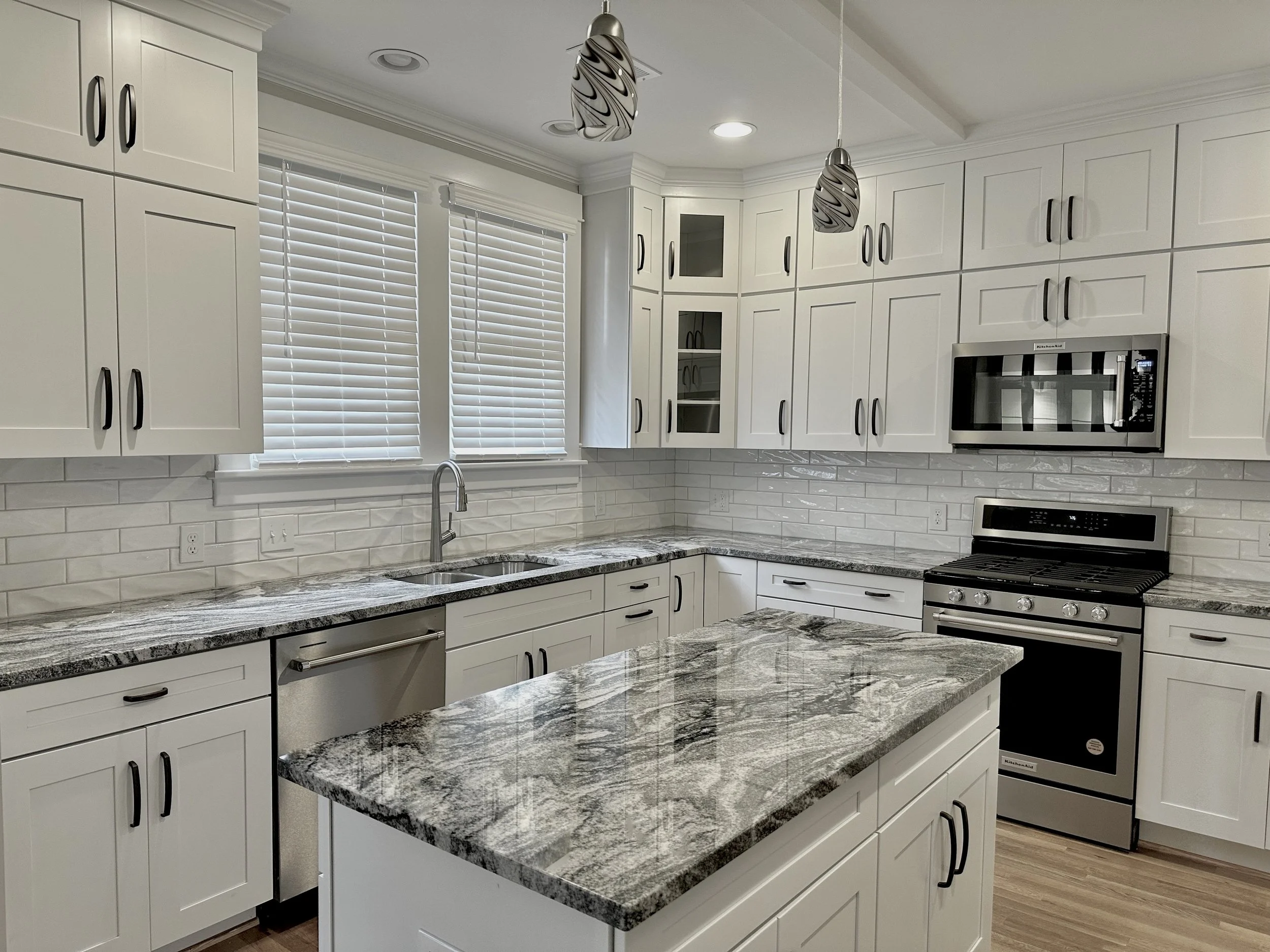
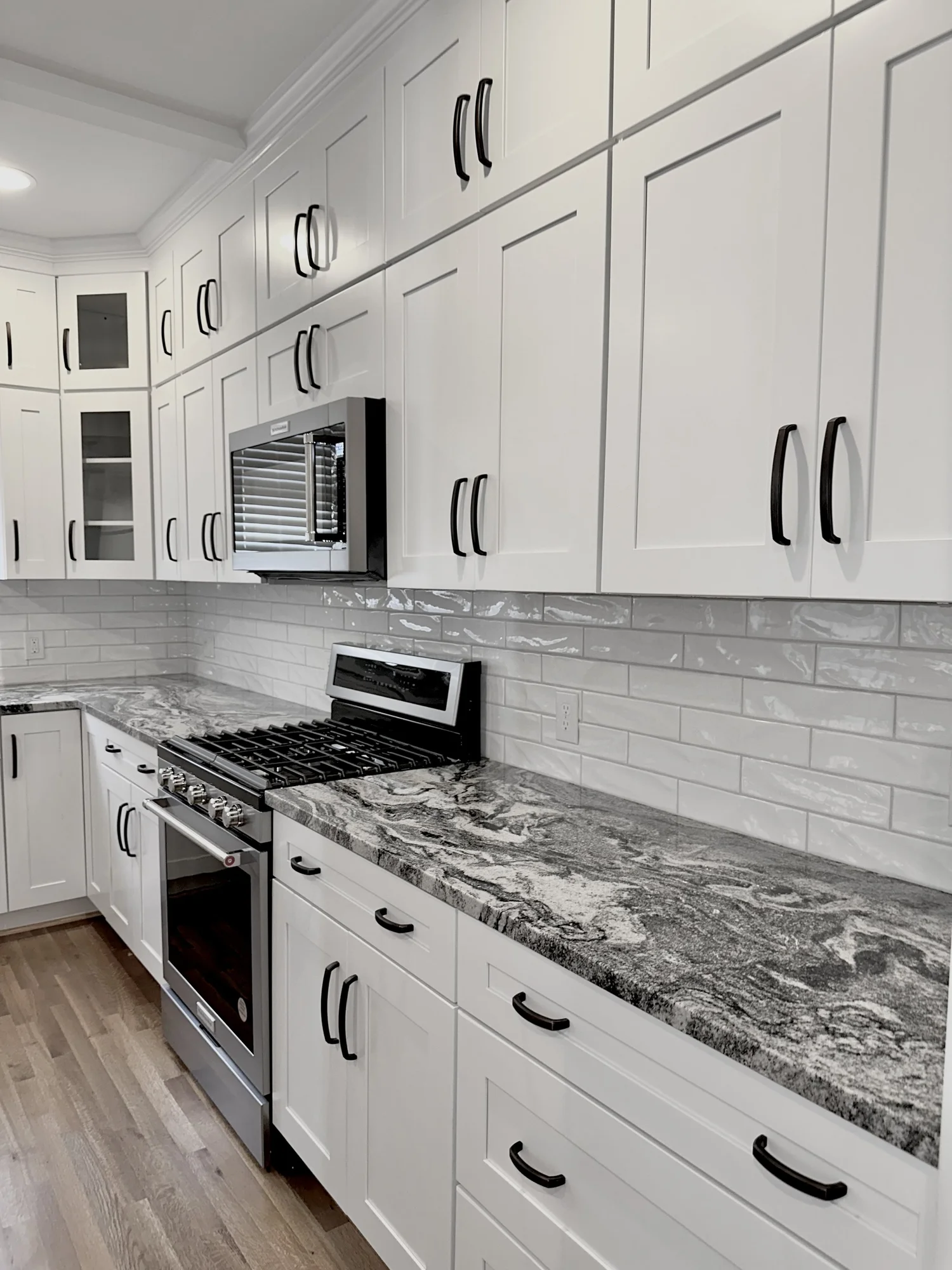
These are completed Sondos Stone projects showing how large-scale movement behaves across real countertops. The installed material is not represented as Blue Roma. The images are included for composition, scale and fabrication inspiration.
Fabrication blueprint
Plan Blue Roma before the first cut.
With a directional, high-contrast stone, layout decisions can matter as much as the slab selection itself.
Map the focal area
Decide whether the strongest blue and gold movement belongs on the island, range wall, perimeter or another feature.
Check slab dimensions
Compare the island and countertop measurements with the usable area of the slabs—not only their listed overall dimensions.
Review natural features
Identify fissures, crystal zones, repaired areas, color shifts and other features that may affect placement.
Discuss seams
Seam locations depend on slab size, pattern, cabinets, sink position, access, transportation and safe handling.
Plan waterfall ends
Vein continuity requires careful positioning and enough usable slab area. A perfect continuous match should not be assumed.
Approve the layout
Review the intended orientation and major cut locations before a dramatic natural stone enters production.
Design lab
What works with Blue Roma?
Blue Roma is usually the visual lead. Cabinets, flooring, backsplash and hardware should support it instead of competing with every vein.
Warm white
Opens the room while allowing the blue-gray areas and warm veins to remain the focal point.
White oak
Adds natural warmth that can connect with the brown and gold-colored movement in the slab.
Black or charcoal
Creates a dramatic result, especially when the kitchen has enough daylight and layered artificial lighting.
Natural walnut
Produces a richer palette. Compare samples carefully so the wood does not make the slab’s warm areas feel overly busy.
Brass, bronze or black
Warm metals can connect with gold-colored movement. Matte black provides contrast without introducing another color family.
Quiet—or full-height slab
Choose a restrained tile, or continue a carefully selected slab section vertically for a stronger feature.
Bring cabinet, flooring, paint and hardware samples to the actual slabs. Phone screens cannot reliably show the undertone.
Care without bad internet advice
How do you clean Blue Roma quartzite?
Use a soft cloth with warm water and mild dish soap or a pH-neutral stone cleaner. Wipe spills promptly and avoid harsh, acidic or abrasive products.
Clean gently
- Blot spills instead of spreading them.
- Use a soft cloth or nonabrasive sponge.
- Clean with mild soap or stone cleaner.
- Dry the surface to reduce streaking.
Use simple barriers
- Use cutting boards during preparation.
- Place trivets under hot cookware.
- Use coasters under staining liquids.
- Protect exposed edges from hard impacts.
Skip harsh products
- Vinegar and lemon-based cleaners
- Abrasive powders and scrub pads
- Unverified chemical mixtures
- Standing on unsupported counters
Sealing
Does Blue Roma need to be sealed?
Many natural quartzite countertops benefit from a penetrating sealer, but absorption varies. The correct product and reapplication timing depend on the selected slab, finish, original sealer and use.
Do not reseal automatically because a fixed number of months has passed. Evaluate how the existing sealer is performing and follow the sealer manufacturer’s instructions.
Project price
How much does Blue Roma quartzite cost?
Blue Roma is generally positioned as a premium exotic natural stone, but there is no honest universal installed price.
Current inventory, slab size, thickness, finish, number of slabs, layout, cutouts, seams, edge work, backsplash, waterfall panels, removal and installation conditions can all change the total.
Dramatic slabs can also require additional material to achieve a preferred layout. A quote should identify the complete scope rather than advertise one isolated square-foot number.
Greensboro and the NC Triad
Local Blue Roma countertop planning
Sondos Stone coordinates countertop selection, final templating, custom fabrication and installation for residential and commercial projects throughout the North Carolina Triad.
Blue Roma availability can change by supplier and bundle. Contact the team before designing an entire project around one online slab photograph.
Discuss Your ProjectCheck inventory
Confirm the available slabs, finish and thickness.
Estimate the scope
Share measurements, cabinet plans and project details.
Complete the template
Verify the final field dimensions and fabrication information.
Review layout
Discuss seams, movement, cutouts and focal areas.
Fabricate and install
Complete the custom pieces for the confirmed project.
Quick answers
Blue Roma quartzite FAQs
Where does Blue Roma quartzite come from?
Multiple stone suppliers identify Blue Roma as originating in Brazil. This guide does not claim an exact quarry or geologic formation without supporting quarry documentation.
Is Blue Roma a real quartzite?
Blue Roma is commercially sold as Brazilian quartzite. Because trade classifications can vary, confirm the documentation and performance characteristics of the exact slabs being purchased.
Is Blue Roma naturally blue?
Yes. Its background commonly appears powder blue, blue-gray, steel or smoky teal. Lighting, finish, photography and natural slab variation affect how blue it looks.
Is Blue Roma good for kitchen countertops?
Blue Roma can be suitable for kitchen countertops when the selected slabs, support, fabrication, sealing and care requirements are properly reviewed.
Does Blue Roma need sealing?
It may benefit from a penetrating natural-stone sealer. Absorption and resealing frequency vary by slab, finish, product and use, so follow project-specific recommendations.
Can Blue Roma stain or etch?
Natural quartzite can absorb staining liquids. True quartzite is generally acid resistant, but individual slabs can contain acid-sensitive minerals or be commercially classified inconsistently. Avoid acidic cleaners and wipe spills promptly.
Which cabinets look good with Blue Roma?
Warm white, white oak, natural walnut, charcoal and black are common starting points. Compare physical cabinet samples with the complete slabs before making the final decision.
Can Blue Roma be bookmatched?
A bookmatched effect may be possible when compatible sequential slabs and the correct cut orientation are available. It should not be promised before the actual slabs and layout are reviewed.
Can Blue Roma be used outdoors?
Quartzite may work in certain exterior applications, but the exact slab, finish, sealer, support, climate exposure and project specifications must be evaluated before fabrication.
Factual references
Research sources
- ARC Surfaces — Blue Roma Brazilian origin, commercial classification and general color description.
- MSI Surfaces — Quartzite Countertops General quartzite formation and metamorphic geology.
- Natural Stone Institute — Stone Care Cleaning, non-acidic product and natural-stone care guidance.
- Natural Stone Institute — Stone Definitions Scientific and commercial stone-classification distinctions.
See the complete slabs
Considering Blue Roma?
Confirm current availability, compare the full slabs and plan the layout before building the entire room around one photograph.