

Natural stone guide · Greensboro & the NC Triad
Cristallo Quartzite Countertops: What to Know Before Choosing a Slab
Cristallo is a Brazilian quartzite known for crystalline white movement, gray veining, warm mineral flecks and naturally translucent areas. This guide explains the stone, realistic backlighting, slab layout, care, cost and local fabrication before you approve a project.

The short version
What is Cristallo quartzite?
Cristallo is a natural quartzite sourced from Brazil and valued for a cool-white crystalline body that may transmit light through portions of the slab. MSI lists gray veins, orange flecking, polished, honed and brushed finishes, and both 2 cm and 3 cm slab options.
It is not engineered quartz, a glass panel or a uniformly translucent sheet. One section may glow strongly while another remains opaque. Gray veins, rust-colored minerals, filled areas, fissures, reinforcement and changes in crystal density can all become more visible when light is placed behind the slab.
Cristallo can become a memorable kitchen island, bar, vanity, backsplash or feature panel. It also requires more planning than a quiet repeating surface. The exact slab, cutout locations, seam plan, support and—in a backlit design—the entire lighting assembly should be reviewed before fabrication.
Country of origin
Brazil, according to MSI's Cristallo product specification
Material family
Natural quartzite—not manufactured quartz and not white onyx
Known for
Crystalline movement with areas of natural translucency
Best advice
Test the actual slab and approve the full layout before cutting
02 / Origin and stone identity
Brazilian quartzite with a crystal-forward structure.
Quartzite forms when quartz-rich sandstone is changed by heat and pressure. The original grains recrystallize into an interlocking metamorphic rock. Cristallo's visual identity comes from the scale and arrangement of those quartz-rich crystalline areas together with contrasting mineral veins and inclusions.
MSI identifies its Cristallo Quartzite as sourced from Brazil, with a cool-white background, gray veining and orange flecking. The supplier lists polished, honed and brushed finishes and notes that the material is naturally translucent. Those details describe the product family; they do not guarantee that every slab has the same distribution of white crystal, gray lines or warm color.
Natural blocks are extracted with their original mineral variation intact.
Blocks are sawn, finished, inspected and prepared for distribution.
The actual material is reviewed for color, light transmission and usable layout.
Pieces are templated, cut, finished and installed for the specific room.
03 / Every slab behaves differently
Read Cristallo at full scale.
A small sample may prove that the stone is white and crystalline. It cannot show whether the island will contain one broad clear field, several opaque bands, warm mineral flecks or a vein that changes direction across the slab.
Crystal-rich fields
These may transmit more light and can become the visual center of an island, wall or bar.
Gray mineral movement
Veins create direction. Their placement near seams, edges and cutouts needs deliberate planning.
Warm flecks or oxidation
Orange, rust or amber details can be natural. Decide whether they connect to the room's wood and metal tones.
Opaque areas
Not every section glows. Opaque formations become part of the composition when the slab is backlit.
Do not buy Cristallo from a close-up photograph alone. Ask for straight-on images of every assigned slab, dimensions and a layout conversation before fabrication.
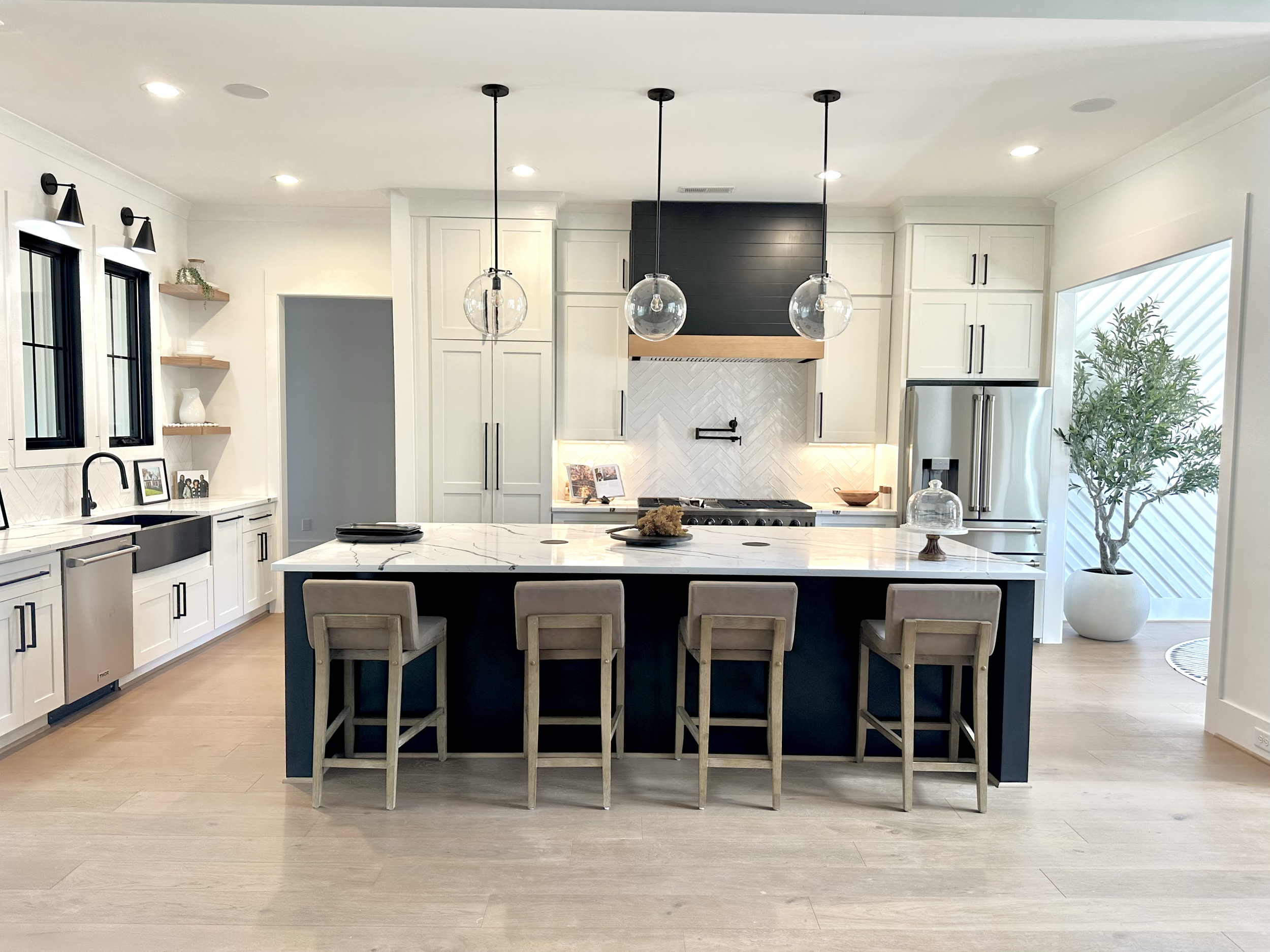
04 / The cut plan
Protect the feature that justified the slab.
A sink, cooktop or seam can remove or divide the exact crystal field that made a homeowner choose Cristallo. Start the layout with the largest visual surface, then fit the supporting pieces around it.
- Reserve and photograph each slab.Natural bundles and individual pieces vary.
- Place the island or feature first.Give the most important formation the most visible location.
- Position cutouts deliberately.Do not let the sink erase the best area by accident.
- Coordinate seams and waterfalls.Review direction, color and crystal density across transitions.
- Confirm support.Cutouts, overhangs and translucent panels require an installation-specific plan.
05 / Natural translucency
Backlighting is a custom system—not a countertop add-on.
MSI describes Cristallo as naturally translucent. That does not mean a finished slab will glow evenly when LEDs are placed underneath. Light transmission changes with thickness, mineral zones, finish, support, distance from the light source and the diffuser.
A successful installation coordinates the stone fabricator, cabinet or metal-frame builder, electrician and lighting specialist before any piece is cut. A representative mockup should use the actual slab and the proposed lighting components.
Map the slab
Photograph it with and without light behind it. Identify clear, veined, warm and opaque zones.
Build a mockup
Test LED spacing, color temperature, distance and diffusion with the real thickness and finish.
Engineer support
The light field cannot replace structure. Frames and support must protect the stone while limiting shadows.
Plan service access
Drivers, wiring and light modules should be repairable without destroying cabinetry or finished stone.
Control heat
Lighting equipment and nearby appliances need appropriate clearance, ventilation and manufacturer-compliant detailing.
Expect silhouettes
Adhesive, seams, support members, veins and cutouts may affect the illuminated appearance.
06 / Where Cristallo works best
Choose the application before choosing the effect.
Large focal surface
Best when the room can give the slab visual space and the cutout plan preserves the main crystal field.
Controlled feature area
A bar front or top may be easier to mock up and service than a heavily used cooking island.
Vertical stone artwork
Outlet placement, seams and cabinet shadows should be included in the slab layout.
Smaller luxury statement
A vanity can use a distinctive section efficiently, though cutouts and cosmetics still influence care.
Architectural installation
Heat clearances, substrate and attachment require project-specific design and code compliance.
07 / Cabinet and finish pairings
Let the crystal lead. Keep the room disciplined.
Cristallo already contains movement, reflection and mineral color. Choose supporting finishes from the actual slab rather than adding another unrelated pattern.
Soft white
Creates a bright, quiet envelope. Compare cabinet undertones directly to the slab's white field.
Pale oak
Adds warmth and connects to orange or amber mineral details without competing with gray veins.
Charcoal
Frames the light stone and creates a more architectural contrast for an island or bar.
Brushed metal
Nickel or stainless finishes can repeat cool gray movement; restrained brass can pick up warmer flecks.
Four rules that prevent an expensive room from looking busy
01 Choose a quiet backsplash when the countertop is the focal point.
02 Repeat one warm or cool mineral tone instead of matching every color.
03 Test the slab under the room's daylight and evening lighting.
04 Keep large-pattern flooring away from a highly active slab.
08 / Compare the intention
Cristallo vs. other light countertop directions
| Surface | What it offers | Variation | Translucency | Care direction |
|---|---|---|---|---|
| Cristallo quartzite | Crystal-forward natural focal stone | High; approve the slab | Natural areas may transmit light | Natural-stone care; sealing may be advised |
| Mont Blanc quartzite | Softer white, gray and taupe movement | Natural slab variation | Not usually selected primarily for glow | Natural-stone care; verify exact slab |
| White onyx | Dramatic light transmission and banding | High natural variation | Often selected for backlit features | Softer, acid-sensitive and more specialized |
| Marble-look quartz | More controlled pattern and lower maintenance | More consistent by design | Generally opaque | No routine sealing; protect from high heat |
Commercial stone names and performance can vary by supplier. Compare documentation and the exact material offered for the project.
09 / Performance and care
Strong natural stone still needs informed use.
The word quartzite is not permission to abuse a finished countertop. Protect the slab, edge work, seams, resin-filled areas and surrounding installation.
Use a trivet
Natural stone can tolerate heat, but the Natural Stone Institute recommends trivets or mats. Rapid temperature change, resins and adjacent materials remain part of the installed surface.
Use a cutting board
Quartzite is generally hard, yet metal marks, softer mineral zones and damage to knives are still reasons not to cut directly on the countertop.
Blot quickly
Ask whether the exact slab and finish should be sealed. An impregnating sealer increases stain resistance; it does not make stone stain-proof.
Keep it neutral
Use neutral stone cleaner or mild dish soap with warm water and a soft cloth. Avoid harsh acids, hydrofluoric acid products and abrasive powders.
Protect edges and cutouts
Avoid heavy blows near sinks, cooktops and exposed corners. Openings and edges concentrate stress even in strong stone.
Review before cutting
Fissures, pits, resin-filled areas, mesh backing and mineral changes should be identified and discussed on the actual slab.
10 / Fabrication changes the result
A rare slab can still be ruined by an ordinary layout.
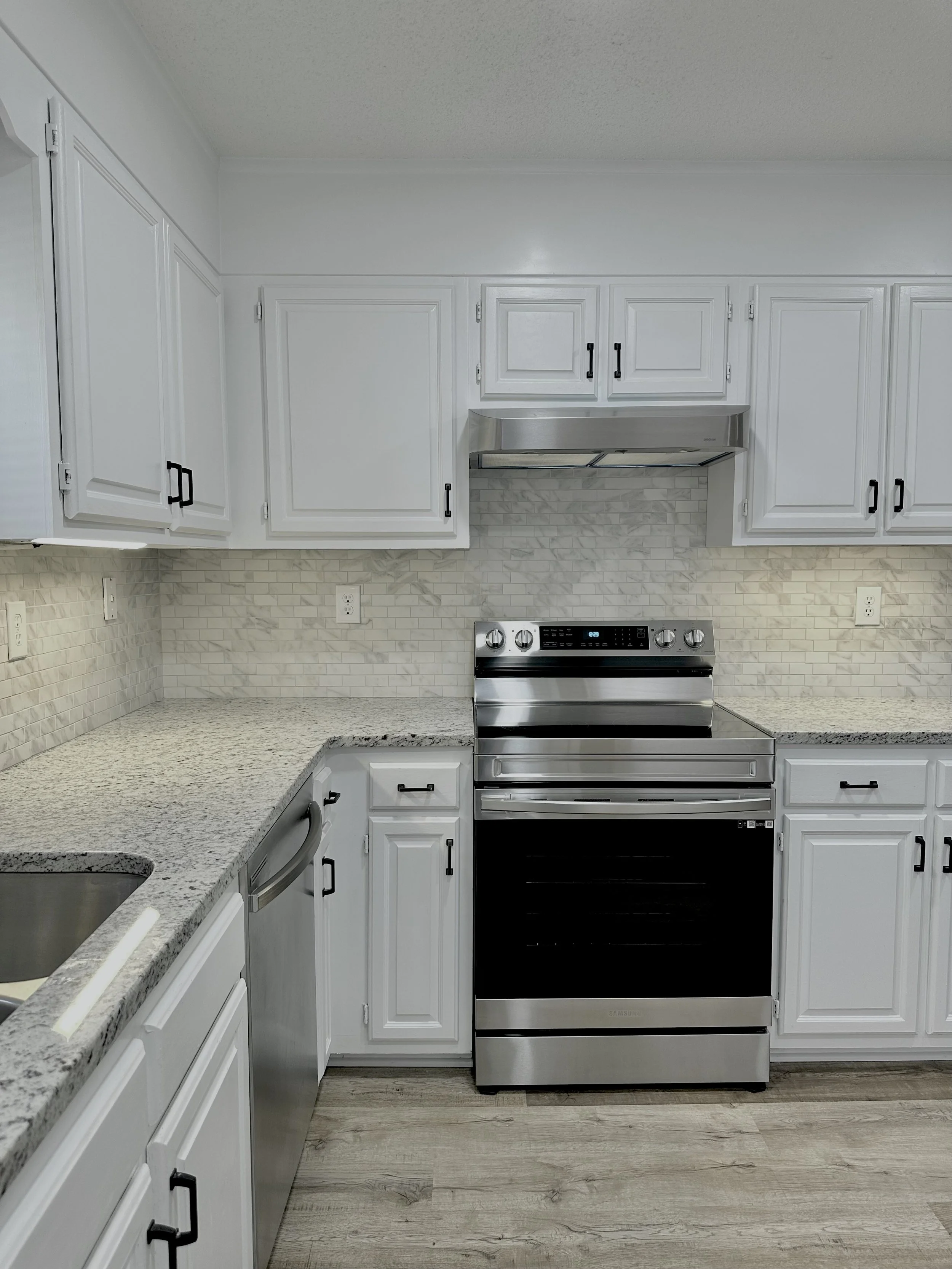
Field measurement, slab photography, digital piece placement, cutout reinforcement, edge finishing, seam planning and careful installation all matter. For backlit work, the lighting and support design must be coordinated before stone fabrication begins.
Real Sondos Stone project shown for craftsmanship and fabrication inspiration; the pictured stone is not identified as Cristallo.
11 / Project cost
What changes the price of Cristallo countertops?
Cristallo is generally treated as a premium natural-stone selection. The installed price depends on current slab availability, grade, thickness, finish, number of slabs, usable yield, pattern placement, edge work, cutouts, backsplash, waterfalls, removal, site access and installation complexity.
A dramatic section may force the layout to use more material than the finished square footage suggests. If the design is backlit, add the separate cost of mockups, structural framing, diffusers, LEDs, drivers, wiring, electrical work, ventilation and service access.
Compare written scope, not only a square-foot rate. Confirm whether the quote includes final measurement, slab layout, fabrication, delivery, installation and the exact custom details shown in the design.
Start an installed countertop estimate →12 / Before you reserve the slab
The Cristallo approval checklist
Is the material documented as Cristallo quartzite, and who supplied it?
Have you viewed straight-on photographs and the actual slabs in person?
Which zones are translucent, veined, warm, opaque, filled or reinforced?
Where will the island, sink, cooktop, seams, waterfall and backsplash land?
Does the finish change the appearance or light diffusion?
Has the project allowed enough material for the preferred layout?
If backlit, has a real mockup been approved by the full project team?
Can lighting components be ventilated, serviced and replaced later?
Are sealing and daily-care instructions documented for the exact finish?
Does the written quote include every fabrication and installation detail?
13 / Local fabrication and installation
Cristallo quartzite countertops across the NC Triad
Sondos Stone helps homeowners, builders, cabinet companies, designers and commercial teams coordinate countertop projects from its Jamestown location. The team provides field measurement, custom fabrication and professional installation for Greensboro, High Point, Winston-Salem, Jamestown, Kernersville, Burlington, Lexington, Thomasville, Asheboro, Archdale, Trinity and surrounding North Carolina communities.
Because exotic natural-stone inventory changes, contact the team to confirm current Cristallo availability and compare the actual slabs before planning the room around a supplier photograph.
14 / Frequently asked questions
Cristallo quartzite FAQs
Direct answers for homeowners comparing the stone, layout, lighting and care.
Where does Cristallo quartzite come from?
MSI identifies its Cristallo Quartzite as sourced from Brazil. Always confirm the documentation attached to the exact slab being offered.
Is Cristallo really translucent?
Yes, portions can be naturally translucent. The amount of transmitted light changes across the slab because crystal density, veins, minerals, thickness and finish vary.
Can every Cristallo countertop be backlit?
No. Backlighting requires the right slab, support system, lighting layout, diffusion, cutout plan, heat management and service access. Test a representative mockup before fabrication.
Is Cristallo the same as engineered quartz?
No. Cristallo is natural quartzite cut from quarried stone. Engineered quartz is a manufactured surface made with mineral content, binders and pigments.
Does Cristallo need sealing?
It may. Follow the supplier and sealer manufacturer's recommendation for the exact slab and finish. Sealing improves stain resistance but does not make stone stain-proof.
Is Cristallo good for kitchen countertops?
It can be when the exact slab is properly selected, laid out, fabricated, supported and maintained. Homeowners should accept natural variation and protect edges and cutouts from impact.
What cabinets pair with Cristallo?
Soft white, pale oak, walnut and charcoal can all work. Use the actual slab's white temperature, gray veins and warm flecks to choose the cabinet and hardware direction.
Why can Cristallo projects cost more?
The material is premium, and dramatic layout may reduce usable yield. Backlighting adds a separate custom scope for mockups, framing, lighting, electrical coordination and service access.
Research and verification
Sources used for this guide
- MSI — Cristallo Quartzite origin, appearance, translucency, finishes and slab thicknesses
- Natural Stone Institute — stone classification, cleaning, heat protection and sealing guidance
- Natural Stone Institute — seam placement, sink cutouts, overhangs, joint widths and tolerances
- Sondos Stone — live quartzite collection including Cristallo
Stone names are commercial labels, and natural slabs vary. Supplier information should be matched to the exact material reserved for the project.