

Surface study · finish changes the stone
Greensboro · High Point · Winston-SalemHoned vs. Leathered vs. Polished Countertops
Finish is not a small cosmetic choice. It changes reflection, color depth, texture, cleaning and the way fingerprints or oils appear.
Fast verdict
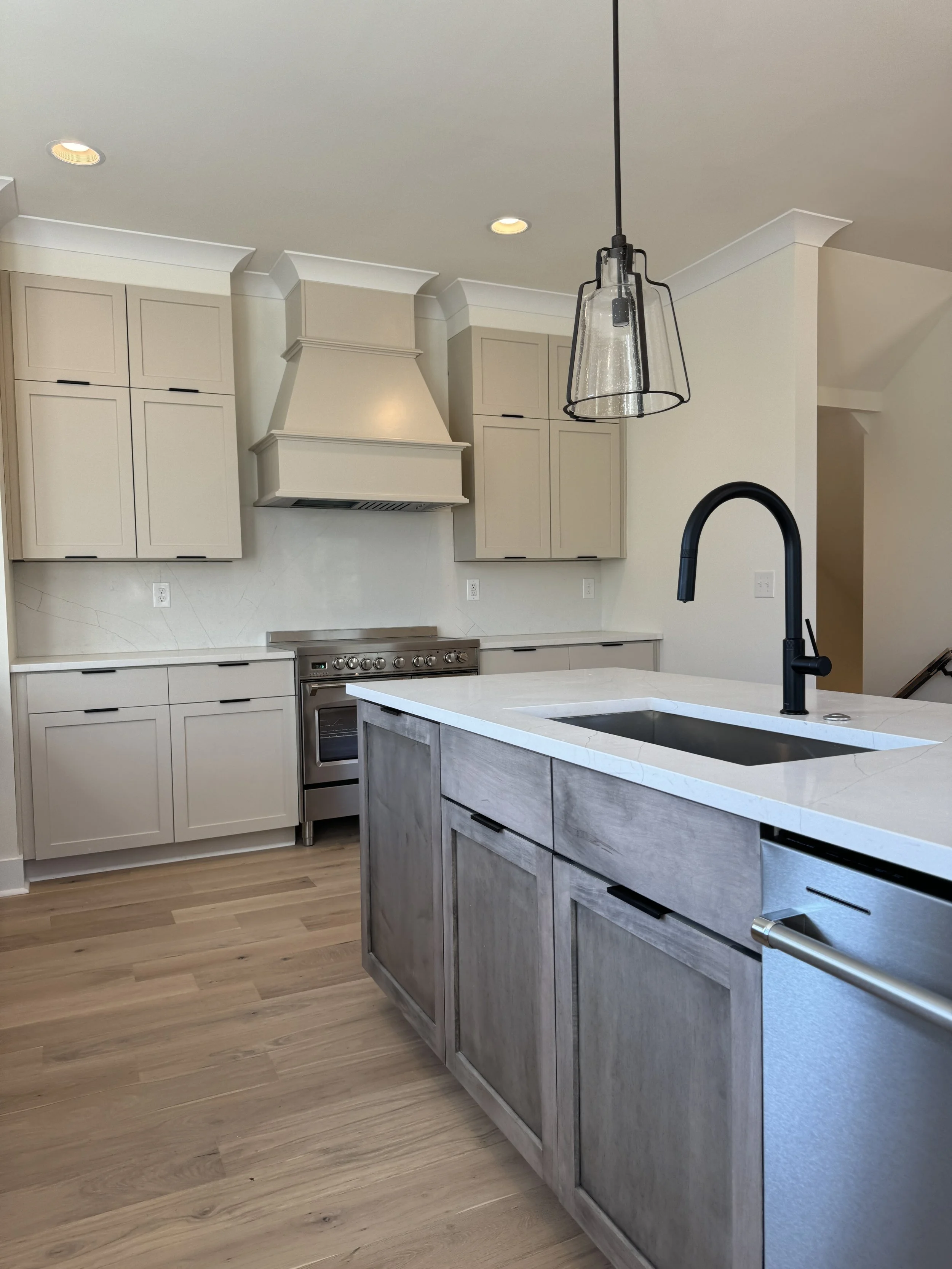
Polished shows the deepest color. Honed feels quieter. Leathered adds touch and shadow.
None is automatically best. The right finish depends on the material, color, room lighting, cleaning expectations and whether you want the countertop to reflect light or absorb it.
The finish laboratory
Three surfaces, seven real differences
Scores below are practical tendencies, not guarantees. A black granite and a white quartzite will not react identically to the same finish.
Polished
Light travels across the surface.
Polishing creates the familiar reflective finish seen on many granite, marble and quartzite slabs. It generally deepens color and makes crystals, veining and contrast easier to read. In a darker kitchen, that reflection can help move light through the room.
A polished surface is typically smooth and easy to wipe. On very dark or consistent stone, however, fingerprints, dust and streaks may be more visible because the reflection exposes them.
Choose polished when
- You want maximum color depth and visual clarity.
- The room benefits from reflected light.
- You prefer a smooth, familiar countertop surface.
Honed
Reflection drops and the pattern relaxes.
Honing leaves a smooth, lower-sheen surface. White and gray stones can feel softer and less formal; dark stones may look lighter or chalkier than their polished versions. That quiet appearance works well in rooms with natural wood, plaster-like walls and restrained hardware.
Matte does not mean maintenance-free. Oils and handling marks can become noticeable on dark honed stone, especially near the cooktop and sink. Sealing and care depend on the exact material.
Choose honed when
- You want a calm surface without strong glare.
- The design is soft, modern or old-world.
- You accept that matte dark stone can show handling marks.
Leathered
Texture becomes part of the design.
Leathering brushes the surface to create a tactile, lower-sheen finish whose relief follows the stone’s mineral structure. The amount of texture varies. Some leathered slabs feel subtle; others have noticeable peaks and valleys.
Leathering is especially popular on dark granite because it can reduce mirror-like reflection while keeping the surface visually rich. A textured finish may disguise fingerprints, but residue can require more careful wiping than on a smooth polish.
Choose leathered when
- You want the countertop to feel natural and tactile.
- You like lower glare without a flat honed appearance.
- You can inspect and touch the actual finished slab.
The part most samples hide
Finish changes the edge too.
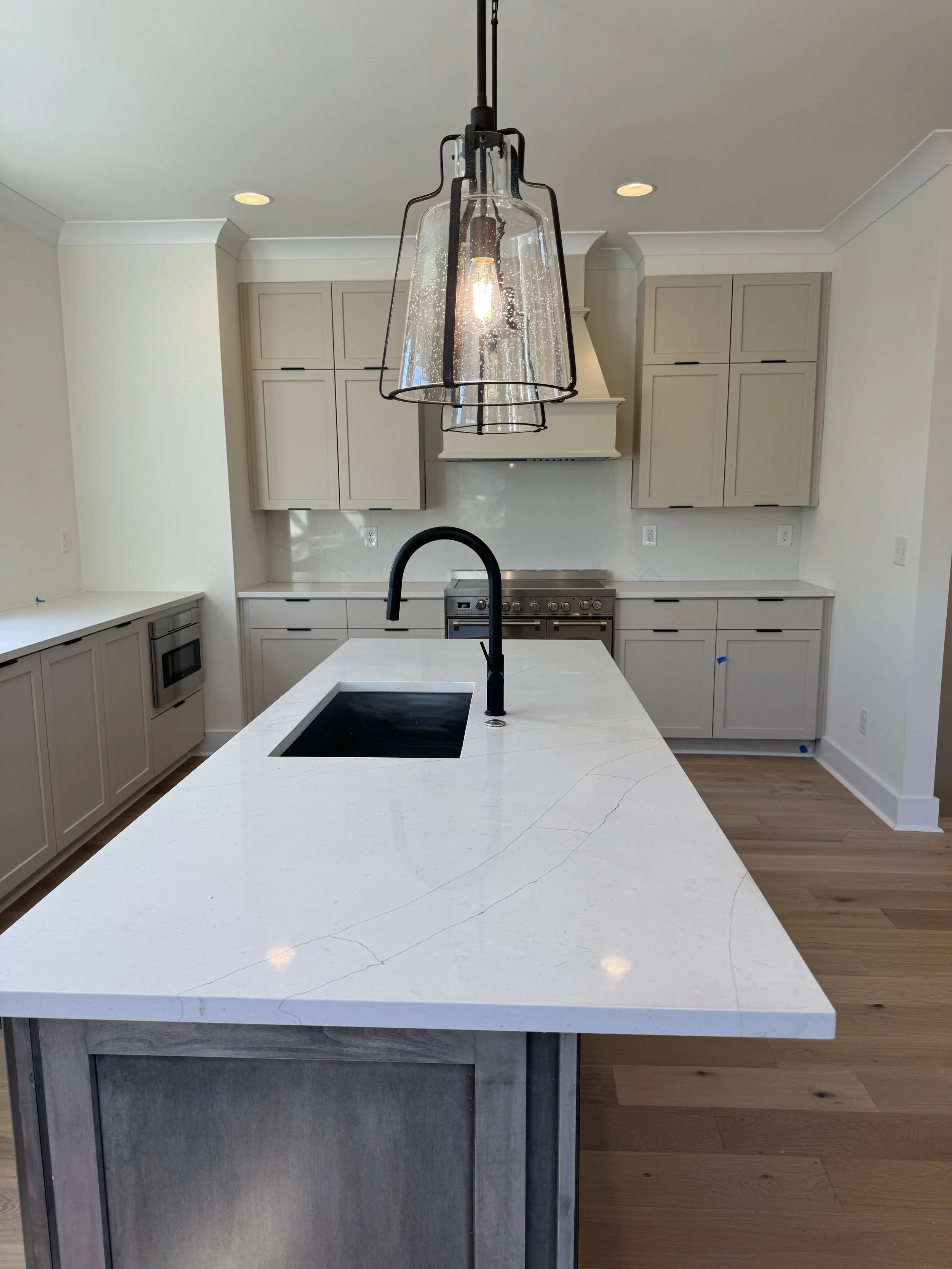
A leathered top with a polished edge may show a visible difference in sheen. A honed face can make a detailed edge feel softer. Ask how the exposed edge, sink cutout and any waterfall panel will be finished—not only the main surface.
Also inspect factory-filled areas, natural pits and resin treatment. Arizona Tile notes that resin may be applied during finishing to fill natural pits, cracks or fissures in certain quartzites. The treatment can be normal, but it should still be understood before the slab is cut.
Material-by-material reality
The same finish does not behave the same on every stone.
Granite
Polished granite emphasizes crystals and color. Leathered granite can create strong depth with less glare. Honed dark granite may show oils or fingerprints more readily.
Browse granite →Quartzite
Polish often shows crystalline movement clearly. Satin, brushed and honed options depend on the supplier. Verify how resin-filled areas and natural texture read under the chosen finish.
Browse quartzite →Marble or dolomitic stone
Honing can make etching less visually obvious than a high polish, but it does not stop acid reaction. Care must match the stone’s calcium-carbonate content.
Browse marble →Engineered surfaces
Quartz, porcelain and Dekton finishes are manufacturer-specific. Use the brand’s approved finish names, care instructions and application limits.
Browse Dekton →Care rules that survive every trend
Clean according to composition, not appearance.
The Natural Stone Institute recommends neutral cleaner, stone soap or mild dishwashing detergent with warm water for normal natural-stone cleaning. Acidic cleaners are especially risky on calcareous stones, and abrasives may scratch certain finishes.
Sealer is a stain repellent—not a plastic shield. Some stones may not need it. Ask the supplier or sealer manufacturer what is appropriate for the exact stone and finish.
Frequently asked
Countertop finish FAQs
Which finish is easiest to clean?
A smooth polished surface is often the simplest to wipe, but performance depends on material and color. Leathered texture may need more attention, while dark honed stone can show oils.
Does leathered granite need sealing?
It may. Sealing needs depend on the exact stone, porosity, finish and sealer instructions. A sealer improves stain resistance but does not make the surface stain-proof.
Is honed stone more durable?
Honing changes sheen, not the underlying rock. It may make certain marks less visible, while other marks such as oil handling can become more noticeable.
Can any slab be leathered?
No. Finish availability depends on material, supplier, equipment, slab condition and desired result. Confirm before purchasing the slab.
Can the countertop top and edge have different finishes?
Yes, but the difference can be visible. Discuss the top, edge, sink cutout and vertical panels as one finish package.
Sources