

Stone file No. 017
Sea Pearl
Quartzite
Countertops
A fact-checked guide to Sea Pearl’s Brazilian origin, quartzite geology, silver-gray movement, slab variation, care, fabrication and kitchen design for Greensboro and the North Carolina Triad.
Sea Pearl is a commercial stone name. Review the actual slabs, supplier documentation and fabrication requirements before making a final material decision.
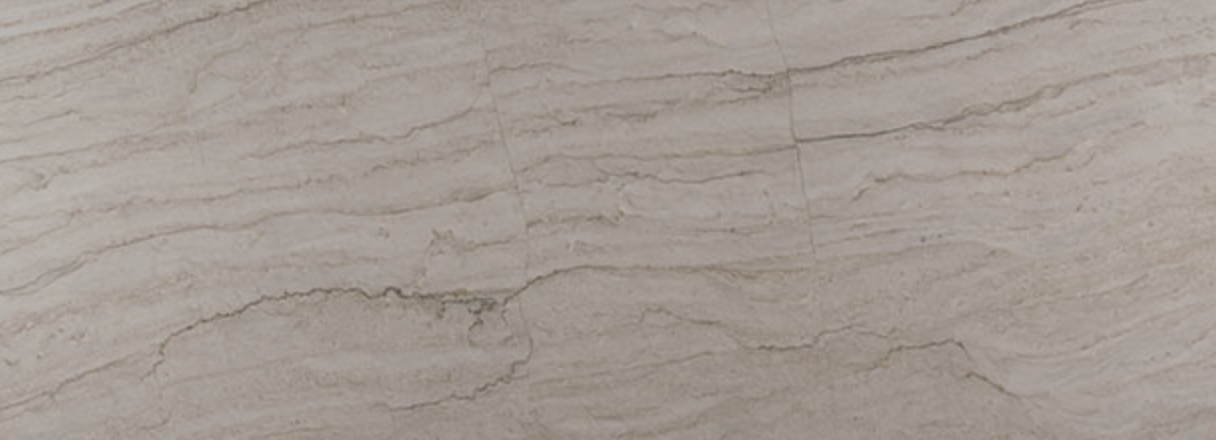
Confirmed by MSI’s Sea Pearl product information.
A metamorphic stone formed from quartz-rich sandstone.
Expect flowing variation—not manufactured consistency.
Small samples cannot show the scale of the movement.
Identity and origin
What is Sea Pearl quartzite?
Short answer: Sea Pearl is a commercial name for a Brazilian natural stone sold as quartzite. It usually combines white, silver, dove-gray and charcoal movement in broad, flowing layers.
MSI identifies Sea Pearl as a quartzite imported from Brazil. Its published description refers to gray tones ranging from frost to charcoal, with veins and areas of contrasting movement. This description is useful for identifying the general design family, but it does not mean every available slab will look alike.
“Sea Pearl” is a trade name rather than the name of one scientifically mapped rock unit. Natural-stone names may be used differently by separate quarries, exporters or distributors. Homeowners should therefore compare the actual slabs being offered, not rely only on a digital photograph or product name.
How does quartzite form?
Geologic quartzite begins as quartz-rich sandstone. Heat and pressure cause the original quartz grains and silica cement to recrystallize into a tighter, interlocking structure. That metamorphic process is responsible for the hardness commonly associated with true quartzite.
The scientific classification of an individual slab cannot be proved from appearance or a commercial name alone. Mineral composition, structure and testing matter. For that reason, Sondos Stone recommends confirming the supplier’s classification and discussing the exact slab before fabrication.
Color and movement
What does Sea Pearl quartzite look like?
Sea Pearl usually has a light white-to-gray foundation with layered silver, charcoal and soft neutral movement. Some slabs appear quiet and linear; others have wider waves, stronger contrast or darker mineral areas.
Sea Pearl is not a uniform gray countertop. Its appeal comes from natural transitions across the slab. A small sample may show only a pale gray section while the full slab contains much darker movement several feet away.
Why online pictures are not enough
Screen brightness, photography, warehouse lighting and image editing can all change the apparent undertone. Cabinet samples, flooring and hardware should be compared with the actual slab whenever possible.
Review the slab both from several feet away and at close range. The distant view reveals the overall direction of the pattern. The close view reveals crystal structure, small mineral changes, fissures and finish quality.
Real Sondos Stone work
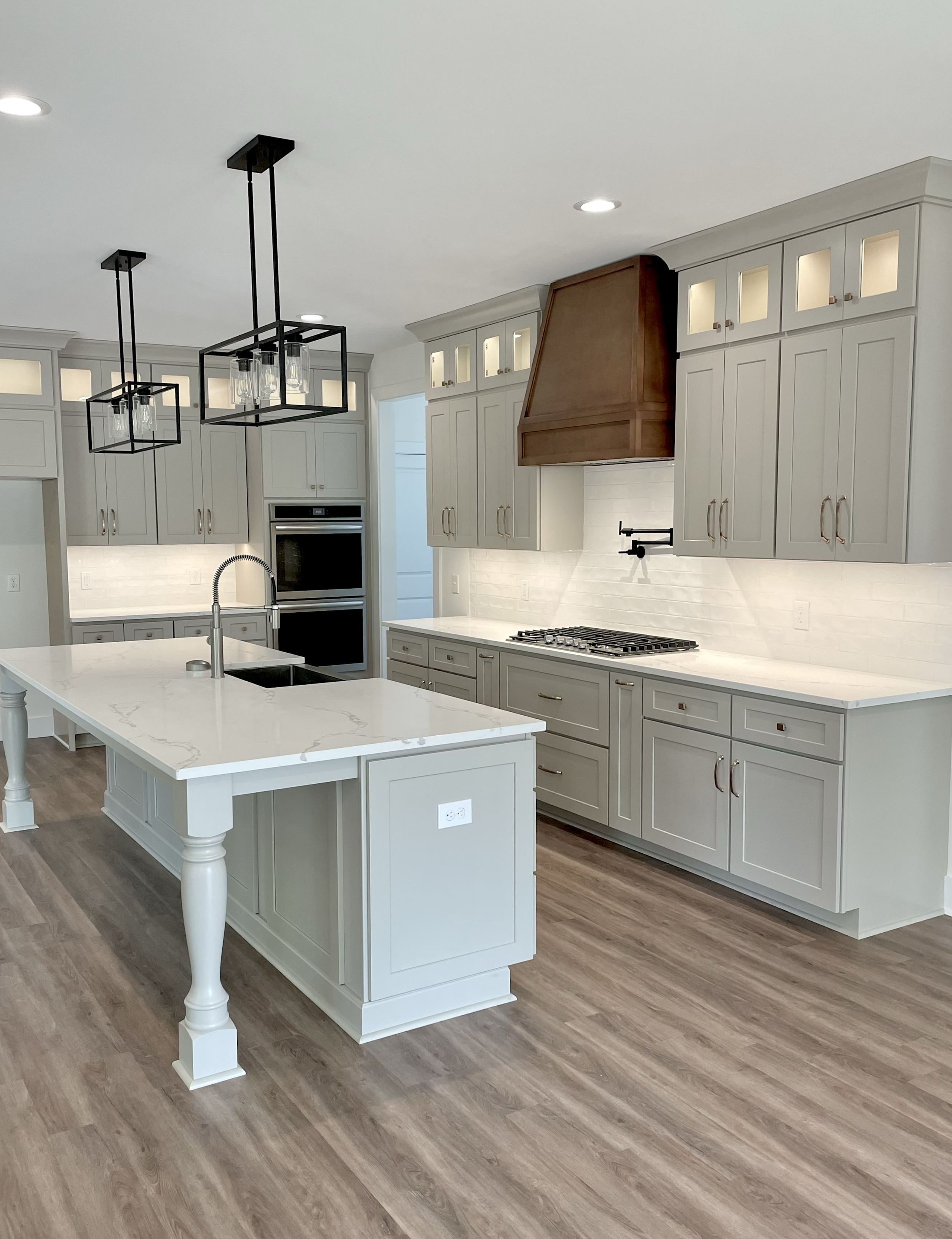
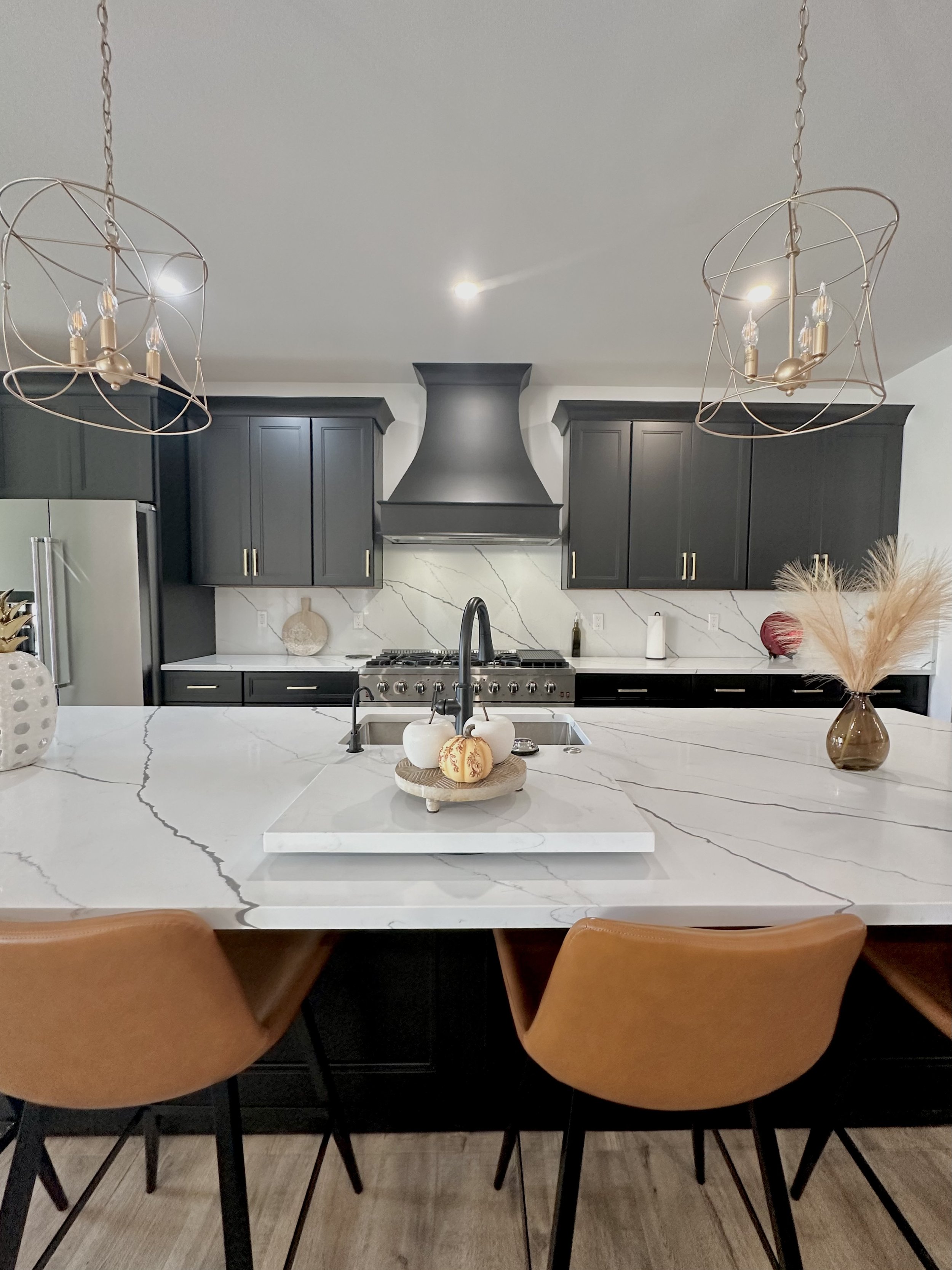
Plan the whole room—not only the stone.
These completed Sondos Stone kitchens show how lighting, cabinetry, pattern scale and layout affect the final result. They are presented as design and fabrication inspiration. The installed materials are not represented as Sea Pearl unless specifically documented.
Daily performance
Is Sea Pearl quartzite durable?
True quartzite is generally a hard, heat-resistant natural stone suitable for kitchen countertops. It is not scratch-proof, stain-proof, chip-proof or maintenance-free.
Strong natural-stone performance
Quartzite generally handles normal kitchen heat well, but trivets are still recommended to protect the stone, sealer and surrounding joints from thermal shock or prolonged heat.
Highly resistant, not invincible
A quartz-rich surface is difficult to scratch during normal use. Cutting boards remain the better habit because knives, gritty debris and repeated abrasion can affect the finish.
Absorption varies by slab
Natural quartzite can absorb liquids to different degrees. Proper sealing, prompt spill cleanup and suitable cleaning products reduce staining risk.
Confirm the exact material
True quartzite is generally more acid resistant than calcitic marble. However, some slabs may contain acid-sensitive minerals or may be commercially classified inconsistently.
Edges remain vulnerable
A hard impact can chip an exposed edge, sink opening or unsupported area. Careful handling and correct fabrication remain important even with hard stone.
Natural features are expected
Color changes, crystal areas, veins and some natural fissures may be part of the slab rather than evidence of manufactured inconsistency.
If etching resistance or absorption is a major concern, ask about testing a representative area of the exact slab. A generic claim about “all quartzite” is less useful than information about the material being fabricated for your project.
Before fabrication
How should you inspect Sea Pearl slabs?
View every slab required for the project, confirm that they come from a compatible bundle and discuss where the major gray movement will appear after cutting.
- Photograph the complete slabs. Capture the full pattern rather than only close-up details.
- Confirm the slab quantity. Large islands, full-height backsplashes and complicated layouts may require more material than the visible countertop area alone.
- Compare multiple slabs together. Check background tone, dark movement and pattern direction before approving slabs from the same bundle.
- Identify the visual focal point. Decide whether the strongest movement belongs on the island, range wall, perimeter or full-height backsplash.
- Discuss seam placement. Slab dimensions, cabinet layout, access, pattern direction, sink placement and safe transportation can affect seam locations.
- Review natural features. Ask the fabricator to explain visible fissures, mineral changes, resin-filled areas or other characteristics before cutting.
- Confirm thickness and finish. Available thicknesses and polished, honed or textured finishes can differ by supplier and current inventory.
- Approve the final plan. A clear layout discussion reduces surprises when a directional natural stone is divided among several countertop pieces.
Sea Pearl’s layered movement makes slab layout especially important. A cut made only for material efficiency may place the most dramatic section somewhere less visible. Layout should balance visual priorities, structural requirements and responsible use of the slab.
Read the countertop seam-planning guide →Kitchen design
Which cabinets work with Sea Pearl quartzite?
Sea Pearl works particularly well with white, warm-white, pale gray, charcoal and natural wood cabinetry. The right pairing depends on the undertone of the specific slab—not only its name.
| Cabinet direction | Likely effect | What to check |
|---|---|---|
| Clean white | Bright, crisp and high contrast | Make sure the cabinet white does not make the slab look unexpectedly warm or blue. |
| Warm white or cream | Softer and less clinical | Look for taupe or warm mineral areas that connect the two surfaces. |
| Light gray | Quiet, layered and coordinated | Avoid matching two grays that are close but visibly incompatible. |
| Charcoal or black | Dramatic contrast around pale slab areas | Confirm the kitchen has enough natural and artificial light. |
| White oak | Warm, natural balance | Compare the wood sample with both the light and dark areas of the slab. |
| Walnut | Richer and more traditional | Check whether strong brown wood tones compete with the gray movement. |
Polished, honed or textured?
A polished finish generally emphasizes contrast, reflection and mineral depth. A honed finish reduces glare and can make the color appear softer, but it may show oils or handling differently. Textured finishes create a more tactile appearance, although they are not available in every slab or bundle.
Do not choose a finish from an online photograph alone. Ask to see a finished sample of the same material and discuss maintenance, edge appearance and fabrication availability.
Compare polished, honed and leathered finishes →Where Sea Pearl can make the strongest impact
- Large kitchen islands where the movement remains visible
- Perimeter countertops with carefully planned seams
- Full-height backsplashes using coordinated slab sections
- Bathroom vanities and feature walls
- Fireplace surrounds approved for the specific installation
- Residential and commercial counters with informed care
Cleaning and maintenance
How do you care for Sea Pearl quartzite?
Clean it with a soft cloth, warm water and a mild non-acidic cleaner. Wipe spills promptly, use cutting boards and trivets, and reseal according to the actual surface’s absorption—not an automatic calendar date.
Do
- Blot spills instead of spreading them.
- Use mild dish soap or a pH-neutral stone cleaner.
- Dry the surface after cleaning to reduce streaks.
- Use cutting boards during food preparation.
- Use trivets under hot cookware and appliances.
- Ask which sealer was used on the installed stone.
- Contact the fabricator about unexplained marks or damage.
Avoid
- Vinegar, lemon-based cleaners and acidic mixtures.
- Abrasive powders and aggressive scrub pads.
- Harsh chemicals without confirming compatibility.
- Leaving oil, wine, coffee or food spills overnight.
- Cutting directly on the finished surface.
- Standing or sitting on unsupported countertop areas.
- Assuming sealing makes natural stone completely stain-proof.
How often should Sea Pearl be sealed?
There is no honest universal schedule. Absorption varies by slab, finish, sealer, cleaning routine and amount of use. Some surfaces may need attention sooner than others.
Ask the fabricator or sealer manufacturer how to evaluate the installed surface. Do not add repeated coats simply because a year has passed; excess or incompatible products can leave residue or affect the finish.
The Natural Stone Institute recommends mild, non-acidic cleaning for natural stone and advises against acidic cleaners even on siliceous stones because trace acid-sensitive minerals may be present.
Read the Natural Stone Institute care guidance ↗Project planning
How much do Sea Pearl quartzite countertops cost?
Sea Pearl pricing depends on current slab availability and the complete fabrication scope. A responsible quote requires more than a generic price per square foot.
Major cost factors can include:
-
01
Slab price and availability
Inventory, bundle, thickness, finish and supplier affect the material cost.
-
02
Number of slabs
Pattern direction and usable slab area can matter as much as total countertop square footage.
-
03
Layout complexity
Large islands, radius work, waterfall ends and full-height backsplashes require additional planning.
-
04
Cutouts and fabrication
Sinks, cooktops, faucets, outlets and special details change the production scope.
-
05
Site conditions
Removal, access, cabinet readiness, support and installation conditions affect the project.
If Sea Pearl is not currently available, visually similar slabs should still be judged individually. A different stone with a similar gray palette may have different geology, absorption, movement and fabrication requirements.
Local fabrication and installation
Sea Pearl quartzite countertops in Greensboro and the NC Triad
Sondos Stone helps homeowners, builders, cabinet companies, designers and contractors select, template, fabricate and install custom countertops throughout the North Carolina Triad.
Confirm availability
Ask whether Sea Pearl slabs are currently available and which thicknesses, finishes and bundles can be reviewed.
Review your project
Share measurements, cabinet plans, project photographs, sink information and design priorities for a starting estimate.
Schedule the template
Final field measurements are completed after the cabinets and relevant project conditions are ready.
Plan fabrication
The team reviews cutouts, seams, overhangs, edges, pattern direction and other production details.
Install the countertops
Finished pieces are delivered, positioned, joined, secured and reviewed as part of the installation.
Material availability changes. Mentioning a city does not mean a photographed project was completed in that city unless the project is specifically identified.
The honest decision
Is Sea Pearl right for your project?
Sea Pearl may fit if you want:
- A natural white-and-gray countertop
- Visible movement instead of manufactured repetition
- A cooler alternative to warm beige quartzite
- A statement island or coordinated backsplash
- Natural stone with informed cleaning and sealing
- The ability to inspect and approve full slabs
Consider another surface if you want:
- Perfect color consistency from sample to installation
- No routine sealing or natural-stone maintenance
- A surface chosen entirely from a small sample
- Guaranteed identical slabs for future additions
- A specific seam count before the layout is reviewed
- A countertop that cannot show natural variation
Frequently asked questions
Sea Pearl quartzite questions
Direct answers for homeowners comparing slabs, maintenance, cabinet colors and fabrication.
Is Sea Pearl a real quartzite?
MSI identifies Sea Pearl as a Brazilian quartzite. Because commercial stone names can be used differently by separate suppliers, confirm the documentation and characteristics of the exact slabs being considered.
Where does Sea Pearl quartzite come from?
MSI lists Sea Pearl quartzite as imported from Brazil. This guide does not claim a specific quarry or geologic formation because the available manufacturer information does not identify one.
What colors are in Sea Pearl quartzite?
Sea Pearl generally combines white, frost gray, silver, dove gray and charcoal movement. Some slabs may also show taupe or other subtle mineral tones. Always inspect the complete slabs.
Does Sea Pearl quartzite need to be sealed?
It may benefit from a penetrating natural-stone sealer, but absorption and resealing frequency vary by slab, finish, sealer and use. Follow the fabricator’s and sealer manufacturer’s recommendations.
Can Sea Pearl quartzite stain or etch?
Natural quartzite can absorb staining liquids if they remain on the surface. True quartzite is generally acid resistant, but individual slabs may contain acid-sensitive minerals or be commercially classified inconsistently. Wipe spills promptly and avoid acidic cleaners.
Is Sea Pearl good for kitchen countertops?
Sea Pearl can be a strong kitchen-countertop choice for homeowners who want natural gray movement and understand slab variation, sealing, proper support and everyday stone care.
Which cabinet colors work with Sea Pearl?
Common pairings include clean white, warm white, light gray, charcoal, black, white oak and walnut. Compare the actual slab with physical cabinet and flooring samples before choosing.
How is Sea Pearl different from Taj Mahal quartzite?
Sea Pearl usually leans white, silver and gray, while Taj Mahal is commonly selected for warmer cream, beige and gold movement. Both are natural stones, so the final comparison should be made between the actual slabs.
Can Sea Pearl be used outdoors?
Quartzite may be considered for some exterior applications, but suitability depends on the exact slab, finish, sealer, support, exposure and local conditions. Confirm the complete exterior specification before fabrication.
Research notes
Sources used for factual claims
- MSI Surfaces — Sea Pearl Quartzite Brazilian origin, commercial classification and published color description.
- MSI Surfaces — Quartzite Countertops General explanation of quartzite formation from sandstone.
- Natural Stone Institute — Natural Stone Care Non-acidic cleaning and everyday natural-stone care guidance.
- Natural Stone Institute — Scientific vs. Commercial Definitions Explanation of the difference between scientific and commercial stone descriptions.
Start with the actual slabs
Considering Sea Pearl quartzite?
Ask about current availability, compare complete slabs and receive a project estimate based on your measurements, layout and fabrication requirements.