

Natural-stone field guide · Greensboro & the NC Triad
Taj Mahal QuartziteCountertops
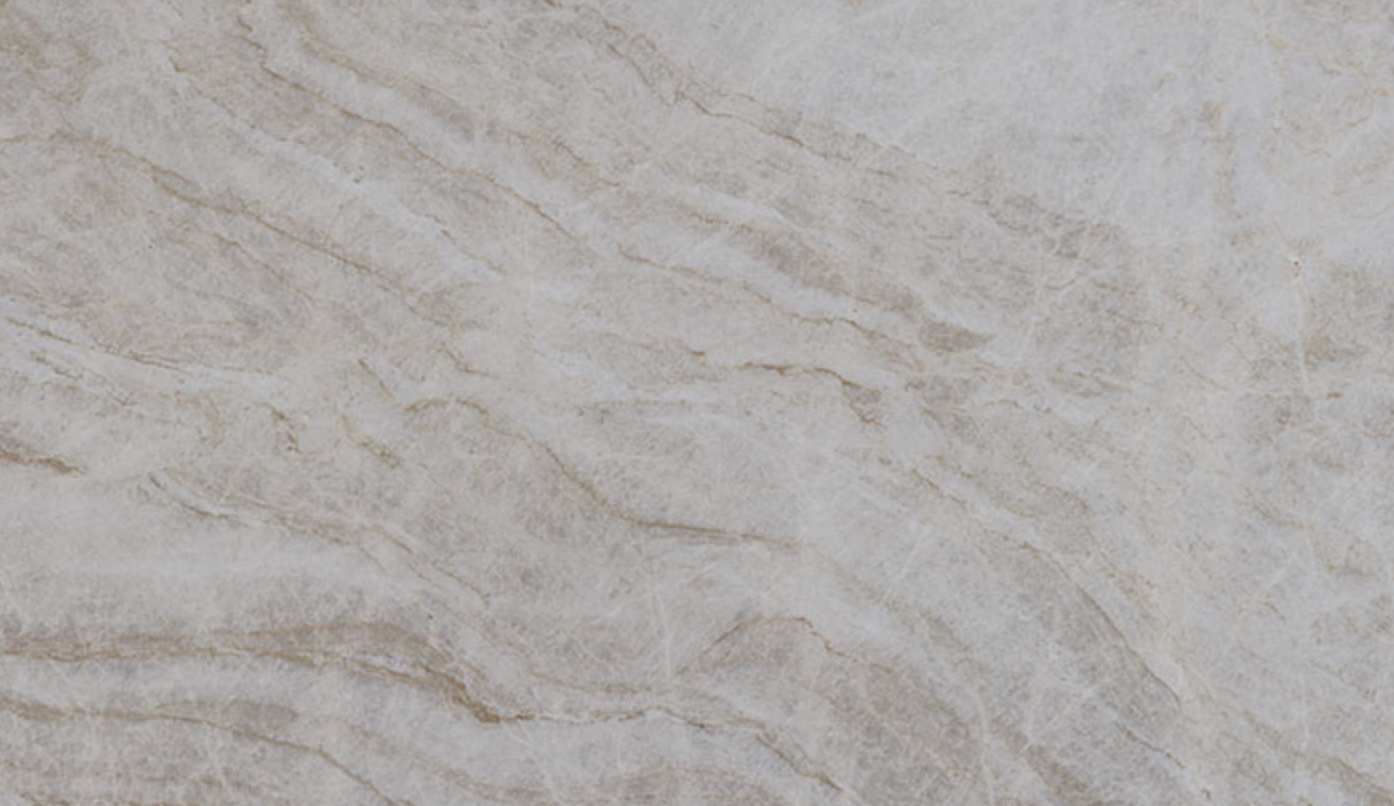
Warm ivory, beige and restrained gold movement give Taj Mahal its quiet appeal. Its performance begins with quartzite geology—but the exact slab, mineral bands, finish, resin, fissures and fabrication plan decide the installed result.
Metamorphic, quartz-rich dimension stone
Use the slab tag for supplier, bundle and lot details
Ivory, beige, taupe, gray and soft gold
The trade name never guarantees identical movement
Direct answer
Is Taj Mahal quartzite good for kitchen countertops?
Yes—Taj Mahal is widely selected for kitchens because it combines a warm, marble-like natural appearance with the strength and abrasion resistance associated with quartzite. It is still natural stone: every slab varies, staining protection is slab-specific, edges can chip from impact and professional layout and fabrication matter.
The smartest comparison is not “Taj Mahal versus a category.” Compare the reserved Taj Mahal slabs with the exact alternative slabs, then compare finish, thickness, usable yield, seams, edge detail, care instructions and installed scope.
01 / Where it comes from
Taj Mahal is Brazilian stone—not stone from India.
The commercial name references the famous monument, but supplier documentation identifies the stone itself as Brazilian quartzite.
Country-level origin is the dependable claim.
Brazilian producer Favorita identifies Taj Mahal as quartzite from Brazil and describes a beige-white field with gold, ivory and yellow-toned veining. Individual distributors may attach more specific regional or quarry claims, but a trade name alone is not a quarry certificate.
For the exact slab: record the supplier, bundle number, slab number, documented origin and any technical sheet. That evidence is stronger than copying a location from an unrelated online listing.
Sandstone begins the story
The Natural Stone Institute describes quartzite as metamorphic rock formed from sandstone.
Heat and pressure alter it
Metamorphism changes the parent rock and recrystallizes its minerals into a denser stone.
Quartz drives performance
Quartz-rich stone can provide exceptional strength, density, hardness and abrasion resistance.
Other minerals create character
Warm veins, translucent zones and shimmering bands can behave or polish differently from the surrounding field.
02 / Read the slab
The name controls the search. The slab controls the kitchen.
Warm Taj Mahal lots can appear quiet and creamy, more gray, more gold, more linear or more clouded. Screen images cannot show every fissure, resin-filled area, translucent zone or change in polish.
Base color
Compare ivory, cream and beige undertones directly with cabinet, floor and backsplash samples.
Vein direction
Decide whether movement should run along the room, across the island or toward a focal feature.
Natural features
Review fissures, mineral lines, small pits, filled zones, mesh backing and areas that may need layout care.
Slab sequence
Confirm whether multiple pieces came from the same bundle and how adjacent slabs relate.
Usable yield
Measure around edges, fractures, undesirable zones and pattern direction—not only nominal slab dimensions.
Finish and thickness
Approve the actual polished, honed or textured finish and the exact thickness being fabricated.
03 / Nearby design directions
Compare real slabs—not similar names.
These are different quartzite selections from the Sondos Stone collection. They are included as visual alternatives, not labeled as Taj Mahal and not presented as installed projects.
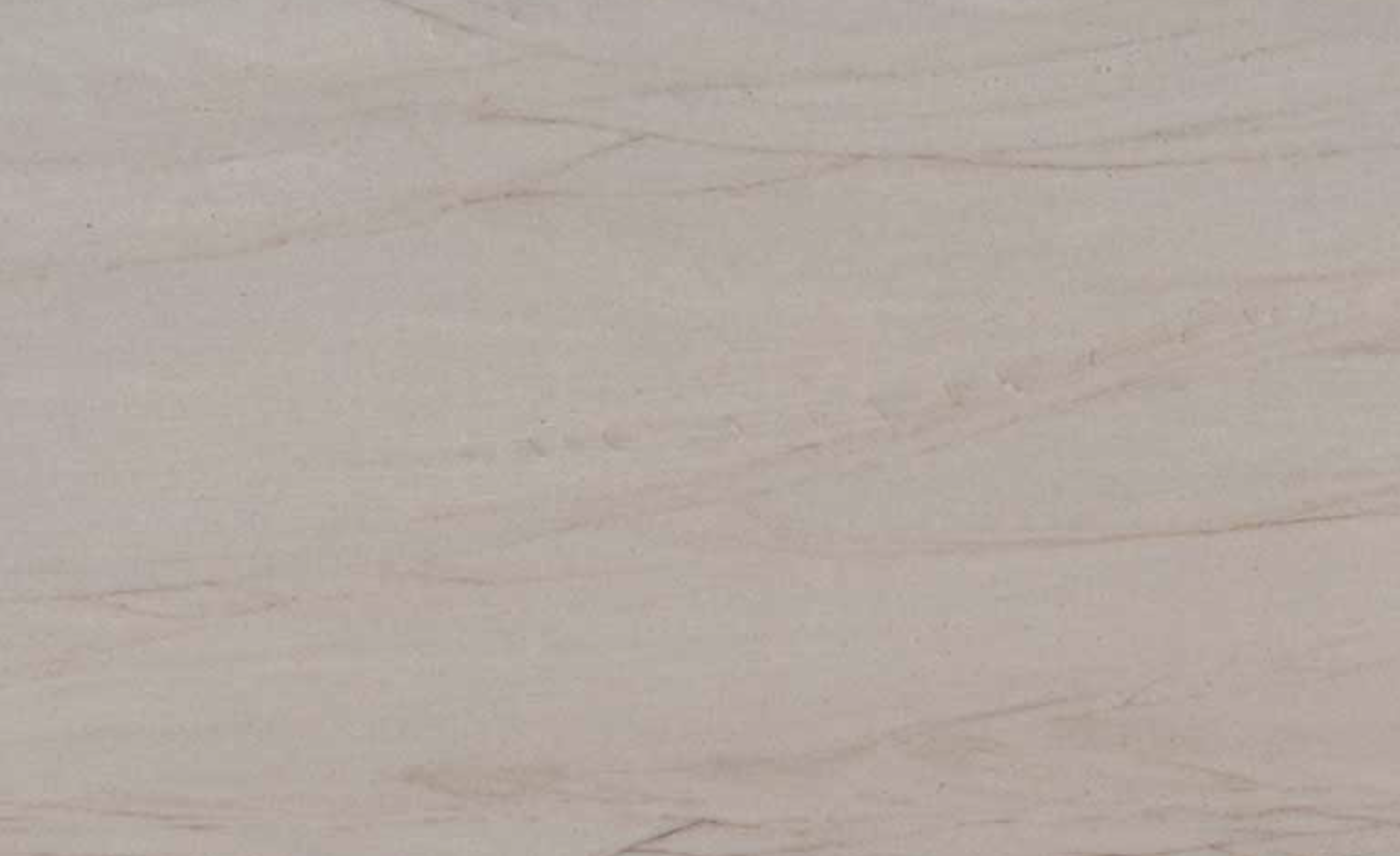
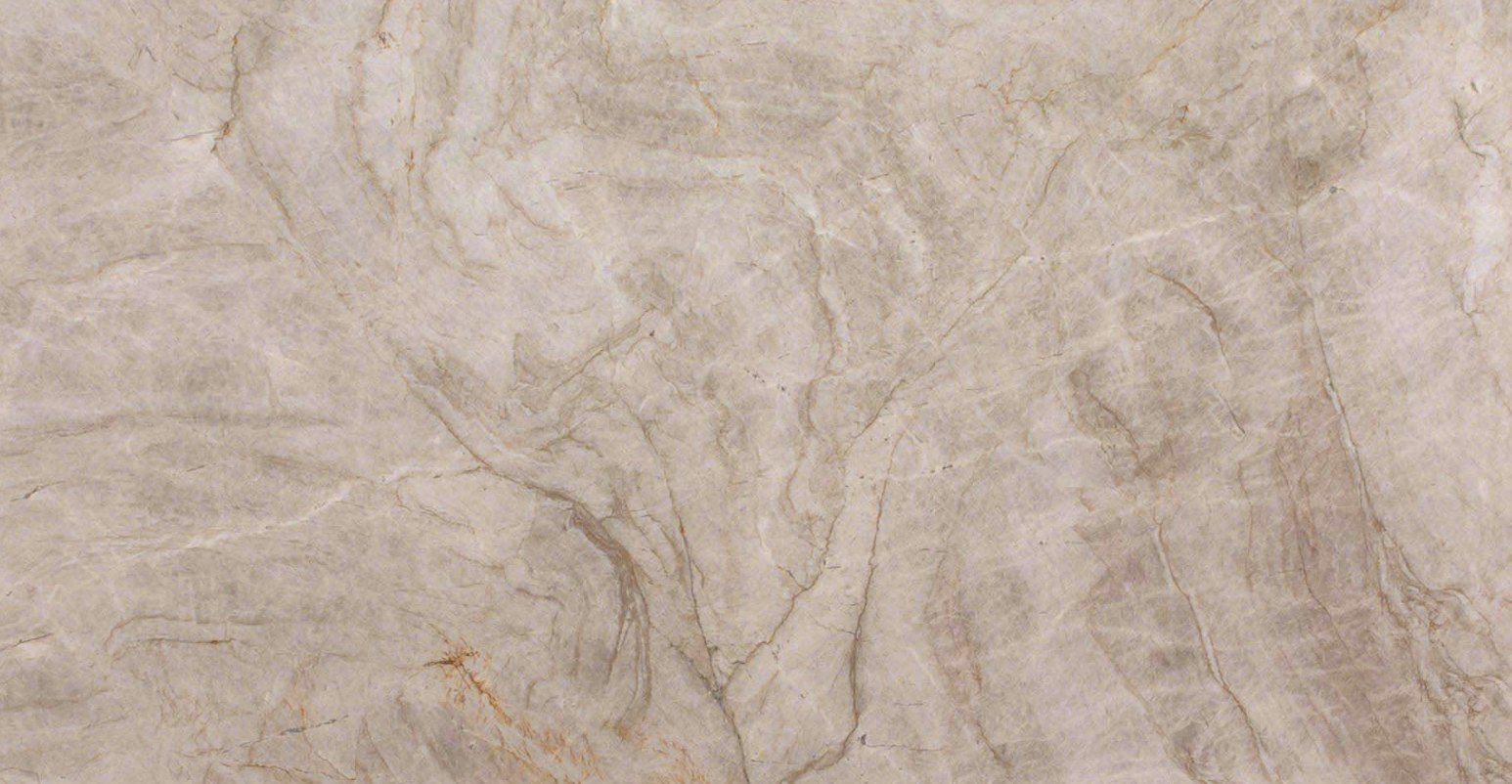
Put all candidates under the same light.
- Use the same cabinet door
- Use the same flooring sample
- Stand back 8–12 feet
- View daylight and warm light
- Photograph slab labels
04 / Performance without hype
Quartzite strength does not make a countertop indestructible.
Marketing turns material categories into absolutes. Installed performance also depends on mineral variation, thickness, finish, cutouts, support, seams, handling, resins, sealers and daily use.
Quartz-rich material is hard and abrasion resistant. Use a cutting board anyway: it protects knives, the finish and any locally softer mineral or filled area.
Protect the finishAvoid direct hot cookware. Trivets protect against thermal shock and protect any resin, sealer, adhesive or nearby cabinet component in the installed system.
Use a trivetTrue quartzite is generally resistant to common kitchen acids, but mineral bands, treatments or a mislabeled slab can behave differently. Request professional confirmation and test a sample or offcut if the question is important.
Do not assumeThe Natural Stone Institute explains that an impregnating sealer is a repellent—not a stain-proof shield. Blot spills promptly and follow the sealer and stone supplier’s instructions.
Resistance ≠ proofA heavy impact can chip an exposed edge or corner. Sink rails, cooktop rails, long spans and overhangs require appropriate fabrication and support.
Protect the edgeVeins, fissures, filled areas, crystal zones and tonal movement are part of natural stone. Review which features are acceptable and where they will land before cutting.
Approve the layout05 / Care plan
Clean gently. Seal by evidence, not by calendar alone.
Natural-stone care guidance recommends neutral cleaning and warns that acids, abrasives and inappropriate chemicals may damage stone or its finish. The correct sealing interval depends on the exact slab, finish, sealer and use.
Soft cloth + stone-safe cleaner
Use warm water and a mild or pH-neutral product approved for natural stone. Wipe spills promptly.
Vinegar, lemon cleaners and abrasives
Acidic or abrasive cleaners can affect minerals, fills, sealers or the finish. Never mix cleaning chemicals.
Ask whether the slab benefits
Use the supplier’s recommendation and the sealer manufacturer’s directions. More sealer is not automatically better.
Watch for changing absorption
If water begins darkening the stone faster than before, ask the installer or stone professional whether protection should be renewed.
06 / Finish lens
The finish changes how Taj Mahal reads.
Polished
Maximum reflection and color depthLight can intensify crystalline depth and warm veins. Reflections also make windows and overhead lighting more visible.
Honed
Lower reflection and softer contrastA matte appearance can feel quiet and architectural. Ask how the selected slab and sealer change in a honed finish.
Leathered or brushed
Texture and directional lightTexture can emphasize mineral movement and touch. Availability and cleanability depend on the actual finish and slab.
Do not choose a finish from a photo of another slab. Compare actual finish samples beside your cabinetry and confirm that the fabricator can produce the approved edge and surface consistently.
07 / Design with warm movement
Build the palette around undertones, not the word “white.”
Taj Mahal often reads warmer than white marble or blue-gray quartz. Its advantage is flexibility: the same slab can bridge cream paint, wood cabinetry, warm metal and quiet stone tile.
Warm white cabinets
Compare cream and ivory undertones. A stark blue-white door can make the slab look more beige.
White oak or walnut
Wood can repeat the stone’s tan and gold notes. Check that the combination still has enough contrast.
Olive or deep green
Muted green can frame warm veins without forcing the kitchen into a black-and-white palette.
Charcoal or black
Dark cabinetry creates stronger contrast and makes the lighter field read as the focal material.
Brass and bronze
Warm metals can echo gold movement. Compare the real hardware finish instead of relying on a screen.
Quiet backsplash
Simple warm-white tile lets the natural slab carry movement. Full-height quartzite requires additional yield and layout planning.
08 / Fabrication layout
Approve the composition before the first cut.
A premium slab can still produce a disappointing kitchen if the best movement is lost to cutouts, turned against the room or broken awkwardly at a seam.
- 01
Reserve and photograph the slabs
Record full-slab images, labels, bundle order and dimensions.
- 02
Overlay the countertop pieces
Place island, perimeter, sink, cooktop, backsplash and waterfall pieces on the slab image or layout.
- 03
Protect structural zones
Keep fragile-looking features away from narrow rails or high-stress cutout locations when possible.
- 04
Review seams at room scale
Consider access, support, piece weight, vein transition and normal sightlines—not only the shortest seam.
- 05
Approve edges and overhangs
Confirm profile, visible thickness, miter or lamination detail, corner radius and support.
- 06
Keep an offcut
An offcut can support future finish, cleaning, sealing or repair tests without risking the installed counter.
09 / Installed cost
Why Taj Mahal quartzite prices vary
There is no honest universal square-foot price for every Taj Mahal project. Slab quality, lot, location, availability and usable yield change before fabrication even begins.
Request a Project EstimateMaterial levelSupplier, lot, grade, finish and current availability
Slab countRoom dimensions, pattern direction and usable yield
FabricationEdges, cutouts, seams, backsplash and waterfalls
Site workRemoval, access, support, delivery and installation
Risk controlLayout time, fragile areas and project-specific handling
10 / Greensboro & the NC Triad
Compare Taj Mahal slabs with a local fabrication plan.
Sondos Stone helps homeowners, designers, builders and remodelers select, measure, fabricate and install countertops in Greensboro, High Point, Winston-Salem, Jamestown, Kernersville, Burlington and nearby North Carolina communities.
Availability changes by supplier and bundle. Send cabinet drawings, approximate dimensions, project ZIP code, edge preference, sink and appliance information, and any slab photos already being considered.
Sondos Stone
4701 Piedmont Parkway #103, Jamestown, NC 27282
(336) 899-0444 · info@sondosstone.com
Sources and fact-check notes
- Favorita do Brasil — Taj Mahal Quartzite: Brazilian origin, warm beige-white appearance, gold/ivory tones and finish examples.
- Natural Stone Institute — Sandstone and Quartzite: quartzite formation from sandstone and category-level strength, density and abrasion-resistance characteristics.
- U.S. National Park Service — Metamorphic Rocks: heat-and-pressure metamorphism and quartzite classification.
- Natural Stone Institute — Natural Stone Care: neutral cleaning, chemical cautions and the limits of impregnating sealers.
- Use Natural Stone — Caring for Quartzite Countertops: routine care, acid resistance context, prevention and slab-dependent sealing.
- Sondos Stone — Quartzite Collection: current collection names and the three referenced slab images.
Origin note: producer and distributor sources agree on Brazil at the country level but online sellers do not always agree on a more specific region. This guide therefore does not assign every slab sold as Taj Mahal to one quarry or state. Verify the reserved slab’s documentation.
11 / Search, AI & voice answers
Taj Mahal quartzite FAQ
Concise answers for the questions homeowners ask before reserving a slab.
Where does Taj Mahal quartzite come from?
Taj Mahal quartzite is sourced from Brazil. The exact quarry, state, supplier, bundle and lot should be verified from the documentation attached to the reserved slabs.
Is Taj Mahal quartzite real quartzite?
It is sold and documented by established Brazilian suppliers as natural quartzite. Because trade names can be misused, verify the supplier label and exact slab rather than relying only on a showroom nickname.
What colors are in Taj Mahal quartzite?
Typical slabs combine ivory, cream or light beige with taupe, gray, sand, hazelnut and restrained gold movement. Every natural slab and bundle varies.
Does Taj Mahal quartzite need sealing?
Many natural-stone countertops benefit from an impregnating sealer, but the need and interval depend on the exact slab, finish, sealer and use. A sealer improves stain resistance; it does not make stone stain-proof.
Will Taj Mahal quartzite etch?
True quartzite is generally more resistant to common household acids than marble. Mineral bands, surface treatments, resins or a mislabeled stone may behave differently, so test a sample or offcut when acid sensitivity is a deciding factor.
Can hot pans go directly on Taj Mahal quartzite?
Use a trivet. The natural stone may tolerate heat well, but rapid temperature change and resins, sealers, adhesives or nearby cabinet materials remain part of the installed countertop system.
Is Taj Mahal quartzite more expensive than quartz?
It can be, but there is no universal answer. Current slab cost, number of slabs, usable yield, edge work, seams, cutouts, backsplash, access and fabrication complexity determine the installed comparison.
What should I inspect before buying Taj Mahal quartzite?
Inspect the full slabs, labels, base color, vein direction, fissures, filled areas, mesh backing, finish, thickness and slab sequence. Then approve the cut layout, seams, edge, overhang support, care plan and complete installed scope.