

Countertop comparison · Greensboro & the NC Triad
Quartz vs. Quartzite Countertops: Which Is Better for Your Kitchen?
Quartz and quartzite sound almost identical, but they are fundamentally different surfaces. One is engineered for consistency and low maintenance. The other is natural stone selected for individual movement and character. This guide compares the real differences before you choose a slab, color or quote.

The short version
Is quartz or quartzite better?
Choose quartz when low maintenance, predictable color and no routine sealing matter most. Choose quartzite when you want a genuine natural slab, individual movement and a premium one-of-a-kind appearance.
Neither material wins every category. Quartz is usually the more practical choice for a household that wants simple care and tighter visual control. Quartzite is often the stronger design choice for a statement island or high-end kitchen where natural variation is part of the goal. Your actual color, slab, layout and care expectations matter more than the similar names.
Best for simple maintenance
Quartz
Nonporous, consistent and not normally sealed.
Best for natural character
Quartzite
Each slab has its own mineral pattern, color and movement.
Lower installed starting price
Quartz
Sondos Stone quartz starts around $100 per sq. ft. installed.
Better heat tolerance
Quartzite
Natural quartzite generally handles heat better, but trivets are still smart.
Side-by-side
Quartz vs. quartzite comparison
This table covers the questions North Carolina homeowners most often need answered before comparing colors and project quotes.
| Category | Quartz | Quartzite |
|---|---|---|
| What it is | Engineered surface made with quartz minerals, binders and pigments | Natural metamorphic stone formed from sandstone under heat and pressure |
| Appearance | Controlled colors and repeatable manufactured patterns | Unique movement, mineral details and slab-to-slab variation |
| Routine sealing | Normally not required | May be required; porosity and sealer guidance vary by stone |
| Stain resistance | High, but spills and chemicals still need sensible care | Varies by slab; prompt cleanup and proper sealing can matter |
| Heat | Use trivets because high heat can affect the resin system | Generally more heat tolerant, but avoid thermal shock and use trivets |
| Scratching | Durable, but not scratch-proof; use cutting boards | Quartz-rich and hard, but no stone surface is damage-proof |
| Pattern consistency | Usually easier to predict from a sample | Approve the full slabs and plan the layout before cutting |
| Outdoor use | Only when the specific manufacturer approves the product | Can suit some exterior projects when the stone and installation are appropriate |
| Sondos Stone starting price | $100/sq. ft. installed | $140/sq. ft. installed |
| Best fit | Busy interiors, predictable design and low-maintenance priorities | Premium kitchens, statement islands and natural-stone priorities |
Product instructions always control. Quartz warranties and heat guidance vary by manufacturer, while natural quartzite performance and porosity vary by the actual stone.
Engineered surface
What is quartz?
A quartz countertop is manufactured rather than cut directly from a natural block as a finished slab. Producers combine quartz minerals with binders, pigments and other components, then form and finish the material into slabs.
Manufacturing makes it possible to create clean whites, warm neutrals, concrete looks and marble-inspired patterns with more consistency than natural stone. Quartz is nonporous and normally does not need routine sealing. It remains a durable surface—not an indestructible one. High heat, harsh chemicals and impacts at exposed edges can still cause damage.
Browse 200+ quartz colors →Natural stone
What is quartzite?
Quartzite begins as quartz-rich sandstone. Heat and pressure transform and fuse the grains into a dense metamorphic rock. The finished countertop is cut from a natural slab, so the movement, color, mineral features and fissures belong to that individual stone.
True quartzite is very hard, but the trade name on a slab rack does not tell you everything about porosity or mineral composition. Some stones sold within the broad quartzite category behave differently from others. That is why slab selection, supplier information, fabrication experience and correct sealer guidance matter.
Ask to view natural quartzite slabs →Local installed pricing
Is quartz or quartzite more expensive?
Quartzite generally costs more. Sondos Stone’s current installed starting price is approximately $100 per square foot for quartz and $140 per square foot for quartzite across qualifying NC Triad projects. These starting prices include material, professional templating, in-house fabrication and professional installation.
Quartz installed starting price
$100/sq. ft.
- 40 sq. ft. starts around $4,000
- 50 sq. ft. starts around $5,000
- 60 sq. ft. starts around $6,000
Quartzite installed starting price
$140/sq. ft.
- 40 sq. ft. starts around $5,600
- 50 sq. ft. starts around $7,000
- 60 sq. ft. starts around $8,400
Why the final total can change
Exact material: Premium quartz designs and rare quartzite slabs can exceed the category starting price.
Slab usage: A layout that crosses into an additional slab can change the total more than square footage alone suggests.
Fabrication: Waterfalls, full-height backsplashes, mitered edges, cutouts and detailed seam plans add work.
Jobsite: Tear-out, access, support corrections and unusual installation conditions affect the scope.
These examples are planning estimates, not guaranteed quotes. See the complete North Carolina countertop cost guide or use the instant quote tool with your measurements.
Everyday use
Heat, stains, scratches and maintenance
Marketing often reduces this comparison to “durable versus durable.” That is not enough information. The way each surface responds to heat, liquids, sunlight and daily cleaning is where the practical differences become clear.
Heat resistance
Quartz contains resin or other binders that can be affected by high temperatures. Do not place hot cookware directly on quartz; follow the manufacturer’s care guide and use a trivet. Natural quartzite generally tolerates heat better, but sudden temperature changes can stress any stone installation. A trivet is inexpensive protection.
Advantage: quartzite
Stain resistance
Quartz is nonporous and highly stain resistant, although spills should still be cleaned promptly. Quartzite porosity varies. Some slabs absorb very little; others benefit from a penetrating sealer and more careful cleanup. Ask about the actual slab rather than assuming every quartzite behaves the same way.
Advantage: quartz
Scratches and cutting
True quartzite is quartz-rich and extremely hard. Quartz is also durable for normal household work. Neither description is permission to cut directly on the countertop. A cutting board protects the finish, keeps knives sharper and prevents unnecessary wear.
Advantage: depends on the exact product and stone
Chips and edge damage
Heavy impacts can chip either material, especially around sink rails, corners and decorative edges. Edge profile, overhang support, cabinet level and fabrication quality all influence performance. Material choice alone cannot compensate for a poor installation.
Advantage: tie—plan the details correctly
Cleaning and sealing
Both surfaces can usually be cleaned with mild soap, warm water and a soft cloth. Quartz normally needs no routine sealing. Quartzite should be evaluated and sealed when appropriate for the stone and sealer. Avoid abrasive pads and unapproved chemicals.
Advantage: quartz
Sunrooms and outdoor kitchens
UV exposure can alter some engineered quartz products, so outdoor or strong-sunlight use requires written manufacturer approval. Quartzite may be suitable for exterior work, but freeze-thaw exposure, stone selection, finish, sealer and installation details still matter.
Advantage: quartzite for appropriately planned exterior work
Design and variation
Which one looks more natural?
Quartzite is the genuine natural slab, so it wins when “natural” means individual mineral movement that cannot be repeated exactly. Quartz wins when the design requires control and consistency across a kitchen, bathrooms or multiple units.
Choose quartz for predictability
- A sample is usually a more reliable preview of the finished color.
- Patterns can be coordinated across several rooms or repeated projects.
- Clean whites and controlled marble looks are widely available.
- Bookmatching may be possible only when the specific product and slab layout allow it.
Choose quartzite for individuality
- No two natural slabs are exactly alike.
- Veins, mineral deposits and tonal movement can create a true focal point.
- Full-slab approval matters more than a small showroom sample.
- Adjacent slabs should be reviewed together for islands, seams and backsplashes.
Make the decision
Which countertop fits your project?
Quartz may be the better fit if…
You want the easier ownership experience
- You do not want routine sealing.
- You want a consistent color or manufactured pattern.
- Your priority is high stain resistance and simple daily cleaning.
- You are coordinating several rooms or repeat units.
- You want the lower installed starting price between these two materials.
Quartzite may be the better fit if…
You want natural stone to lead the design
- You want a one-of-a-kind slab rather than a repeatable pattern.
- You value natural depth, movement and mineral variation.
- You are willing to view slabs and follow stone-specific sealing guidance.
- You want a premium statement island or full-height stone backsplash.
- You need better heat and UV tolerance than standard interior quartz usually offers.
Common project scenarios
How the choice changes by room and lifestyle
Quartz is usually the simpler starting point.
It removes routine sealing from the care plan and offers consistent patterns. You still need trivets, cutting boards and prompt cleanup.
Quartzite can deliver natural movement that cannot be duplicated.
Confirm slab size, vein direction, overhang support and whether a seam is required before approving the material.
Quartz often makes matching and replacement planning easier.
Consistent colors and low maintenance can help when several kitchens or bathrooms need a coordinated specification.
Either can work, but pattern layout becomes critical.
Quartz offers more control; quartzite offers natural drama. Confirm range-area guidance, outlets, seams and usable slab material.
Do not assume standard quartz is approved.
Check the written product warranty. For quartzite, confirm the specific stone, finish, sealer and exterior installation method.
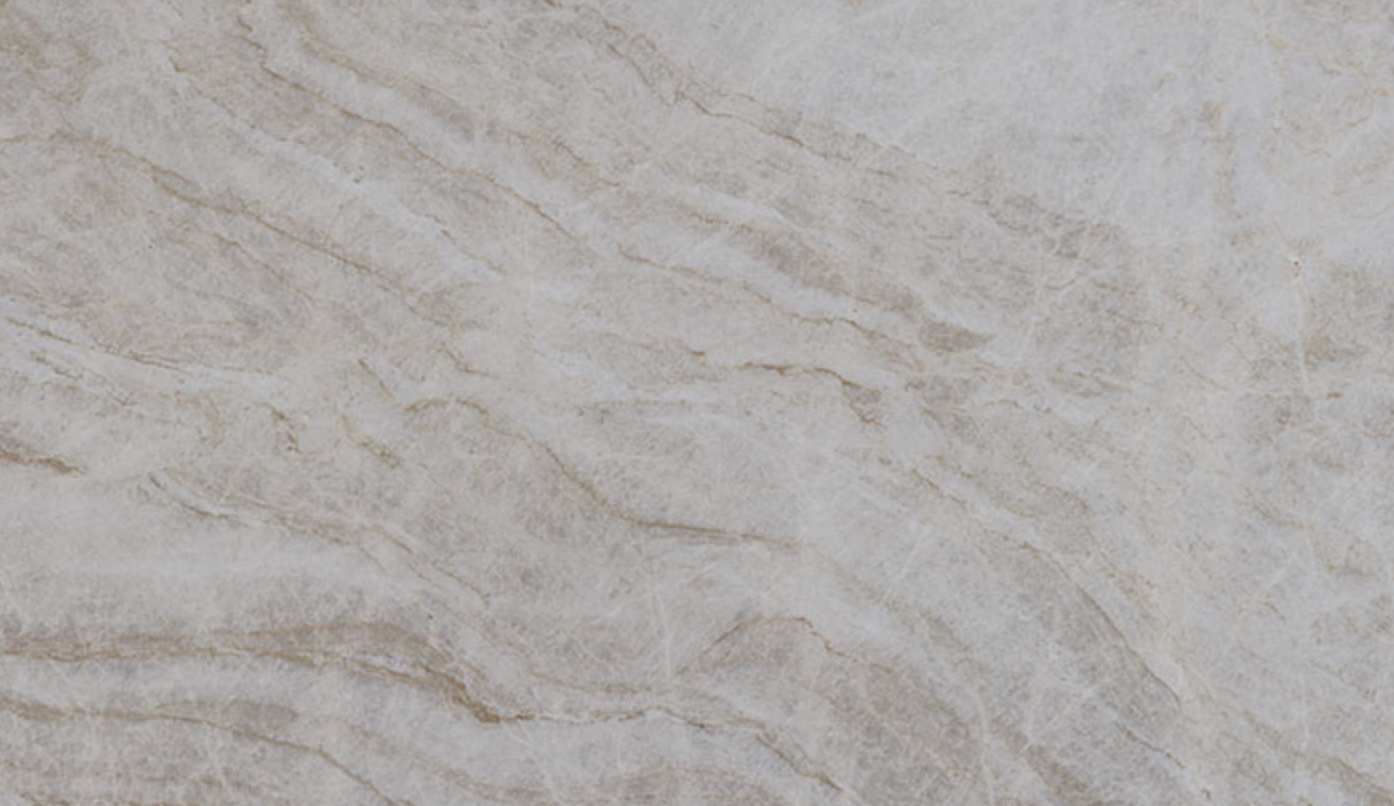
Taj Mahal quartzite is a frequent natural-stone direction.
Its warm cream and beige-gold movement can pair well with warm whites and wood cabinetry. Read the Taj Mahal quartzite guide.
Local planning matters
Quartz and quartzite countertops in the NC Triad
Sondos Stone fabricates and installs countertops for homeowners, builders, designers, cabinet companies and commercial teams across Greensboro, High Point, Winston-Salem, Jamestown, Kernersville, Burlington, Lexington, Thomasville, Asheboro, Archdale, Trinity and nearby North Carolina communities.
The right comparison is not just material against material. It is your selected surface, actual cabinet layout, slab usage, sink and cooktop details, edge profile, backsplash, access and installation requirements reviewed as one project.
Compare full-size options
Review quartz samples and natural quartzite slabs in the lighting and color direction of your project.
Price the actual layout
Include slab usage, cutouts, edges, overhangs, backsplashes, removal and access—not only square footage.
Confirm the cabinets
Permanent cabinets should be installed, secured, level and in their final position before templating.
Plan before fabrication
Finalize seams, pattern direction, focal areas, sink details and appliance information before material is cut.
Before you sign
Questions to ask on both quotes
- What exact product or slab is included? A category-level quote is not enough when colors and slabs have different costs.
- How many slabs does the layout require? Ask whether the estimate assumes one slab, multiple slabs or a remnant.
- What is included in the installed price? Confirm templating, fabrication, installation, cutouts, edge, removal and backsplash.
- Where will the seams go? A low number is not automatically a good plan if pattern flow or support is ignored.
- Who is responsible for product care guidance? Keep the quartz manufacturer instructions or the natural-stone and sealer recommendations.
- Are the cabinets ready to support the surface? Level, secure cabinets and properly supported overhangs matter for both materials.
Quartz vs. quartzite FAQs
Answers to common countertop questions
What is the biggest difference between quartz and quartzite?
Quartz countertops are engineered surfaces made with quartz minerals, binders and pigments. Quartzite is a natural metamorphic stone cut into slabs. That difference affects pattern consistency, maintenance, heat tolerance, slab selection and price.
Which is more expensive: quartz or quartzite?
Quartzite is usually more expensive. Sondos Stone’s current installed starting prices are approximately $100 per square foot for quartz and $140 per square foot for quartzite. The exact color, slab usage and project details determine the final quote.
Does quartzite need to be sealed?
Many quartzite countertops benefit from sealing, but porosity varies by stone. Follow the recommendation for the actual slab and sealer rather than using a universal schedule. Quartz normally does not require routine sealing.
Can quartzite stain?
Yes. Quartzite can stain when liquids enter the stone, particularly when a more absorbent slab is not properly protected or spills remain. Prompt cleanup, a suitable sealer when needed and gentle care reduce the risk.
Can a hot pan go directly on quartz?
No. Use a trivet or heat pad. High or prolonged heat can affect the binders in engineered quartz. Always follow the specific quartz manufacturer’s care and warranty instructions.
Is quartzite heat resistant?
Natural quartzite generally tolerates heat better than engineered quartz. Even so, use trivets to reduce the risk of thermal shock, protect sealers and avoid unnecessary stress on the countertop.
Which is easier to maintain?
Quartz is usually easier to maintain because it is nonporous and normally does not require sealing. Both materials should be cleaned with appropriate gentle products, and both benefit from cutting boards and trivets.
Which looks more like marble?
Both can provide a marble-inspired look. Quartz can reproduce a controlled marble pattern, while light quartzites can offer genuine natural veining and depth. Quartzite has natural variation; quartz is more predictable.
Is quartz or quartzite better for a busy kitchen?
Quartz is often the simpler choice when low maintenance and stain resistance are the priorities. Quartzite can also perform well in a busy kitchen when the slab is correctly selected, fabricated, protected and maintained.
Can quartz or quartzite be repaired if chipped?
Some chips may be repairable, but the result depends on location, size, color, pattern and material. Repairs may remain visible. Preventive planning around edges, supports and heavy impacts is better than relying on a future repair.
Should I view the full slab before buying?
Always view natural quartzite slabs when possible, especially for a large island or strong pattern. For quartz, confirm the full slab or current production sample when color, vein placement or lot consistency is important.
Do you install both materials around Greensboro?
Yes. Sondos Stone templates, fabricates and installs quartz and quartzite countertops throughout Greensboro, High Point, Winston-Salem and surrounding NC Triad communities, subject to project location and availability.
How this guide was prepared
This comparison combines Sondos Stone’s local pricing and fabrication perspective with material guidance from the Natural Stone Institute’s Use Natural Stone program, Cambria’s quartz comparison and product-level care principles. Always follow the instructions for your selected slab, quartz manufacturer, sealer and installation.
Still deciding?
Compare the right surfaces for your actual kitchen.
Send measurements, photos and the colors you are considering. Sondos Stone can help compare installed pricing, slab usage, edge details and the practical tradeoffs.