

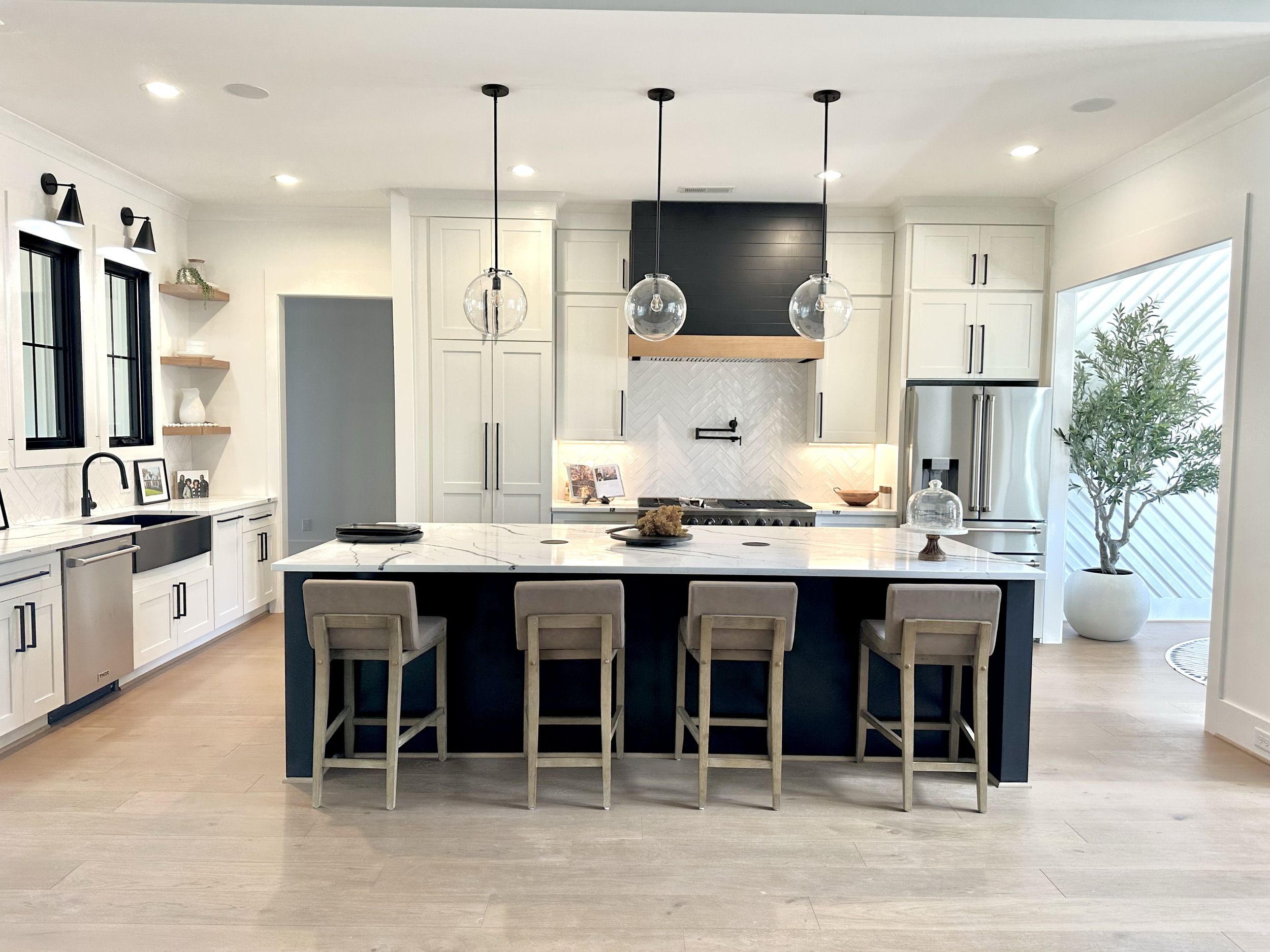
Sondos Stone · Countertop Buying Guide
01 / MaterialsThere isn't one best countertop.
There is only the best countertop for your kitchen, your budget and the way you actually live.
This guide compares quartz, granite, quartzite, marble, Dekton, soapstone, porcelain and concrete using the same practical questions homeowners ask before spending thousands on a new kitchen.
The honest answer
The best material depends on what you expect it to do.
Quartz may be the best choice for one family and the wrong choice for another. Granite may offer the best value in one kitchen, while quartzite may be worth the added investment in a luxury home.
A homeowner who cooks constantly may prioritize heat resistance. A family with young children may care more about stain resistance and maintenance. Someone preparing to sell may choose broad buyer appeal over a rare natural slab.
Over the last several years, we have fabricated and installed hundreds of countertops across Greensboro, Winston-Salem, High Point and the North Carolina Triad. The most successful projects are rarely chosen by trend alone.
They are chosen by comparing material performance, maintenance, appearance, fabrication requirements, long-term cost and how the countertop works with the cabinets, flooring and lighting already in the room.
Start with your priority
What matters most to you?
Do not begin with a color or stone name. Begin with the problem the countertop needs to solve.
The biggest countertop mistake is choosing a material before choosing a lifestyle.
Most comparison pages list products. This guide compares how those products actually behave in real kitchens.
How the materials are compared
One evaluation system. Every major countertop material.
No countertop wins every category. The goal is not to manufacture a universal winner. It is to show where each material performs best and where the compromises begin.
Evaluation categories
The factors that affect daily ownership and long-term value.
Overall comparison
The countertop performance scoreboard.
These preliminary scores summarize broad performance across ownership, maintenance, durability, resale and design flexibility. Part 2 breaks down every material individually.
Quartz
Granite
Quartzite
Dekton
Soapstone
Marble
Porcelain
Concrete
Scores are editorial comparisons, not laboratory certifications. Exact performance varies by product, finish, fabrication, installation, use and maintenance.
What real installations teach
The material is only one part of a successful countertop.
After hundreds of projects across the NC Triad, one lesson stays consistent: an excellent material can still disappoint when the color, layout, seams, edge work or installation do not fit the kitchen.
Undertones must work with cabinets, flooring and lighting.
Natural stone movement cannot be judged from a tiny sample.
Seams, overhangs, sink cutouts and edges shape the final result.
Daily habits determine whether maintenance feels reasonable.
Materials 01–04
Four popular surfaces. Four completely different ownership experiences.
Quartz, granite, quartzite and marble can all produce an exceptional kitchen, but they should not be treated as interchangeable products. They differ in composition, appearance, maintenance, heat performance, natural variation and long-term expectations.
The strongest choice is not automatically the most expensive one. It is the material whose advantages matter to you—and whose compromises you can comfortably accept.
Engineered surface
Best overall for most households
Quartz
Quartz is usually the strongest all-around countertop choice for homeowners who prioritize consistent color, low routine maintenance and broad design flexibility.
What quartz actually is
Quartz countertops are engineered slabs made with mineral content, pigments and binding materials. The exact formulation varies by manufacturer and product line.
Because the design is controlled during manufacturing, quartz generally offers more predictable backgrounds and patterns than natural stone. That consistency makes it easier to coordinate with a specific cabinet color or repeat the same design across multiple surfaces.
Where quartz performs best
Quartz works especially well in family kitchens, resale-focused renovations, apartments, rentals and projects where the homeowner wants a specific white, cream, gray or softly veined appearance.
It is also useful when several countertop sections need to look closely coordinated. While individual slabs and production runs can still vary, engineered designs are usually easier to predict than strongly moving natural stone.
The compromise
Quartz should not be treated as indestructible. Excessive heat can damage the binding materials, so hot cookware should be placed on a trivet rather than directly on the surface.
It also does not provide the exact depth, mineral variation and one-of-a-kind character of a natural slab. Some homeowners see that consistency as an advantage; others prefer the unpredictability of granite or quartzite.
Routine cleaning without typical natural-stone sealing.
Use trivets and follow the exact manufacturer's guidance.
Broad selection of whites, neutrals and controlled veining.
Particularly strong for busy households and resale projects.
Quartz misconception
“Quartz is indestructible.”
Quartz is durable and practical, but it can still chip, scratch or react poorly to excessive heat. Good daily habits and professional fabrication still matter.
Natural stone
Best combination of value and natural character
Granite
Granite remains one of the strongest countertop choices for homeowners who want authentic natural stone, dependable performance and a wide range of price and color options.
Why granite remains relevant
Granite is formed naturally and cut into slabs that display their own mineral composition, pattern and movement. No two slabs are exactly identical.
It has been used in residential kitchens for decades because it can provide strong heat performance, natural visual depth and long-term durability when selected, fabricated and maintained correctly.
Where granite performs best
Granite is a strong fit for traditional, transitional, farmhouse and natural-material kitchens. It also makes sense for homeowners who cook frequently and want a surface with solid heat resistance.
Neutral granites with controlled movement can support resale, while more expressive slabs can become the focal point of a custom kitchen.
The compromise
Granite varies significantly between colors and slabs. Appearance, porosity and maintenance expectations cannot be assumed from the material name alone.
Many granite surfaces benefit from an impregnating sealer. The need and schedule depend on the exact stone, finish, product and daily use. Sealing improves stain resistance; it does not make the surface completely stain-proof.
Some stones benefit from periodic sealing.
Naturally heat resistant, though trivets remain a smart habit.
Quiet neutrals through highly expressive mineral patterns.
Strong for families, cooks and traditional homes.
From the fabrication floor
Granite cannot be chosen responsibly from a tiny sample alone.
Small samples may not reveal the full mineral pattern, movement or color variation of the slab. Review the actual material whenever possible, especially when the kitchen includes a large island or visible seams.
Browse available countertop colors →Natural stone
Best for high-end natural beauty
Quartzite
Quartzite is often the strongest choice for homeowners who want the movement and elegance associated with marble but prefer a harder natural stone.
What quartzite actually is
True quartzite is a natural metamorphic stone formed when quartz-rich sandstone is transformed by heat and pressure. It is not the same material as engineered quartz.
Quartzite slabs can range from quiet cream and pale gray backgrounds to dramatic movement with gold, blue, green or charcoal features. That variation is one reason the material is commonly selected for luxury islands and full-height backsplashes.
Where quartzite performs best
Quartzite works especially well in luxury, organic-modern, European and transitional kitchens where the stone is intended to become a primary design feature.
It is particularly effective on large islands where the full movement of the slab can remain visible. Careful layout planning is important when the project includes seams, corners, waterfalls or matching backsplash pieces.
The compromise
Quartzite is generally more expensive than common granite and many quartz products. Fabrication can also be more demanding, especially with complex movement, large islands or mitered details.
Stone names are not always used consistently throughout the market. Review the actual slab, supplier information and care expectations instead of assuming every material labeled quartzite behaves exactly the same.
Many slabs benefit from appropriate sealing and care.
Natural mineral structure generally performs well with heat.
Quiet neutrals through statement-level natural movement.
Especially strong for large islands and custom homes.
Frequently confused
Quartz and quartzite are not versions of the same material.
Read the complete comparison →Strong for low maintenance, controlled design and broad household appeal.
Strong for luxury movement, natural depth and statement surfaces.
Natural stone
Best for timeless character and natural patina
Marble
Marble is not the most forgiving countertop material, but for the right homeowner it can create a depth and timeless character that few other surfaces reproduce.
Why marble remains desirable
Marble has been used in architecture and interiors for centuries. Its soft movement, natural translucency and evolving patina create an established appearance that engineered surfaces often try to reference.
It is especially attractive in traditional, European, historic and highly customized kitchens where natural aging is accepted as part of the material.
Where marble performs best
Marble can work beautifully in baking areas, bathroom vanities, butler's pantries, fireplace surrounds and kitchens owned by people who understand its care requirements.
Honed finishes may help create a softer appearance and can make the natural patina feel more intentional than a highly polished finish.
The compromise
Acidic foods and cleaners can etch marble. This is a chemical reaction with the calcium-based stone, not simply a stain that sealing can prevent.
Marble can also scratch and develop visible wear. Homeowners who expect the surface to remain visually unchanged may find those characteristics frustrating.
Requires informed care and comfort with natural wear.
Naturally heat resistant, though protective habits remain wise.
Soft whites, creams, grays and expressive natural veining.
Best for homeowners who value patina over perfection.
The quick verdict
Four materials. Four reasons to choose differently.
The best countertop depends on which advantage you are unwilling to compromise.
Best when low maintenance and controlled design matter most.
Best when heat performance and broad natural selection matter.
Best when the slab should become the central design feature.
Best when authentic patina is more important than perfection.
Materials 05–08
The alternatives become stronger when the project is more specific.
Dekton, soapstone, porcelain and concrete are not the default answer for every kitchen. Each becomes compelling when the homeowner has a specific design goal, performance requirement or appreciation for the way the material changes over time.
These surfaces should be selected deliberately. Their strongest qualities can outperform more common materials in the right project, while their limitations may make them unnecessary in an ordinary remodel.
Best for architectural performance
Dekton
Dekton is strongest when the kitchen needs a restrained, architectural surface with strong resistance to heat, UV exposure and everyday use.
What Dekton actually is
Dekton is an ultracompact manufactured surface created from a blend of mineral-based raw materials processed under intense pressure and heat. It is different from engineered quartz and should be evaluated as its own material category.
Its appearance ranges from concrete-inspired solids to marble-like movement, muted stone designs and dark architectural finishes.
Where Dekton performs best
Dekton is a strong option for contemporary kitchens, outdoor applications, full-height backsplashes, waterfall ends and projects where large visual planes matter more than traditional natural-stone character.
It can also work well when the homeowner wants a consistent, low-porosity surface without routine sealing.
The compromise
Fabrication and edge planning require experience. Thin profiles, complex corners and unsupported areas should be approached carefully. The exact product thickness and edge detail must be considered before fabrication begins.
Some homeowners may also find its visual character more controlled and less organic than granite, quartzite or marble.
Our verdict
Dekton is not the safest default. It is one of the strongest specialized choices.
Choose it when the project calls for a clean architectural surface, outdoor suitability or large-format continuity. Do not choose it simply because it sounds more advanced than other materials.
Material 06 · Natural stone
Soapstone
Soapstone is one of the most distinctive countertop materials because it is selected for how it ages—not for its ability to remain visually unchanged.
What makes soapstone different
Soapstone is a natural metamorphic material known for its smooth, almost soft feel and typically dark gray, charcoal or green-gray appearance. Veining and mineral movement vary by slab.
It is nonporous compared with many other natural stones and is often valued for its heat resistance and chemical stability.
Where soapstone performs best
Soapstone works especially well in historic, farmhouse, traditional, moody and European-inspired kitchens. It can create contrast against warm wood, painted cabinetry and light plaster walls.
It is also attractive to homeowners who want a natural surface that develops visible character over time.
The compromise
Soapstone is softer than granite and quartzite. Scratches, dents and wear can develop more easily. Some homeowners see those marks as damage; others consider them part of the patina.
Mineral oil or specialty treatments may be used to deepen and even the color, depending on the desired appearance.
“A scratch means soapstone is ruined.”
Surface marks can often be softened or blended, and many owners accept them as part of the material's evolving character. Soapstone should be chosen with that expectation from the beginning.
Best for thin, modern surfaces
Porcelain
Porcelain can create a highly refined, minimal surface with strong heat, stain and UV performance, but fabrication details matter significantly.
Why homeowners choose it
Porcelain slabs can reproduce stone, concrete, metal and solid architectural finishes in a relatively thin format. They are often chosen for modern kitchens, wall cladding and projects that continue one visual surface across multiple planes.
Where it performs best
It can work especially well for full-height backsplashes, contemporary islands, outdoor kitchens and spaces where UV stability or low porosity matters.
The compromise
Thin slab edges, corner impacts and fabrication complexity must be considered carefully. The finished edge may also reveal the slab body unless an appropriate miter or edge treatment is used.
Choose porcelain when:
- Thin modern profiles are part of the design.
- A matching wall application is planned.
- Outdoor or UV-exposed use matters.
- You prefer low routine maintenance.
Think twice when:
- You want thick, traditional stone edges.
- Impact resistance at exposed corners is a major concern.
- Your fabricator has limited slab-porcelain experience.
Material 08 · Custom surface
Concrete
Concrete offers exceptional customization, but the finished surface requires more acceptance of variation, movement and maintenance than many homeowners expect.
Why homeowners choose it
Concrete can be formed into custom shapes, integrated details, unusual thicknesses and colors that are difficult to achieve with prefabricated slabs.
It is most closely associated with industrial, modern, rustic and highly customized interiors.
The compromise
Hairline cracking, color variation, staining, etching and visible wear may occur depending on the mix, finish, sealer and use.
It can also be heavy and may require careful structural planning. Homeowners should understand the maker's process and sample finish before approving the project.
The alternative-material verdict
These materials win by specialization—not by trying to please everyone.
Choose them when the project has a clear architectural, outdoor, historic or customization goal.
Strong for outdoor use, heat performance and minimal design.
Strong for heat, patina and historic character.
Strong for wall continuity, outdoor use and low maintenance.
Strong for unique shapes, textures and handcrafted architecture.
Stop choosing by material name
Choose the countertop that fits the way you actually live.
The best countertop for a family with young children may not be the best countertop for a homeowner building a showpiece kitchen. A serious cook, frequent entertainer, landlord and luxury buyer all place different demands on the surface.
Start with your daily habits. Then choose the material whose strongest qualities solve your most important problems.
Choose your situation
Which kitchen sounds most like yours?
These are practical recommendations, not universal rules. Exact product, finish, fabrication and maintenance still matter.
Families with children
Choose quartz for the easiest daily ownership.
Quartz is usually the safest recommendation for busy households because it offers predictable color, low routine maintenance and strong resistance to common household spills.
Use trivets, avoid harsh chemicals and do not assume the surface is impossible to chip or scratch.
Explore Quartz →Serious cooks
Choose granite or quartzite.
Natural stone is often preferred when heat performance and heavy everyday cooking matter. Protective habits are still recommended.
Luxury custom homes
Choose quartzite.
Large natural movement, slab individuality and premium visual depth make quartzite especially effective in high-end kitchens.
Low-maintenance homeowners
Choose quartz or Dekton.
Both offer low porosity and generally avoid the routine sealing associated with many natural stones.
Historic or farmhouse kitchens
Choose granite, marble or soapstone.
Natural variation, patina and depth often feel more appropriate than highly controlled engineered patterns.
Outdoor kitchens
Choose granite, Dekton or porcelain.
Exterior use requires careful product selection, UV consideration, proper support and climate-appropriate installation.
Rental properties
Choose practical quartz or value-focused granite.
Prioritize broad appeal, replacement cost and easy ownership over rare stone or highly personalized movement.
Homeowners preparing to sell
Choose neutral quartz or restrained granite.
Warm whites, creams and soft natural movement usually appeal to more buyers than strongly personalized colors.
Home bakers
Consider marble selectively.
Marble remains valued for pastry work and natural character, but the owner must accept etching, scratching and visible patina.
Modern architectural homes
Choose Dekton or porcelain.
Thin profiles, large visual planes and controlled designs support highly minimal interiors.
Homeowners who hate visible wear
Avoid marble, soapstone and concrete.
These materials can develop etching, scratches, patina, variation or hairline movement that some owners find frustrating.
Homeowners who want something unique
Choose quartzite, granite or soapstone.
Natural slabs provide mineral variation and individual character that engineered surfaces cannot exactly repeat.
The quick-answer section
The best countertop material by priority.
Use this as a starting point, then verify the exact product, slab, finish and fabrication requirements.
Quartz
Predictable ownership, broad availability and no typical routine sealing.
Granite
Authentic stone, strong heat performance and a wide range of price points.
Quartzite
Large-scale natural movement and premium visual depth.
Marble
Best for homeowners who value natural patina and historic elegance.
Granite or Dekton
Product selection and installation must still suit exterior exposure.
Dekton
Controlled patterns and strong architectural applications.
Soapstone
Strong for homeowners who want a surface that develops visible character.
Porcelain
Strong for modern edges, wall cladding and continuous design.
Concrete
Best for custom forms, textures, thicknesses and unusual shapes.
Choose by total project value
The cheapest slab is not always the least expensive countertop.
Material price is only one part of the project. Slab yield, waste, fabrication complexity, seams, edge details, backsplash height, cutouts, access and installation can all affect the final cost.
A lower-priced slab that requires an additional slab or difficult fabrication may cost more than a better-planned alternative.
Value-focused projects
Start with granite and entry-level quartz.
These materials often provide the strongest balance of appearance, durability and availability when the budget is controlled.
Mid-range projects
Compare premium quartz, granite and select quartzites.
This level usually offers the broadest mix of practical performance, strong design and reasonable customization.
Luxury projects
Consider statement quartzite, marble or architectural surfaces.
Higher budgets make sense when the home, cabinetry and full design support premium material and detailed fabrication.
A large island, full-height backsplash or vein-matched design may require more material than the square footage alone suggests.
What affects the final price
Eight cost drivers homeowners regularly underestimate.
Two kitchens with similar square footage can have very different final costs because fabrication difficulty is not measured by area alone.
Slab count
Layout, slab size, movement and waste can require more material than simple square-foot calculations suggest.
Island size
Large islands may require oversized slabs, seams or special handling.
Edge construction
Mitered, built-up and detailed edges require more fabrication than a standard eased profile.
Sink and cooktop cutouts
Cutout size, sink type, corner geometry and reinforcement affect the fabrication plan.
Full-height backsplash
Wall pieces add material, measurements, outlet cutouts and installation complexity.
Waterfall ends
Matching movement and clean mitered joints require careful slab layout and fabrication.
Access and installation
Stairs, narrow entries, finished floors and heavy pieces affect handling and labor.
Natural slab variation
Directional movement may limit where pieces can be placed and increase waste.
Side-by-side use guide
Which materials belong in which environments?
This table summarizes broad suitability. Exact products and finishes must still be confirmed.
| Material | Busy family | Heavy cooking | Luxury home | Outdoor use | Low maintenance | Natural character |
|---|---|---|---|---|---|---|
| Quartz | Excellent | Good | Very Good | Limited | Excellent | Low |
| Granite | Excellent | Excellent | Very Good | Strong | Moderate | Excellent |
| Quartzite | Very Good | Excellent | Excellent | Product dependent | Moderate | Excellent |
| Marble | Selective | Good | Excellent | Selective | Higher care | Excellent |
| Dekton | Very Good | Excellent | Very Good | Excellent | Excellent | Low |
| Soapstone | Selective | Excellent | Very Good | Product dependent | Moderate | Excellent |
| Porcelain | Good | Excellent | Very Good | Excellent | Excellent | Low |
| Concrete | Selective | Good | Custom | Product dependent | Higher care | Handmade |
Still unsure?
Use this three-question shortcut.
Do you want natural variation?
Start with granite, quartzite, marble or soapstone.
Start with quartz, Dekton or porcelain.
Is low maintenance your highest priority?
Compare quartz, Dekton and porcelain.
Natural stone remains fully open to you.
Should the countertop be the focal point?
Look closely at quartzite, marble and expressive granite.
Choose quieter quartz, granite, Dekton or porcelain.
The material comes second
First choose the life the countertop has to survive.
Part 5 covers the mistakes that can ruin even a good material choice, along with slab selection, fabrication planning, FAQs, local guidance, internal resources and complete structured data.
Buying like an expert
Fifteen mistakes that can ruin a good countertop choice.
Choosing the right material is only the beginning. Color, slab layout, fabrication, lighting and installation determine whether the finished kitchen feels intentional.
Choosing the material before defining your priorities
A beautiful surface can become frustrating when it conflicts with your cooking habits, maintenance expectations or budget.
Choosing from a phone screen
Photography, editing and screen settings can change brightness, undertones and movement. Verify the material in person.
Ignoring cabinet undertones
Two whites, grays or creams can clash even when they look similar separately. Compare the actual cabinet door beside the sample.
Forgetting the flooring
Floors often carry strong yellow, orange, gray or red undertones that influence how the countertop reads.
Testing only under showroom lighting
Check the surface in daylight, under-cabinet lighting and the kitchen's permanent evening light.
Selecting natural stone from a small sample
A sample cannot show the complete movement, mineral variation, fissures or focal areas of a full slab.
Assuming every stone with the same name looks identical
Natural slabs can vary considerably between bundles, suppliers and quarries. Approve the actual material reserved for your project.
Buying only by square-foot price
Slab quantity, waste, cutouts, access, edge details and backsplash work can change the final project cost.
Ignoring seam placement
Seams should be planned around slab size, movement, cabinet support and installation access—not decided as an afterthought.
Making every surface dramatic
Bold counters, patterned floors, strong cabinets and decorative tile can compete instead of creating a focal point.
Assuming sealing prevents every problem
Sealers can improve stain resistance. They do not prevent marble etching, physical damage or every possible stain.
Choosing a complex edge without considering the room
Detailed edges can look heavy in small or modern kitchens. The edge should support the cabinetry and overall architecture.
Planning an unsupported overhang
Overhang depth, stone type, thickness and cabinet construction determine whether additional support is required.
Rushing the template and fabrication process
Cabinets, appliances, sinks and project conditions should be ready before final field measurements are taken.
Choosing the stone but ignoring the fabricator
Layout, seams, polish, sink cutouts, support and installation quality affect the result as much as the material itself.
Before placing the order
Ask these questions before fabrication begins.
A clear plan protects the material, controls the budget and reduces surprises during installation.
- 01 What exact material, finish and thickness am I buying?
- 02 Will I approve the actual natural-stone slab?
- 03 How many slabs will the project require?
- 04 Where will the seams be located?
- 05 How will directional movement flow through the kitchen?
- 06 What edge profile fits the design and material?
- 07 Does the island require additional support?
- 08 What care and heat precautions apply?
- 09 Is sealing recommended for this exact surface?
- 10 What is included in the final quote?
The final answer
So, what is the best stone for kitchen countertops?
There is no universal winner, but these are the strongest starting recommendations for most projects.
Quartz
The safest all-around choice for low maintenance, predictable design and broad household appeal.
Explore Quartz →Granite
Strong heat performance, authentic variation and options across many budgets.
Explore Granite →Quartzite
The strongest choice when dramatic natural movement and premium visual impact matter most.
Explore Quartzite →Marble
Best for informed owners who accept etching and patina as part of the stone's character.
Explore Marble →Dekton
Strong for modern design, outdoor use and demanding large-format applications.
Explore Dekton →Countertop guidance in the NC Triad
Compare the materials beside the finishes already in your home.
Over the last several years, Sondos Stone has fabricated and installed hundreds of countertops across Greensboro, Winston-Salem, High Point and the North Carolina Triad.
Bring your cabinet door, flooring sample, paint color, backsplash ideas and kitchen measurements. Reviewing those elements together is the safest way to narrow the material and color before templating.
We serve homeowners, contractors, builders and cabinet companies in Greensboro, Winston-Salem, High Point, Jamestown, Kernersville, Burlington, Lexington, Thomasville, Asheboro, Archdale, Trinity and surrounding communities.
Continue your countertop research
Materials, colors, comparisons and project planning.
Use these guides to narrow the design before requesting your final countertop estimate.
Browse countertop materials
Countertop material FAQs
Questions homeowners ask before choosing a countertop.
Exact performance depends on the specific material, finish, product, fabrication, installation and daily care.
What is the best stone for kitchen countertops?
Quartz is often the strongest all-around choice for low maintenance and predictable design. Granite offers strong natural value, while quartzite is a leading option for luxury natural movement.
What is the most durable countertop material?
Granite, quartzite, Dekton and porcelain can all provide strong durability. The best choice depends on heat exposure, edge details, impact risk, fabrication and maintenance expectations.
Is quartz better than granite?
Quartz is often easier to maintain and more consistent in appearance. Granite offers authentic natural variation and generally stronger heat performance. Neither is universally better.
Is quartzite better than quartz?
Quartzite offers natural one-of-a-kind movement and strong heat performance. Quartz offers more predictable color and lower routine maintenance. The better material depends on your priorities.
Which countertop requires the least maintenance?
Quartz, Dekton and porcelain generally require relatively low routine maintenance and do not typically require the sealing associated with many natural stones.
Which countertop is best for families with children?
Quartz is often recommended because of its predictable appearance, low routine maintenance and strong resistance to common household spills.
Which countertop is best for serious cooks?
Granite and quartzite are strong options when heat performance and heavy cooking matter. Trivets and cutting boards are still sensible with every material.
What is the best natural stone countertop?
Granite offers excellent overall natural-stone value. Quartzite is often preferred for luxury movement, while marble and soapstone suit homeowners who appreciate patina.
What countertop adds the most home value?
Quartz often has broad buyer appeal, while quartzite can strengthen luxury positioning. Installation quality, color and compatibility with the rest of the kitchen also affect perceived value.
Which countertop is best for outdoor kitchens?
Granite, Dekton and certain porcelain products are common outdoor options. Confirm UV exposure, climate, support and manufacturer guidance for the exact material.
Does granite need to be sealed?
Many granite surfaces benefit from an impregnating sealer, but the need and schedule depend on the exact stone, finish, sealer and use.
Does quartz need to be sealed?
Engineered quartz typically does not require routine sealing. Follow the care instructions provided by the manufacturer.
Can quartz handle hot pans?
Excessive heat may damage quartz binding materials. Use trivets and avoid placing hot cookware directly on the surface.
Does marble stain and etch?
Marble can absorb stains and may etch when exposed to acidic foods or cleaners. Sealing may reduce absorption but does not prevent etching.
Is soapstone easy to scratch?
Soapstone is softer than granite and quartzite, so scratches and visible wear can develop more easily. Many owners accept this as part of its natural patina.
Is Dekton the same as quartz?
No. Dekton is an ultracompact manufactured surface, while quartz countertops are engineered using mineral content, pigments and binding materials.
Is porcelain good for kitchen countertops?
Porcelain can offer strong heat, stain and UV performance with thin modern profiles. Edge planning and experienced fabrication are important.
Should I see the whole slab before buying natural stone?
Yes. A full slab reveals movement, mineral variation and focal areas that cannot be judged from a small sample.
Should countertop seams be visible?
Seams are often necessary, but their location and appearance should be planned carefully around slab size, movement, support and access.
What countertop color is safest for resale?
Warm white, cream, pale greige and restrained natural movement often coordinate with the widest range of cabinets, floors and paint.
Where does Sondos Stone install countertops?
Sondos Stone serves Greensboro, Winston-Salem, High Point, Jamestown, Kernersville, Burlington and surrounding North Carolina Triad communities.