

Natural stone guide · Greensboro & the NC Triad
Titanium Granite Countertops: How to Design Around a Dramatic Black-and-Gold Slab
Titanium is a Brazilian natural stone with sweeping black, white, gold and gray movement. This guide separates the trade name from the geology and explains layout, performance, pricing and design before you reserve a slab.
Start with the facts
What is Titanium granite?
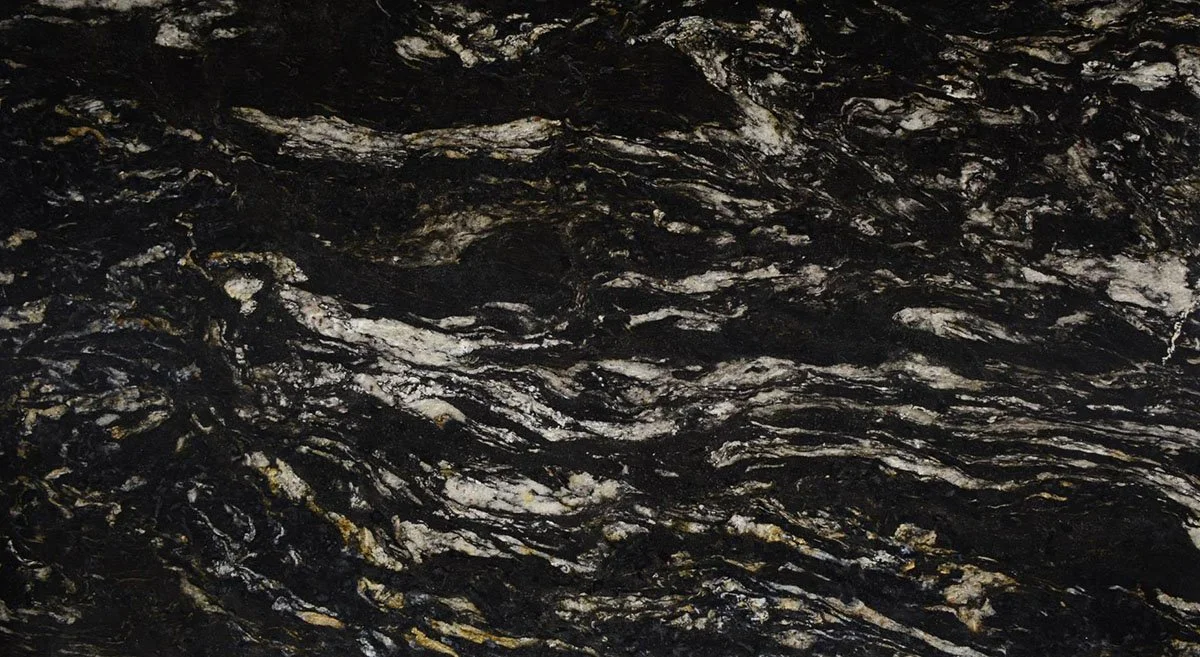
Titanium is the trade name for a dramatic natural stone from Brazil, commonly sold by slab suppliers as granite. It is also marketed as Titanium Black or Black Titanium. The countertop name refers to the stone's appearance—not the metal titanium. Arizona Tile and MSI both list the material as Brazilian granite, while natural-stone geology sources explain that commercial “granite” is a broader category than strict laboratory classification.
The surface usually has a deep black or charcoal base crossed by broad white, cream, gray, and gold movement. Some slabs are mostly dark and linear. Others contain large pale sections, warmer rust-colored minerals, or wide flowing bands. That range is exactly why the full slab matters more than a small sample.
The appearance
What colors are in Titanium granite?
Most Titanium slabs combine several tones instead of one flat color. Black and charcoal create the base. White and silver bands bring contrast. Gold, bronze, cream, and occasional rust tones add warmth. Under showroom lighting, polished slabs can look darker and more reflective; inside a home, daylight and cabinet color can make the gold or white movement more noticeable.
Why slab layout matters more with Titanium
Titanium is not a quiet, repeating pattern. A large white band may become the center of an island, while a dark section may land near a sink or cooktop. Seams can interrupt the movement if they are treated like an afterthought. A careful layout uses the strongest part of the slab intentionally and considers pattern direction across islands, perimeter runs, backsplashes, and waterfall ends.
If your project needs more than one slab, choose slabs from the same bundle whenever possible. Place them side by side and compare color, scale, direction, and the way the movement continues. Bookmatching may be possible on some projects, but it depends on the slab sequence, finish, dimensions, and available material.
Design it correctly
Cabinet colors that work with Titanium granite
White or warm-white cabinets
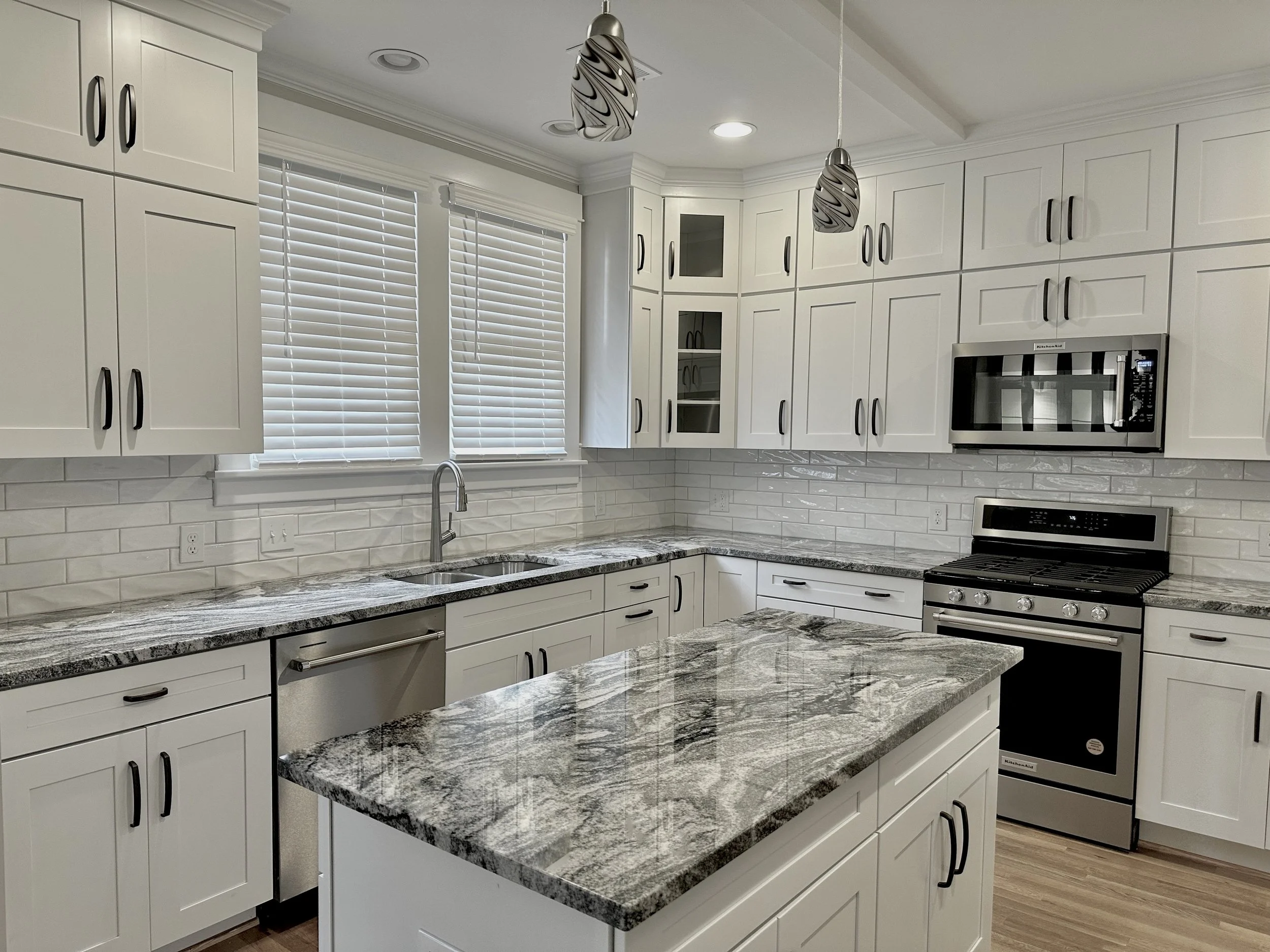
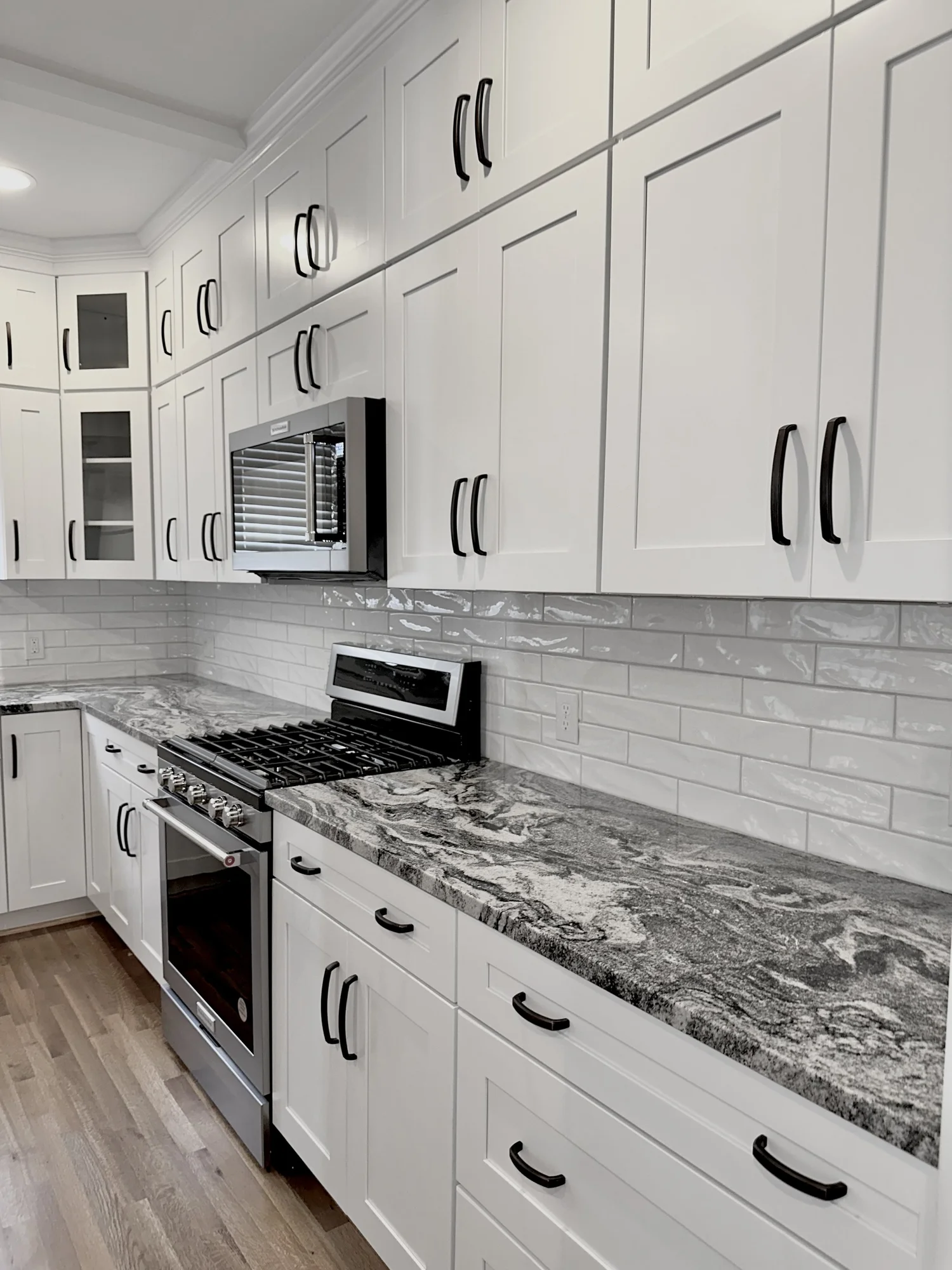
This is the clearest high-contrast pairing. White cabinets keep the room bright and allow the dark stone to become the focal point. A slightly warm white can connect better with slabs that contain cream, bronze, or gold.
Natural wood cabinets
Walnut, medium oak, and other warm woods can pull out the gold and bronze minerals. Bring a cabinet door to the slab viewing; wood undertones and stone undertones can look different under showroom lights.
Black or charcoal cabinets
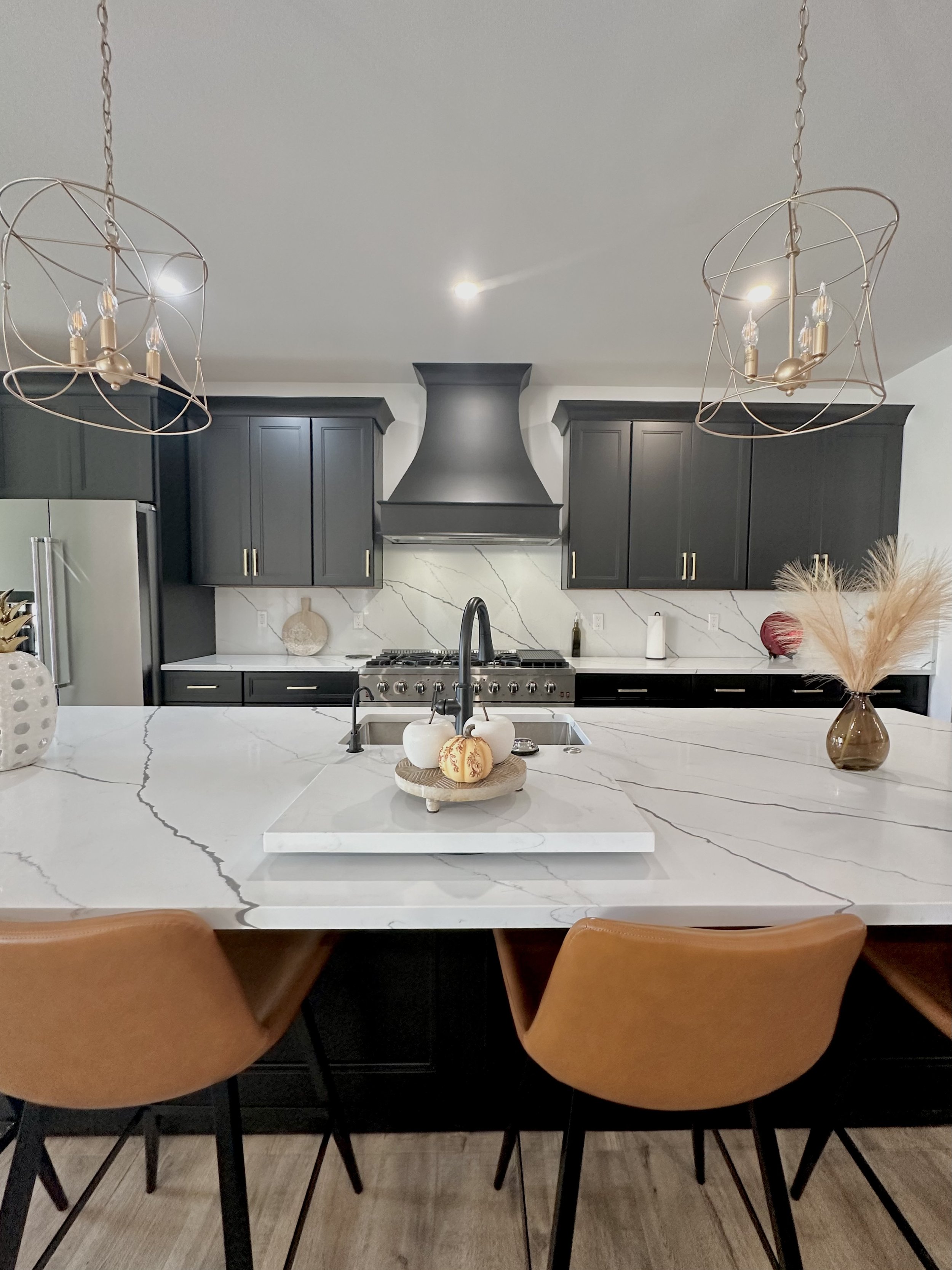
A dark-on-dark combination can look sharp in a large, well-lit kitchen. It needs contrast from the flooring, backsplash, walls, or the lighter sections of the selected slab so the room does not lose definition.
Backsplash, flooring, and hardware
Because Titanium already carries a lot of visual movement, the safest backsplash is usually restrained: a simple warm-white tile, a quiet plaster-look surface, or a carefully planned continuation of the slab. Competing mosaic patterns can make the room feel busy. Full-height Titanium backsplash can look impressive, but it requires extra slab planning so outlets, seams, and pattern direction do not break the design.
Black hardware gives the room a clean connection to the dark base. Brass or bronze can repeat the warmer minerals. Stainless and brushed nickel work well when the slab leans silver and gray. Flooring should support the stone, not fight it; compare all samples together instead of choosing each finish separately.
Everyday performance
Is Titanium granite durable?
Titanium is selected for kitchens because it combines dramatic natural movement with the practical performance expected from a hard natural countertop stone. It can handle normal cooking, serving, and cleaning when it is properly fabricated, installed, and maintained. Like any premium surface, it is not impossible to damage.
Heat
Natural stone generally handles heat well, but use trivets. They protect the finish, the sealer, and the surrounding area from thermal shock and concentrated heat.
Scratches
The surface is hard, but cutting directly on it can dull knives and create avoidable wear. Use a cutting board, especially around sink and prep areas.
Stains
Absorption varies by slab and finish. An appropriate impregnating sealer can improve stain resistance, but it does not make stone completely stain-proof.
Chips
Edges and sink openings are more vulnerable to hard impacts. A well-planned edge and careful everyday use reduce unnecessary risk.
Does Titanium granite need to be sealed?
It may. Sealing should be based on the actual slab, finish, sealer, and use—not a made-up rule that every countertop must be resealed on the same schedule. A penetrating or impregnating sealer makes stone more stain resistant, not stain-proof. Follow the recommendation provided for your installed surface and test the stone when needed instead of automatically applying product.
For daily cleaning, use warm water, a soft cloth, and a mild pH-neutral stone cleaner or a small amount of mild dish soap. Wipe spills promptly, rinse away cleaner residue, and dry with a soft cloth. Avoid abrasive powders and acidic cleaners. The Natural Stone Institute care guide provides additional general guidance for natural stone.
Project pricing
What affects the cost of Titanium granite countertops?
Sondos Stone granite projects commonly start around $90 per square foot installed, but Titanium is a premium natural-stone selection and may price above that starting point. Two kitchens with the same square footage can need different slab quantities, seam layouts, cutouts and fabrication work.
- 01Slab price and availability
Supplier inventory, bundle quality, finish, thickness, and transportation affect material cost.
- 02Square footage and slab yield
Large movement can require extra material to keep the pattern positioned and flowing correctly.
- 03Edges and cutouts
Sinks, cooktops, detailed edges, waterfall panels, and full-height backsplash add fabrication.
- 04Access and installation
Piece size, seams, stairs, removal, site conditions, and installation complexity affect labor.
Finish the details
Best finishes and edge profiles for Titanium
Polished finish
A polished surface deepens the black areas, sharpens the lighter bands, and reflects more light. It is the most familiar choice when the goal is strong contrast and visible mineral detail.
Leathered finish
A leathered finish lowers the shine and adds texture. It can give dark Titanium a softer, more tactile appearance and may hide fingerprints better, although textured surfaces can require more attention while cleaning.
Eased or round-over edge
Simple edges keep attention on the stone itself. They suit modern and transitional kitchens and avoid adding another visual pattern to an already dramatic surface.
Mitered or waterfall detail
A mitered edge can create a thicker visual profile. A waterfall end can carry movement down the side of an island, but both require careful vein alignment, additional material, and precise fabrication.
Finish and edge availability must be confirmed for the selected slab and project.
Be honest about the choice
Who should—and should not—choose Titanium granite?
Titanium may be right for you if:
- You want the countertop to be the main visual feature.
- You prefer real natural variation over a repeated pattern.
- You are willing to view full slabs and approve the layout.
- You like black, white, gray, gold, and bronze together.
- You understand basic natural-stone care.
Choose something quieter if:
- You want every section to look uniform.
- Your backsplash, flooring, and cabinets already have strong patterns.
- You dislike visible seams in heavily moving stone.
- You want a pale countertop with minimal contrast.
- You do not want to select the actual slab used.
If you like natural stone but Titanium feels too busy, compare it with quieter black or gray granites. If you want dramatic light stone instead, browse natural quartzite countertops. The right decision depends on the actual room and slab, not which stone name is trending.
From slab to installation
How Sondos Stone handles a Titanium project
Review the room
Share your measurements, cabinet plan, photos, sink, cooktop, backsplash, and design direction.
Select the slabs
Compare the actual Titanium slabs and reserve enough matching material for the approved scope.
Template and plan
Confirm final dimensions, seams, overhangs, cutouts, edge details, and the important areas of movement.
Fabricate and install
Cut, finish, deliver, seam, and install the countertops for the confirmed layout.
Local fabrication and installation
Titanium granite countertops across the NC Triad
Sondos Stone helps homeowners, builders, cabinet companies, designers, and contractors plan natural-stone countertops throughout Greensboro and surrounding North Carolina communities. Visit our Jamestown location to discuss current Titanium slab availability and the details of your project.
Sondos Stone
4701 Piedmont Parkway #103
Jamestown, NC 27282
(336) 899-0444
Straight answers
Titanium granite countertop FAQs
Is Titanium granite actually granite?
Arizona Tile and MSI classify Titanium as granite. The natural-stone industry uses “granite” more broadly than geologists do, so the commercial label does not replace a laboratory analysis. For countertop decisions, evaluate the actual natural slab, finish and supplier documentation.
Where does Titanium granite come from?
Titanium granite is quarried in Brazil. Blocks are cut and polished into slabs before being exported to regional suppliers, where color balance and movement can vary between bundles.
Are Titanium, Titanium Black and Black Titanium the same stone?
Suppliers often use those names for the same general Brazilian stone family. Trade names are not standardized, so compare the actual slabs instead of assuming every bundle will match.
What colors are in Titanium granite?
Most slabs have a black or charcoal base with white, gray, silver, cream, gold, bronze, and occasional rust-colored movement. The balance and direction of these colors varies from slab to slab.
Does Titanium granite need sealing?
It may benefit from an appropriate impregnating sealer. The need and schedule depend on the selected slab, finish, sealer, and use. Sealing improves stain resistance but does not make stone completely stain-proof.
Is Titanium granite good for a kitchen island?
Yes. Its large-scale movement can make an island the visual center of a kitchen. The slab layout should be planned so the strongest bands land intentionally and any seams are handled carefully.
What cabinet color looks best with Titanium?
White and warm-white cabinets create the clearest contrast. Natural wood can connect with gold and bronze minerals. Black or charcoal can also work in a larger, well-lit room with enough contrast elsewhere.
Can I choose Titanium from a small sample?
A small sample cannot show the scale or direction of Titanium's movement. View the full slabs intended for your project and review the planned layout before fabrication.
How much does Titanium granite cost in North Carolina?
Sondos Stone granite projects commonly start around $90 per square foot installed, but premium Titanium slabs may cost more. Final pricing depends on current material cost, square footage, slab yield, layout, finish, edges, cutouts, backsplash, removal, access and installation complexity.
Where can I view Titanium granite near Greensboro?
Contact Sondos Stone at 4701 Piedmont Parkway #103 in Jamestown, NC, to discuss current slab availability and schedule a viewing for your Greensboro or NC Triad project.
Ready to compare slabs?
See Titanium at full scale before you decide.
Bring cabinet, flooring, backsplash, and hardware samples. We will help you compare the actual movement and plan the countertop around your space.