

Material dossier 01 · Brazil to the NC Triad
Patagonia Quartzite: Origin, Geology, Cost & Slab Design
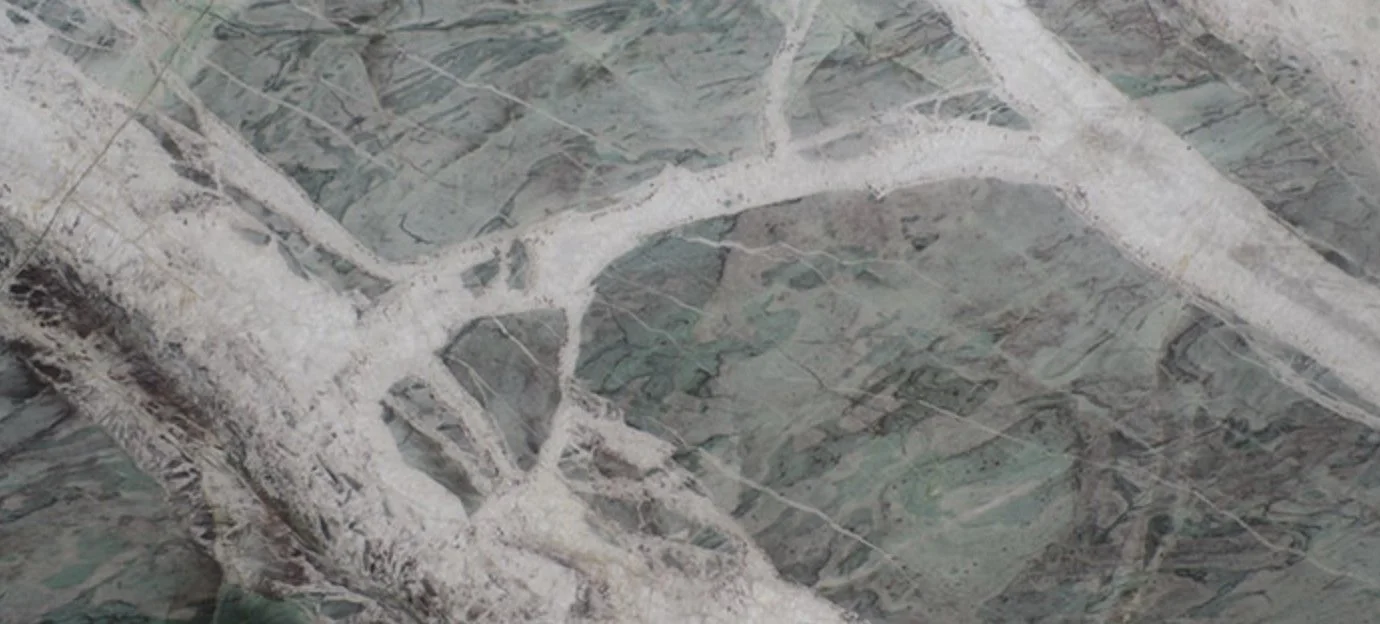
Patagonia is not a quiet background. Its fractured-looking fields, mineral blocks and high contrast demand a layout plan before the first cut.
“Patagonia” is used for more than one commercial stone. Sondos Stone currently lists Patagonia Green in its quartzite collection, while suppliers also sell a brown, cream and crystalline Patagonia Granite. Confirm the exact inventory label, supplier documentation and slab—not only the shortened name.
MSI lists both Patagonia Green Quartzite and Patagonia Granite as Brazilian materials.
Patagonia Green is sold as quartzite. Other Patagonia material may be sold as granite.
Green, white, black and crystalline-looking zones can shift dramatically across one slab.
Island placement, seams, cutouts and waterfall panels should be planned from slab photographs.
The name is simpler than the stone.
Natural-stone names are commercial tools. They help distributors and homeowners talk about a look, but they do not always describe a single geological unit. That matters with Patagonia because visually related slabs may be placed in different sales categories.
For the green material shown on Sondos Stone’s quartzite page, MSI identifies Patagonia Green as quartzite from Brazil, with white, green, black and other rock-like colors. A separate MSI listing identifies classic Patagonia as Brazilian granite with cream, cocoa, gray, espresso and translucent crystalline sections. Those are not interchangeable product descriptions.
The practical rule is direct: ask which Patagonia is available, review the supplier label, and evaluate the exact slab for its intended use. Do not assume a performance claim from a photograph or from a shortened trade name.
02 · Read the full slab
A Patagonia slab is closer to a landscape than a repeating pattern.
Quiet fields
Larger areas of similar color can carry sink rails, perimeter runs or areas where a cutout needs visual calm.
Mineral blocks
Strong green, dark or light formations can become the island’s focal point. Their scale may disappear in a small sample.
Crystalline zones
Some Patagonia materials show translucent-looking quartz-rich sections. Any backlighting concept requires project-specific testing and engineering.
Natural lines
Veins, fissures and resin-filled areas may be part of the slab. Review which features are natural, stable and acceptable before fabrication.
03
The cut plan
Design the kitchen on top of the slab.
Photograph every slab
Use straight-on, high-resolution images with dimensions. If the project requires multiple slabs, label each one clearly.
Place the island first
The island is usually the largest uninterrupted surface. Decide which mineral formation deserves that position.
Position cutouts
A sink or cooktop can remove the exact detail that made the slab special. Move templates digitally before cutting stone.
Plan every continuation
Discuss seam direction, waterfall alignment and full-height backsplash pieces together—not as separate decisions.
04 · Keep the room disciplined
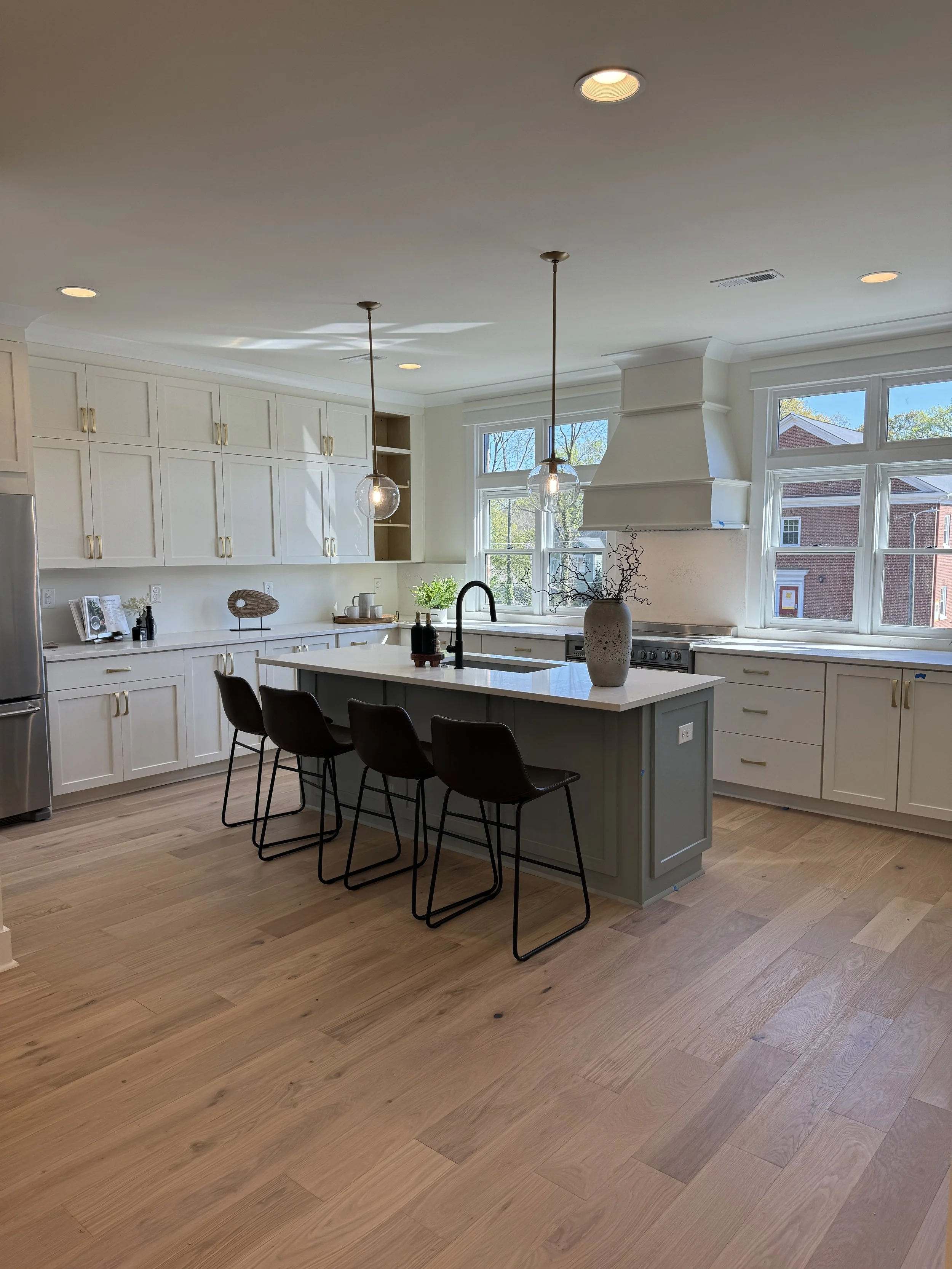
Let one surface carry the drama.
Patagonia’s large formations already act like artwork. Flat or restrained cabinet finishes usually give the stone enough visual space. White oak, walnut, soft white, charcoal and muted green can work depending on the actual slab.
- Cabinets: repeat a dominant slab tone instead of chasing every color.
- Backsplash: continue the slab only when the layout and budget support it; otherwise choose a quiet field tile.
- Hardware: black, aged brass and restrained stainless finishes can connect to dark or warm minerals.
- Flooring: avoid adding another large high-contrast pattern.
05 · Performance without sales language
Test and care for the exact stone you are buying.
Heat
Natural quartz-rich stone generally handles kitchen heat well, but the Natural Stone Institute still recommends trivets or mats. Thermal shock, resins and adjacent materials remain part of the installed system.
Scratches
Quartzite is commonly hard, but the commercial name alone does not prove composition. Do not use the countertop as a cutting board, and review softer mineral zones if present.
Stains and sealing
An impregnating sealer may increase stain resistance; it does not make stone stain-proof. Sealer choice and frequency should follow the stone supplier and product instructions.
Acid sensitivity
If classification is uncertain, ask about testing a sample for acid reaction and absorption. True quartzite behaves differently from calcium-carbonate-rich marble or dolomitic stone.
06 · What changes the quote
Square footage is only the first number.
Patagonia projects are affected by slab price, number of slabs, usable yield, freight, thickness, finish, edge detail, cutouts, full-height backsplash, waterfall panels, seam planning and installation conditions. Dramatic slabs can require extra material to preserve a specific formation or direction.
A lower square-foot number can become a worse value if the quote excludes layout work or forces a poor cut plan. Compare the complete written scope.
Calculate a starting estimate →07 · Local fabrication
Patagonia countertops for Greensboro and the NC Triad
Sondos Stone coordinates material selection, field measurement, custom fabrication and professional installation from its Jamestown location. Availability changes by supplier and slab, so contact the team before designing around a specific image.
08 · Buyer questions
Patagonia quartzite FAQs
Where does Patagonia quartzite come from?
MSI identifies Patagonia Green Quartzite as a product of Brazil. Because Patagonia is used for multiple commercial stones, verify the supplier record for the exact slab.
Is Patagonia always quartzite?
No. Patagonia Green is sold as quartzite, while other suppliers sell a classic Patagonia material as granite. Commercial labels can cover different-looking and differently classified stones.
Can Patagonia stone be backlit?
Some slabs contain translucent-looking crystalline zones, but backlighting is a custom architectural decision. The exact slab, support, light system, cutouts and service access must be evaluated before fabrication.
Does Patagonia need to be sealed?
Possibly. The need depends on the exact stone and finish. Sealing improves stain resistance but does not make natural stone stain-proof.
Is Patagonia good for a kitchen island?
It can be an excellent focal surface when the slab dimensions, support, cutouts and desired mineral formation are planned together.
Sources checked