

Countertop buyer guide · Greensboro & the NC Triad
How to Choose the Best Countertop Fabricator in Greensboro, NC
The right company does more than sell a slab. It explains the full scope, measures the room, plans seams and movement, fabricates each piece for the cabinets and takes responsibility for installation.
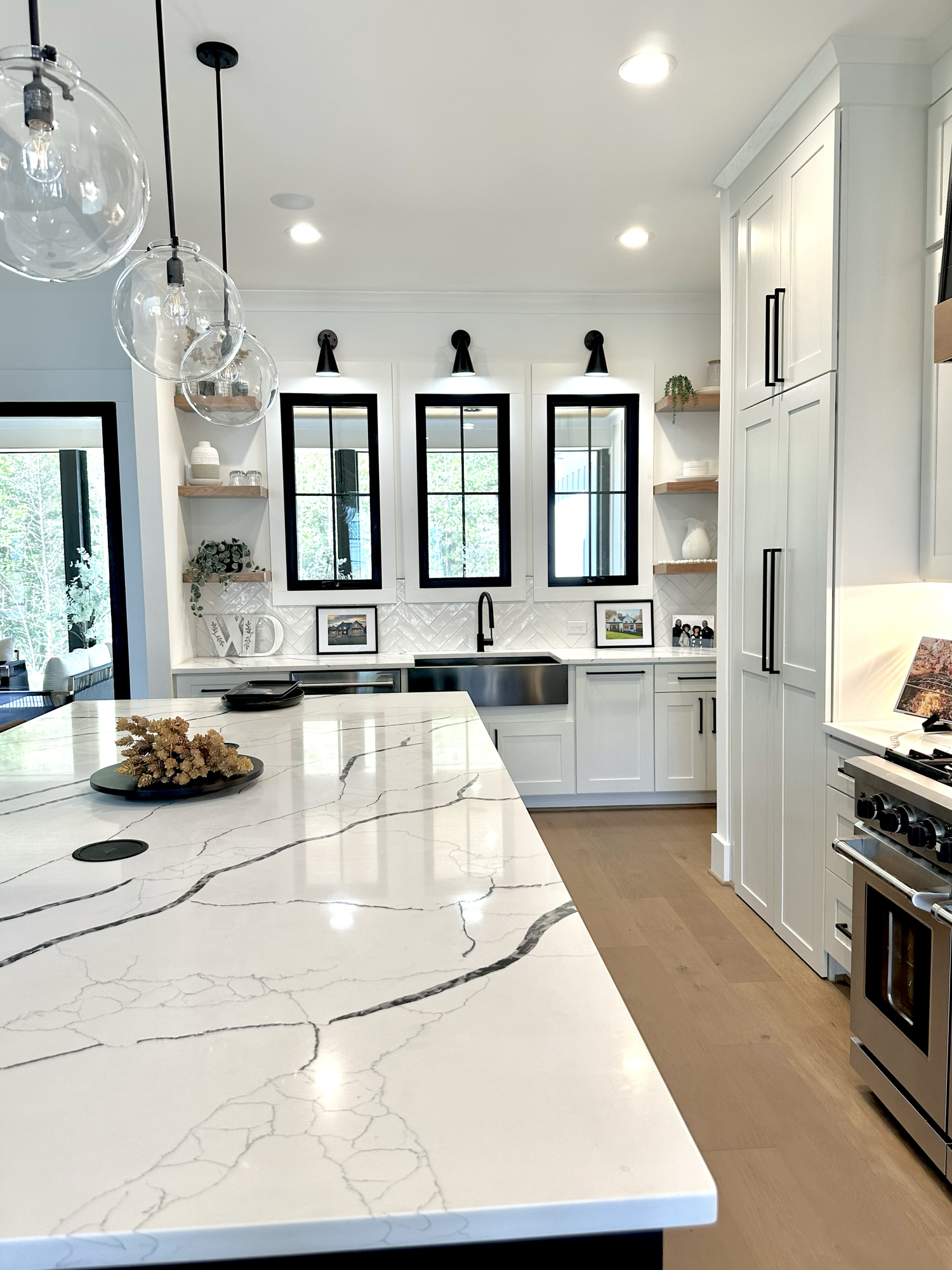
The direct answer
What makes a countertop fabricator worth hiring?
The best countertop fabricator for your project is the company that can prove its work, define the entire installed scope and explain what happens from material selection through final installation.
Do not choose from a price-per-square-foot number alone. Compare who measures, who owns the slab, who approves the layout, who cuts the material, who installs it, what the estimate excludes and who answers if something does not fit.
A strong company should be able to show recent work, provide a physical point of contact, discuss seams and support before cutting, and put the project details in writing. The Natural Stone Institute specifically treats seam placement, sink cutouts, overhangs, joint widths and tolerances as technical installation topics—not small decorative details.
The seven-part test
A practical fabricator scorecard.
Use the same questions with every company. A comparable process is more useful than comparing two estimates that include different work.
Recent, relevant project evidence
Ask to see completed kitchens similar in material, layout and complexity to yours—not only manufacturer room scenes.
Original photos, clear captions, local projects and details about the work performed.
Only stock photos or an inability to explain who fabricated the pictured work.
A complete written scope
The proposal should connect the material, thickness, finish, measurements, edges, cutouts, backsplash, delivery and installation.
Inclusions, allowances, exclusions, payment stages and change-order rules are written down.
A low headline price with important fabrication or installation items left undefined.
A real templating plan
Final fabrication dimensions should come after cabinets are installed, level, secured and ready for accurate measurements.
The company confirms sink, faucet, cooktop, overhang, wall and cabinet conditions.
Cutting from rough homeowner measurements without a clear final-measurement stage.
Slab and layout approval
Natural stone movement and engineered patterns must land intentionally around islands, seams, sinks and backsplashes.
You can identify the actual material and discuss how visible sections will be positioned.
No conversation about vein direction, slab variation or where seams may fall.
Fabrication ownership
Know whether the company cuts the material itself or sends the work to another shop. Either model can work, but responsibility must be clear.
One named contact can explain material handling, cutouts, edges, polishing and quality checks.
The seller cannot identify the fabricator or explain who controls the schedule and quality.
An installation and support plan
Large pieces, sink rails, seams, wall conditions and overhangs affect how a countertop must be delivered and supported.
The installer reviews access, seam location, supports, plumbing limits and site readiness.
No one asks about stairs, doorways, cabinet support, appliance openings or jobsite access.
Clear responsibility after installation
Ask who receives concerns, what the final walkthrough covers and how service requests are documented.
You receive care guidance, contact information and a clear process for reporting a problem.
Responsibilities become vague as soon as the final payment is discussed.
Compare the total project
What should a countertop estimate include?
Two quotes are only comparable when they cover the same material, measurements, fabrication work and installation responsibilities.
A square-foot figure can be useful for an early comparison, but it is not a complete installed proposal until the scope and final measurements are confirmed.
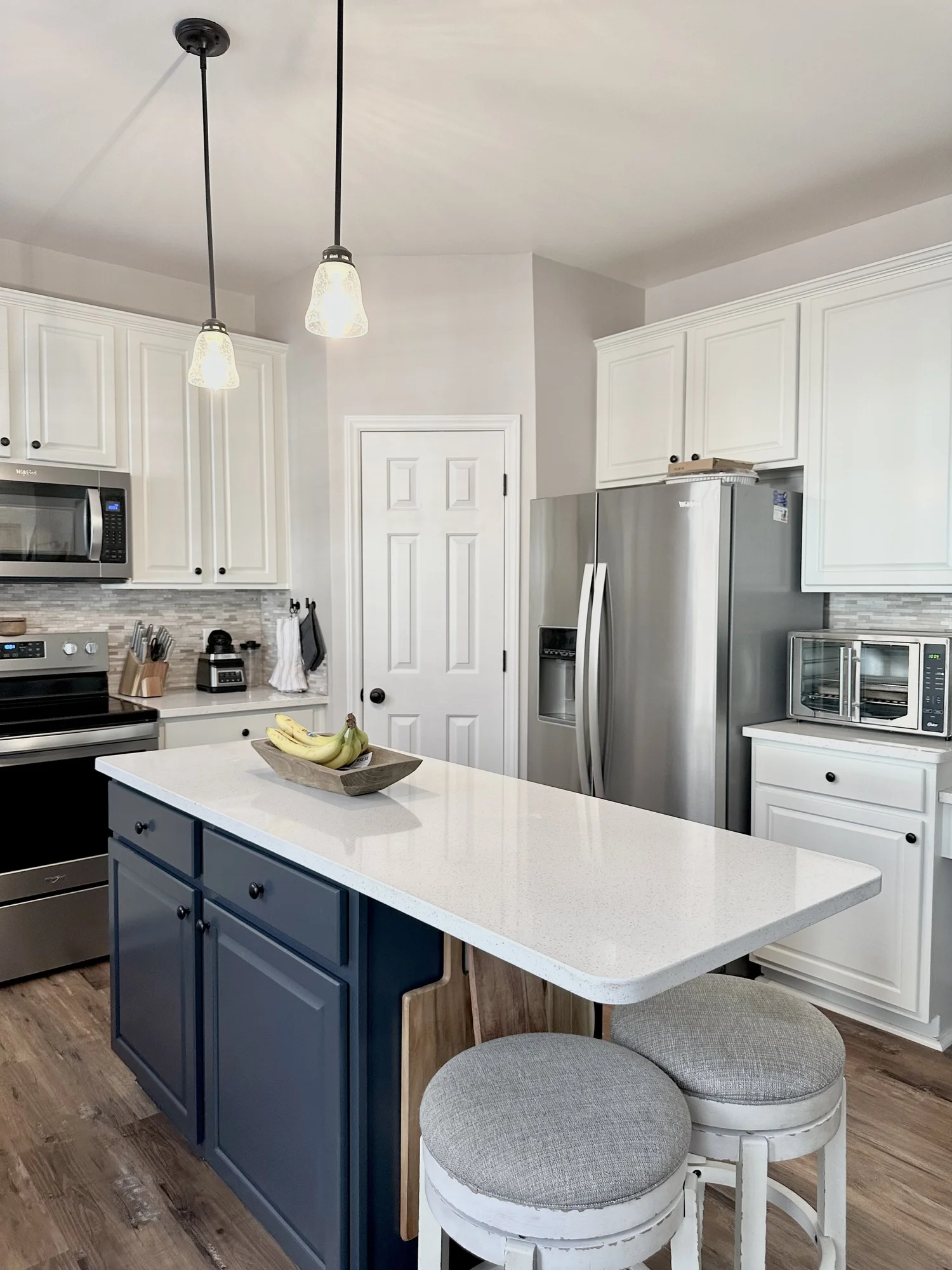
Proof is in the finished room
Look past the sample. Study the installation.
A portfolio should let you inspect long runs, island proportions, seam decisions, sink areas, finished edges and how the surface works with cabinets and light.
Ask what the company actually handled on the project. A useful caption distinguishes fabrication and installation work from cabinet, plumbing, electrical or general remodeling work performed by others.
View Sondos Stone kitchen projects →Know the handoffs
A countertop project should have five clear gates.
Each gate confirms different information. Skipping one can move uncertainty into the shop or the installation day, where changes become harder.
- 01Scope and starting estimateDecision: Is the project scope realistic?
Share rough measurements, plans or photos. Choose the material family, general edge, sink type, backsplash scope and priorities.
- 02Material approvalDecision: Is this the material being fabricated?
Confirm the exact quartz color or natural stone slabs, thickness, finish, quantity and any visible variation.
- 03Final templateDecision: Are the fabrication dimensions final?
With cabinets ready, record walls, corners, cutouts, overhangs, appliance conditions and support requirements.
- 04Layout and fabricationDecision: Does the layout protect the design?
Plan pattern placement and seams, then cut, finish, polish and inspect each piece for the approved project.
- 05Installation and walkthroughDecision: Is the countertop work complete?
Deliver, place and seam the pieces; confirm final fit, included backsplash work and the condition of the completed surface.
Slow down before paying
Five warning signs that deserve another question.
The scope lives only in a text message
Material, fabrication details, exclusions and payment terms should be organized in a written proposal.
No one discusses final templating
Rough dimensions are useful for an estimate, but custom countertops require confirmed site measurements.
The cheapest number excludes the hard parts
Ask about cutouts, edges, seams, delivery, removal, supports, backsplash, tax and installation.
Natural slab layout is treated as random
Movement, color changes and visible inclusions should be considered before the material is cut.
No clear person owns the final result
Know who coordinates the supplier, template, shop, installer and any service concern.
Use these in every consultation
Twelve questions to ask before signing.
You do not need technical vocabulary. A good fabricator should answer these in plain language and explain where the answer depends on your room or material.
Who performs the final measurements, fabrication and installation?
Can I see recent projects similar to my layout and material?
Exactly what material, thickness and finish does this estimate include?
Which edge, sink and cooktop cutouts are included?
Where are seams likely, and when will we discuss them?
Can I approve natural slabs or pattern layout before cutting?
What must be ready before the template appointment?
Who confirms overhang support and cabinet readiness?
Does the proposal include delivery, installation and existing-top removal?
What work must be completed by a plumber, electrician or contractor?
What can change the price after final measurements?
Who do I contact if I have a concern after installation?
Material knowledge matters
The advice should change with the surface.
A fabricator should not give identical guidance for every material. Quartz has manufactured pattern and heat limitations. Granite and quartzite vary by slab and may need sealing. Marble can etch. Porcelain and sintered surfaces require their own handling and fabrication methods.
The question is not whether one surface is universally best. It is whether the company can explain the appearance, maintenance, layout and fabrication consequences of the material you are considering.
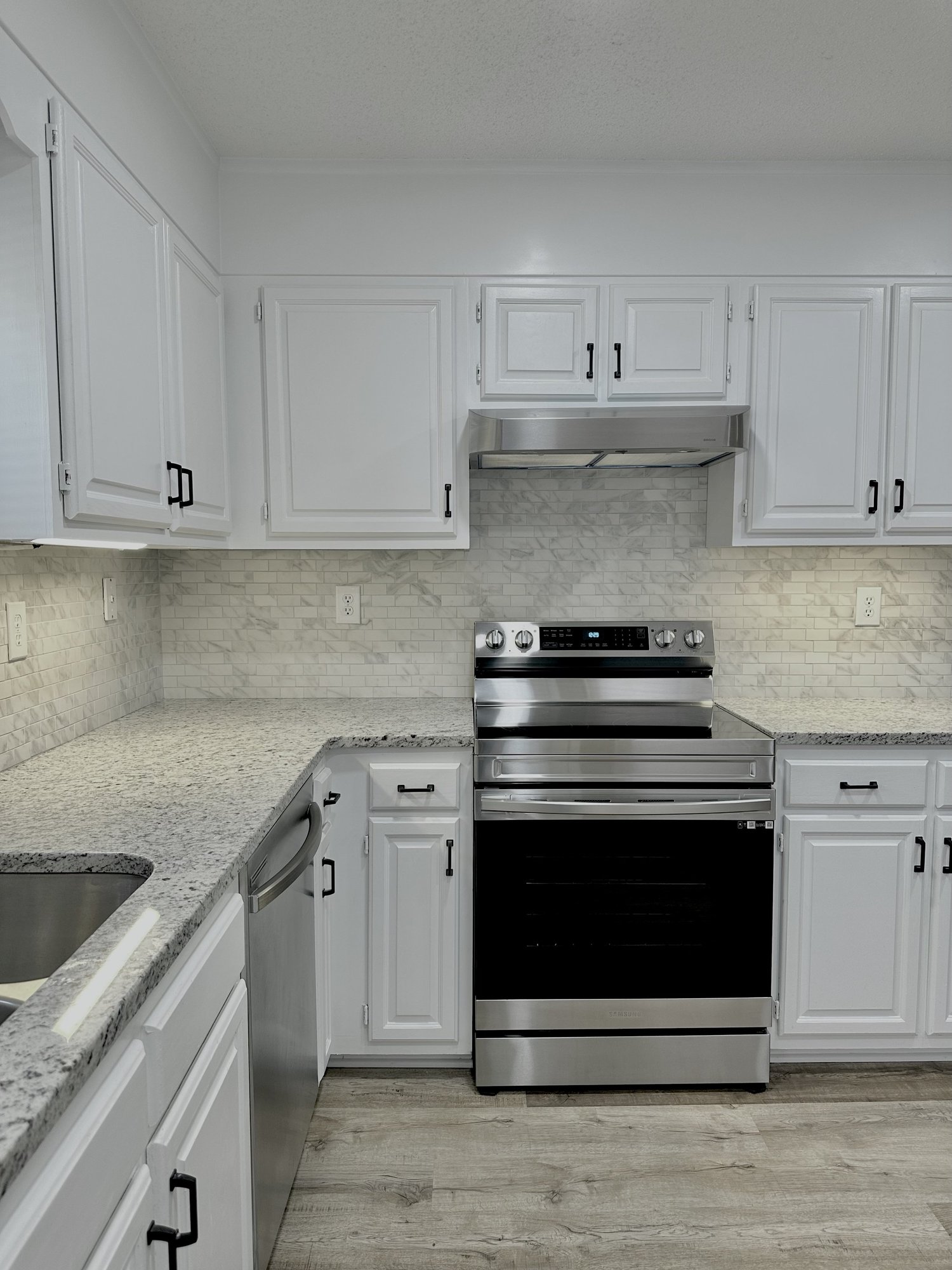
A local point of responsibility
Why the fabricator’s location and process matter.
A nearby showroom or shop gives homeowners a place to compare materials, bring cabinet samples, review details and identify the company responsible for the work. It also helps connect the estimate, template, fabrication schedule and installation.
Sondos Stone is based at 4701 Piedmont Parkway #103 in Jamestown, North Carolina, near southwest Greensboro and High Point. The company states that it has operated since 1982 and handles fabrication and installation in-house.
Serving homeowners, builders, designers and contractors across:
Winston-Salem High Point Kernersville Burlington Asheboro Lexington Jamestown Thomasville ArchdaleBuyer questions
Countertop fabricator FAQs.
The answers below apply to typical custom countertop projects. Your material, cabinets and project scope can change the details.
What is the difference between a countertop supplier and a fabricator?
A supplier or distributor stocks slabs and surfaces. A fabricator measures the project, cuts and finishes the material, prepares openings and creates the countertop pieces. Some companies also provide installation; others coordinate a separate installer.
Should the same company fabricate and install my countertops?
It can simplify responsibility and communication, but the important issue is clarity. Ask who performs each stage, who controls quality and scheduling, and who is responsible for the final fit.
When should countertops be measured?
Final templating usually happens after base cabinets are installed, secured, level and in their final position. The sink, faucet and cooktop details should be available when they affect openings or placement.
Is the cheapest countertop estimate usually the best value?
Not necessarily. A lower quote may cover a different material, fewer fabrication details or less installation work. Compare the complete written scope, project evidence and responsibility—not only the first number.
Should I see the actual natural stone slabs?
Yes. Granite, quartzite, marble and other natural stones vary in color, movement, fissures and scale. Review the slabs intended for the project and discuss the visible layout before fabrication.
How are countertop seams decided?
Seam placement depends on slab and sheet size, access, cabinet layout, sink and cooktop openings, material movement, support and fabrication limits. Ask where seams are expected and how pattern direction will be handled.
What should be ready before templating?
Base cabinets should be installed and secured. The fabricator should have sink, faucet, cooktop, range and backsplash information, plus decisions about edges, overhangs and any special features.
How long does countertop fabrication and installation take?
Timing depends on material availability, final measurements, project size, layout approval, fabrication complexity and the company’s current schedule. Ask for the stages and dependencies rather than relying on one generic number.
Where can I find a countertop fabricator near Greensboro?
Sondos Stone is located at 4701 Piedmont Parkway #103 in Jamestown, near Greensboro and High Point. The team serves residential and commercial countertop projects across the North Carolina Triad.
Bring the same questions to every estimate
Compare the work, the scope and the responsibility.
Send your measurements, cabinet plan or project photos. Sondos Stone can help you compare materials and prepare a starting installed estimate for your space.